Current Cryptocurrency News for Sunday, March 15, 2026. Bitcoin, Ethereum, Major Altcoins, Institutional Demand, and Key Trends in the Cryptocurrency Market for Investors
For the global audience of investors, it is particularly important that the digital asset market is no longer just a speculative story. Major capital is now evaluating cryptocurrencies as a separate asset class with its own logic of demand, liquidity, and risk. At the same time, volatility remains high, meaning any movement in Bitcoin, Ethereum, and the largest altcoins continues to rapidly reshape interest across market segments.
Bitcoin Remains a Magnet for Capital
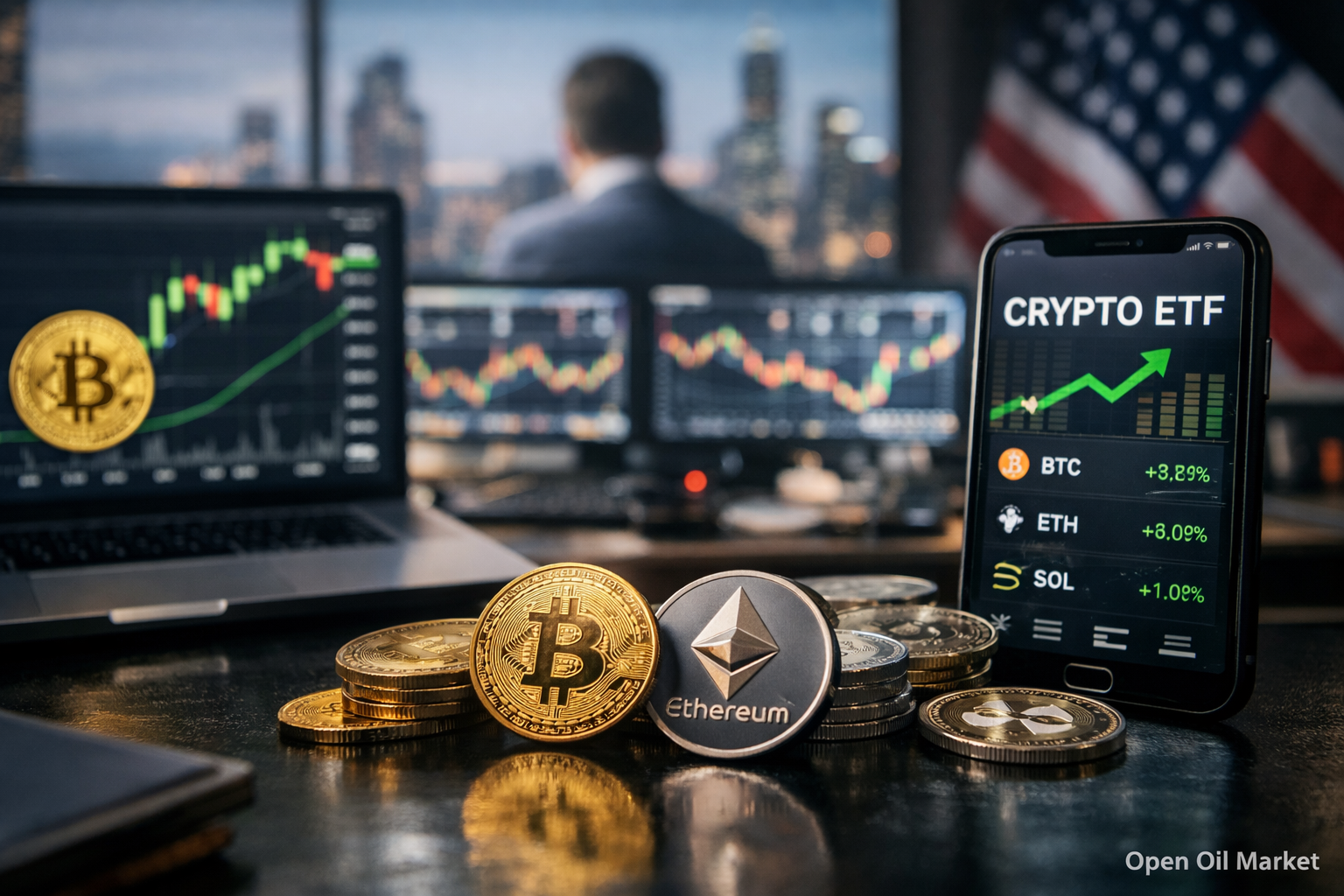
The main narrative of recent days has been the strengthening of Bitcoin against the backdrop of a recovering risk appetite and sustained interest from institutional investors. This is critically important for the global market, as Bitcoin sets the direction for the entire crypto industry: when it stabilizes, investors actively seek opportunities in Ethereum, Solana, XRP, and other major assets.
The current landscape shows that the market is once again closely monitoring:
- the dynamics of inflows into spot Bitcoin ETFs and similar instruments;
- the cryptocurrency market's reaction to macroeconomic signals from the U.S. and Europe;
- the easing of pressures from previous overheating in speculative positions;
- changes in the behavior of institutional and retail investors.
For investors, this means that Bitcoin continues to serve as the main indicator of confidence in the digital asset sector. If the market maintains demand for this leading asset, cryptocurrencies as a whole have a chance for a broader recovery.
Ethereum Strengthens Its Status as the Foundational Asset of the Crypto Economy
Ethereum retains its position as the second most significant digital asset and gradually returns to the center of attention for long-term investors. While Bitcoin is perceived as the primary reserve asset of the crypto market, Ethereum remains the infrastructural backbone for a substantial portion of blockchain economy: decentralized finance, tokenization, stablecoins, and numerous applied solutions.
The importance of Ethereum for the global market is determined by several factors:
- its role in the smart contract ecosystem;
- the sustained interest from institutional entities;
- its influence on the valuation of the entire Web3 sector;
- its ability to serve as a benchmark for riskier altcoins.
Practically speaking, this means that Ethereum's dynamics in the weeks ahead will be viewed as a marker of market maturity. If ETH maintains demand and liquidity, this bolsters confidence in the entire segment of major platform cryptocurrencies.
Altcoins: The Market Is Becoming More Selective
One of the key features of March 2026 is not just the increasing interest in altcoins, but a more stringent selection within this segment. Investors are no longer willing to actively buy the entire market. Capital is concentrating on projects with clear liquidity, significant ecosystem scale, a strong brand, or a specific investment narrative.
Among the largest altcoins, the following trends are particularly notable:
- Solana — seen as a bet on high throughput and an active ecosystem;
- XRP — characterized as an asset sensitive to institutional and payment narratives;
- BNB — a key part of a large global crypto infrastructure;
- TRON — an essential element of stablecoin circulation and transactional activity;
- Cardano and other major networks — viewed as more selective ideas for medium-term positioning.
This is a significant shift for the global crypto industry: the market is gradually moving away from a model where "everything grows" to one where capital prefers liquid and relatively clear stories.
Inflow of Funds into ETFs and Exchange Products Once Again Influences the Market
The institutional landscape merits special attention. In 2026, this becomes the primary factor for revaluation concerning cryptocurrencies. When sustainable inflows into ETFs and other regulated instruments return to the market, it reduces the feeling of isolation for crypto assets and strengthens their ties to the global capital management system.
For investors, the significance of this trend is clear:
- the market's reliance on retail demand decreases;
- liquidity quality improves in major assets;
- Bitcoin and large cryptocurrencies gain additional legitimacy in portfolio strategies;
- volatility does not disappear but becomes more correlated with macro factors and capital flows.
This is why news on cryptocurrencies as of March 15, 2026, should not be viewed in isolation from the global investment market. For many funds, cryptocurrencies have already become part of a broader discussion about risk, returns, and diversification.
Regulation Remains One of the Main Drivers of Sentiment
A second major narrative concerns the regulation of cryptocurrencies and stablecoins. Investors worldwide continue to monitor how quickly the largest jurisdictions can establish predictable regulations. For the industry, this is a matter not only of control but also of scaling speed.
The market is currently assessing regulation in two dimensions:
1. Rules for Crypto Assets
Market participants are anticipating clearer guidelines regarding the status of tokens, platform requirements, the circulation of investment products, and disclosure principles.
2. The Future of Stablecoins
Stablecoins are increasingly perceived as a bridge between traditional finance and the crypto economy. How these instruments are regulated will determine the speed of institutional adoption of digital assets.
For investors, this means that the regulatory agenda can either support a new phase of market growth or provoke localized periods of uncertainty.
Security Risks Are Again in the Spotlight
Despite improvements in infrastructure quality, the crypto market still faces serious security risks. After extensive losses in the industry over the past year, investors are becoming more discerning not only regarding the growth prospects of tokens but also assessing the resilience of exchanges, wallets, bridges, and custodial services.
Against this backdrop, it is vital for investors to adhere to basic rules:
- avoid excessive concentration of funds on a single platform;
- utilize multifactor protection and hardware wallets for long-term storage;
- evaluate not just the token, but also the infrastructure risks surrounding it;
- do not ignore the risk of fraud and social engineering.
For the global market, this indicates that the issue of security is no longer secondary. It directly influences risk premiums, sector valuations, and the willingness of large capital to enter the industry.
Top 10 Most Popular Cryptocurrencies
The attention of the world remains focused on the largest digital assets by market capitalization and liquidity. These cryptocurrencies shape the primary structure of demand, set market benchmarks, and are most frequently utilized in both institutional and retail strategies.
- Bitcoin
- Ethereum
- Tether USDt
- BNB
- XRP
- USDC
- Solana
- TRON
- Dogecoin
- Cardano
For investors, this list is significant not only as a ranking of popularity but also as a map of current capital distribution within the crypto economy. It demonstrates that the market encompasses reserve assets, infrastructural blockchains, payment solutions, and major stablecoins.
What This Means for Investors on March 15, 2026
The cryptocurrency market enters Sunday with a more constructive sentiment than a few weeks prior; however, it is too early to talk about the complete disappearance of risks. Bitcoin remains the tone-setter for the entire sector, Ethereum holds its role as the infrastructure leader, and altcoins are competing for capital with increasing intensity.
Key takeaways for investors are as follows:
- Bitcoin remains the main indicator of market strength;
- Institutional demand through ETFs supports the sector;
- Altcoins may demonstrate leading dynamics, but selection must be precise;
- Regulatory decisions and security remain critical variables;
- The global crypto market is increasingly integrated into the overall macroeconomic picture.
If the current environment persists, news on cryptocurrencies in the coming days will increasingly revolve around two themes: whether Bitcoin can solidify its recovery amidst global risk demand, and whether capital will begin to flow more widely into major altcoins. For market participants, this is not just background information, but the foundation for investment decisions in the upcoming week.