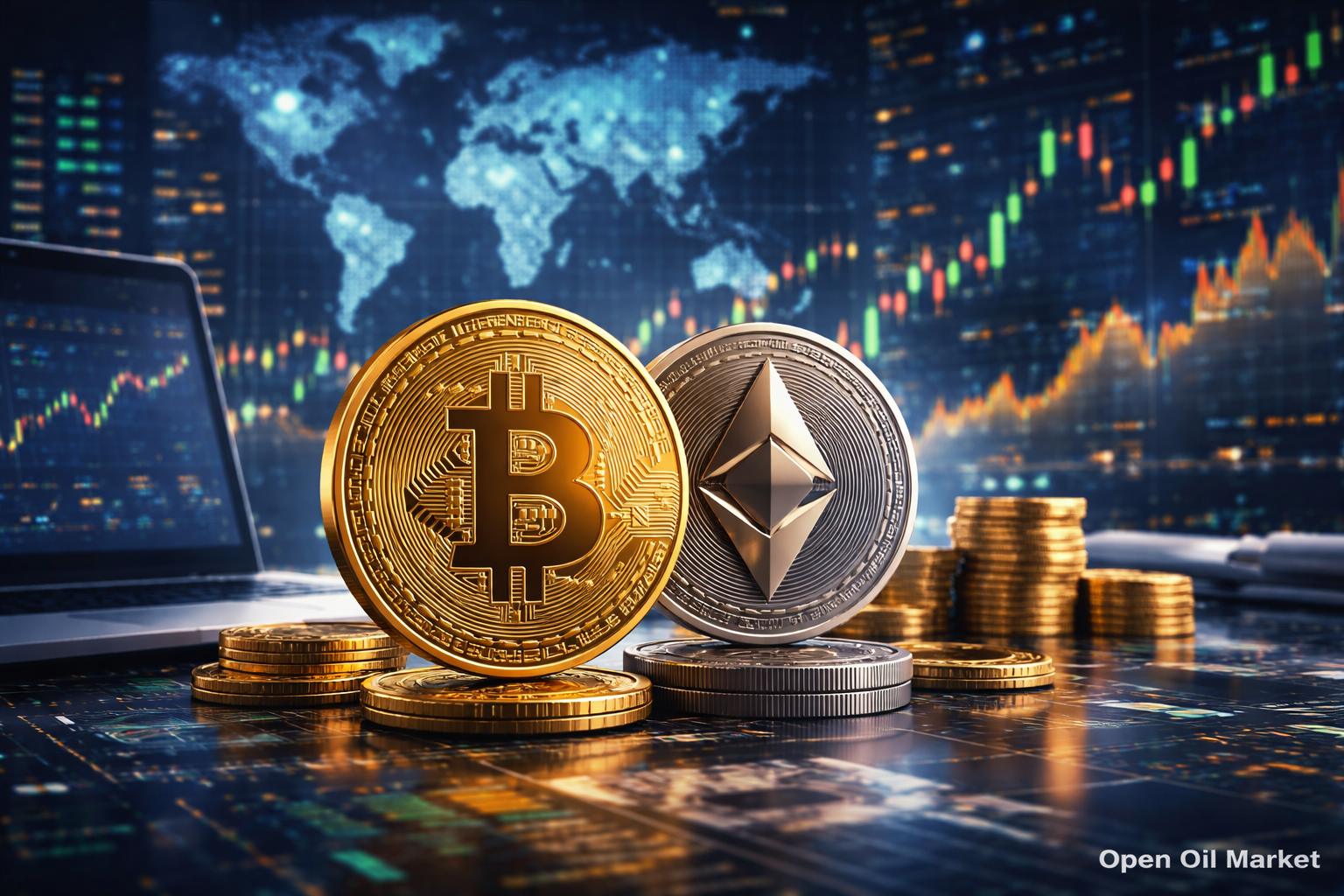
Cryptocurrency News for Friday, December 26, 2025: Bitcoin and Ethereum Dynamics, Altcoin Market, Top 10 Cryptocurrencies, Institutional Investors, and Key Trends in the Global Crypto Market.
Current cryptocurrency news for December 26, 2025: The cryptocurrency market is consolidating after the Christmas holidays. Bitcoin is holding steady around $88,000, demonstrating resilience even amid recent fluctuations. Major altcoins, including Ethereum, are gradually recovering after a volatile start to the week; many digital assets from the top 10 are showing moderate growth. Investors—both retail and institutional—are exhibiting cautious optimism, relying on an improved regulatory environment and ongoing interest from large players in crypto assets.
Bitcoin Consolidates Below $90,000
In the final days of December, Bitcoin (BTC) is trading relatively steadily, consolidating in the $85,000 to $89,000 range. Following a brief drop earlier in the week (amid thin holiday liquidity, the price of BTC fell below $85,000 for a short time), the leading cryptocurrency quickly rebounded to the current ~$88,000. This is significantly lower than the yearly high (earlier in 2025, Bitcoin briefly exceeded $120,000), yet around 120% higher than levels at the beginning of the year, emphasizing the impressive growth over the year despite the recent correction. The market capitalization of BTC is approximately $1.7 trillion, with Bitcoin's share remaining at ~58% of the total cryptocurrency market capitalization. Technical analysts note that Bitcoin has yet to surpass the psychologically important threshold of $90,000—there is a sense of resistance around this level. Nevertheless, the resilience of BTC near $88,000 indicates investor confidence: even during the holiday lull, sellers were unable to push the price significantly lower. Experts also highlight the influence of macroeconomic factors: a loosening of monetary policy is expected in the U.S. and Europe in 2026, which traditionally increases the attractiveness of risk assets, including cryptocurrencies. Additionally, the crypto-industry-friendly policies of the Donald Trump administration in 2025, such as the approval of a stablecoin bill and the launch of the first Bitcoin spot ETFs, have strengthened large investors' confidence in the market.
Ethereum Holds Its Ground
Following in Bitcoin's footsteps, Ethereum (ETH), the second-largest cryptocurrency by market capitalization, is also demonstrating stability. As recently as summer, Ethereum was approaching multi-year highs (~$4,800), but by the end of December, its price has corrected along with the rest of the market. After dropping below $3,000 mid-week, ETH has managed to recover some losses and is currently trading around $3,000, showing moderate growth in the past day. The market capitalization of ETH is about $350 billion (~12% of the overall market capitalization), maintaining a strong second position. Ethereum continues to be the foundational platform for smart contracts, DeFi protocols, and the NFT ecosystem, which sustains fundamental demand for the coin. Investors are anticipating further development of the Ethereum ecosystem in 2026—with a focus on launching new network upgrades to enhance scalability, as well as the potential approval of the first Ethereum spot ETFs following Bitcoin ETFs. These factors are shaping positive long-term expectations for ETH, even if the short-term price dynamics remain volatile.
Altcoins Show Recovery
The broader altcoin market is attempting to develop a recovery after the December fluctuations. Many major altcoins from the top 10 are in the green today, compensating for recent dips. Over the past 24 hours, prices of most leading digital assets have risen by 2-4%, reflecting a moderate improvement in market sentiment. For example, Binance Coin, Solana, and Cardano are gaining a few percentage points after corrections, following the stabilization of Bitcoin and Ethereum. The total market capitalization of the cryptocurrency market is estimated at around $3.0 trillion, down from $4.1 trillion at its peak in August—the correction has significantly reduced the overall market value, but the current consolidation indicates attempts to establish a new base for growth. Market observers note a rotation of interest: retail traders have become more cautious following recent declines and have shifted their focus to more reliable “blue-chip” cryptocurrencies (Bitcoin, Ethereum), while institutional investors continue to accumulate positions, expecting the market to transition into a new growth phase. Certain mid-cap coins are also showing strength—for example, Monero (XMR) is just ~10% off its historical high, indicating selective interest in niche projects (in this case, privacy cryptocurrencies). Overall, altcoins are still lagging behind Bitcoin in the pace of recovery, but they retain potential for rallies with improved overall market conditions.
Institutional Investment and Regulation
One of the key trends of 2025 has been the increasing institutional involvement in the cryptocurrency market. Despite the recent correction, interest from large investors in digital assets remains high. Throughout the year, the first Bitcoin spot exchange-traded funds (ETFs) launched in the U.S., accumulating hundreds of thousands of BTC in their early months. However, by the end of the year, there has been a partial outflow: recent reports suggest that some Bitcoin ETFs cut their holdings by about 24,000 BTC (around $2.1 billion) in December, potentially indicating profit-taking by some institutions. However, at the same time, other players are ramping up their investments: public companies, hedge funds, and even governments in some countries are augmenting their treasury reserves with Bitcoin, reinforcing BTC's status as “digital gold.” Notably, an Asian counterpart to MicroStrategy is forming: Japanese company Metaplanet has received shareholder approval for an ambitious plan to accumulate 210,000 BTC by 2027 (about 1% of the total Bitcoin supply). Such decisive actions by institutional investors indicate long-term faith in crypto growth. Regulators are also gradually creating clearer rules: the recently passed U.S. Stablecoin Act establishes standards for backed digital currencies, and legislation (the CLARITY bill) is discussing clearer definitions of crypto asset statuses. Overall, a reduction in regulatory uncertainty in leading jurisdictions (the U.S., EU, Asia) and a friendly rhetoric from authorities are contributing to the inflow of institutional capital into the sector.
Market Sentiment and Volatility
The sharp price fluctuations that occurred mid-week reminded investors of the ongoing volatility in the cryptocurrency market. Over Monday and Tuesday, more than $1 billion in margin positions were liquidated as the swift drop of Bitcoin below $85,000 triggered a “washout” of leveraged trades. However, by Friday, the situation had relatively stabilized. The cryptocurrency Fear and Greed Index is currently around 50 out of 100 points, indicating a neutral sentiment (for comparison, it exceeded 70 in the summer, indicating euphoria). The decrease in the index reflects a partial cooling of enthusiasm among retail market participants after the correction. Many traders took a wait-and-see approach amid the holidays and low liquidity—historically, late December is characterized by reduced trading activity, which can lead to increased volatility with any major news. Meanwhile, analysts note a divergence in sentiment among different groups of investors: retail players are cautious following sharp fluctuations, while institutions remain “bullish” and view dips as opportunities for entry. Collectively, market sentiment can be characterized as cautiously optimistic: a quick rebound from local lows has bolstered confidence in market stability, but investors would like to see additional drivers, such as an improved macroeconomic situation or significant positive industry news, before initiating a new full-fledged rally.
Forecasts and Expectations
Looking ahead to 2026, the cryptocurrency industry remains predominantly optimistic despite the current pause in growth. Many analysts and financial institutions maintain “bullish” forecasts for Bitcoin and the market as a whole. For instance, major British bank Standard Chartered recently stated that it expects BTC to reach $500,000 by 2030 in the long term, emphasizing limited supply and growing demand from investors. In the near term, forecasts are more cautious: analysts at Galaxy Digital believe that 2026 could be volatile and “hard to predict,” but they do not rule out Bitcoin rising to $200,000–250,000 by 2027. The upcoming 2026 year will be the first full year after the launch of crypto ETFs in the U.S., and market participants will closely monitor capital inflows through these instruments. An additional factor is the potential decrease in global interest rates—a loosening of monetary policy could provide a new impetus for risk assets, including cryptocurrencies. The upcoming Bitcoin halving (reducing the reward for miners), expected in 2028, remains a notable event on the agenda; historically, the market has started to rise several quarters before this event, so many anticipate intensified bullish trends in 2026-2027. Overall, long-term holders and institutional investors express confidence that the current consolidation is temporary, and the cryptocurrency market will be able to hit new highs in the coming years as the sector matures and new capital flows in. Nevertheless, some analysts warn of ongoing risks: potential tightening of regulations in some countries, geopolitical instability, or unforeseen macroeconomic shocks could temporarily cool the market. Investors are advised to maintain a balance between enthusiasm and caution, carefully evaluating both growth potential and risks.
Top 10 Most Popular Cryptocurrencies
As of the morning of December 26, 2025, the following digital assets comprise the top 10 most popular cryptocurrencies by market capitalization:
- Bitcoin (BTC) – the first and largest cryptocurrency. BTC is trading around $88,000 after a volatile week, demonstrating its ability to hold achieved positions. Bitcoin's market capitalization is approximately $1.7 trillion (dominance ~58% of the total market).
- Ethereum (ETH) – leading altcoin and primary platform for smart contracts. ETH is priced around $3,000, which is below multi-year peaks, but Ethereum remains instrumental in DeFi and NFT ecosystems. ETH's market capitalization is about $350 billion (~12% of the market).
- Tether (USDT) – the largest stablecoin pegged to the US dollar 1:1. USDT is widely used for trading and settlements in the crypto market, with a capitalization of around $150 billion; the coin consistently holds its price close to $1.00 due to reserves backing.
- Ripple (XRP) – token for the Ripple payment network used for cross-border transactions. XRP trades around $2.5, with a market capitalization estimated at ~$140 billion. Investors reacted positively to the legal clarity of XRP's status in the U.S., enabling the token to regain its position among market leaders in 2025.
- Binance Coin (BNB) – coin of the largest crypto exchange Binance and native token of the BNB Chain blockchain. BNB's price is approximately $650 (market capitalization around $100 billion). Despite regulatory pressures on Binance in various jurisdictions, BNB remains among the top 5 due to its wide range of uses—from paying exchange fees to deploying in DeFi protocols.
- Solana (SOL) – high-performance blockchain platform for decentralized applications. SOL trades around $150 per coin (market cap ~$80 billion), close to levels seen at the beginning of 2022. Interest in Solana is supported by the growth of its project ecosystem and expectations of launching ETFs for Solana in the future, which could attract additional investments.
- USD Coin (USDC) – second largest stablecoin issued by Circle and fully backed by dollar reserves. USDC's price remains stable at $1.00, with a market cap of around $60 billion. USDC is actively used by institutional investors and in DeFi due to its high transparency of reserves and adherence to regulatory standards.
- Cardano (ADA) – a blockchain platform with an emphasis on research-driven development. ADA is currently priced at approximately $0.85 (market value ~$28 billion) following recent volatility. Cardano is attracting attention due to plans for network scaling and the development of its decentralized application ecosystem; communities and investors hope for long-term growth of this project.
- TRON (TRX) – platform for smart contracts and decentralized applications, particularly popular in Asia. TRX trades around $0.30; market capitalization ~ $27 billion. TRON remains among the top cryptocurrencies partly due to its active use for stablecoin issuance (a significant portion of USDT circulates on the Tron blockchain) as well as ongoing development of its content and DeFi ecosystem.
- Dogecoin (DOGE) – the most well-known "meme" cryptocurrency originally created as a joke. DOGE remains near $0.18 (market cap ~$26 billion), largely due to community loyalty and periodic attention from prominent figures. Despite high volatility and a lack of fundamental value, Dogecoin continues to feature in the top 10, demonstrating remarkable resilience of interest from investors.
Cryptocurrency Market on the Morning of December 26, 2025
Prices of Major Cryptocurrencies:
- Bitcoin (BTC): $87,400
- Ethereum (ETH): $2,980
- XRP (XRP): $2.55
- BNB (BNB): $645
- Solana (SOL): $152
- Tether (USDT): $1.00
Market Indicators:
- Total Cryptocurrency Market Capitalization: ~$3.0 trillion
- Bitcoin's Share: 58.2%
- Fear and Greed Index: 50 (Neutral)
Daily Change Leaders:
- Gains: Monero (XMR) — +5.4%
- Losses: Conflux (CFX) — –7.8%
Analysis: Bitcoin and Ethereum are demonstrating relative stability near current levels, instilling confidence in market participants after recent turbulence. The sentiment index (Fear and Greed) is at a neutral mark, whereas just a few months ago it indicated “greed” – this reflects a partial shift toward a more cautious mood. The growth leader XMR reflects investors' interest in privacy and alternative cryptocurrencies as they seek new growth points. Simultaneously, the drop in CFX over the day could be attributed to profit-taking on the previously rising token or local negative news about the project. Overall, the market is entering the year-end final days in a state of equilibrium: active movements are concentrated in select altcoins, while major currencies consolidate, preparing for potential impulses in the new year.




