Cryptocurrency News for Friday, January 23, 2026: Bitcoin Holds Key Level, Ethereum and Altcoins Recover, Institutional Investors Buy on Dips
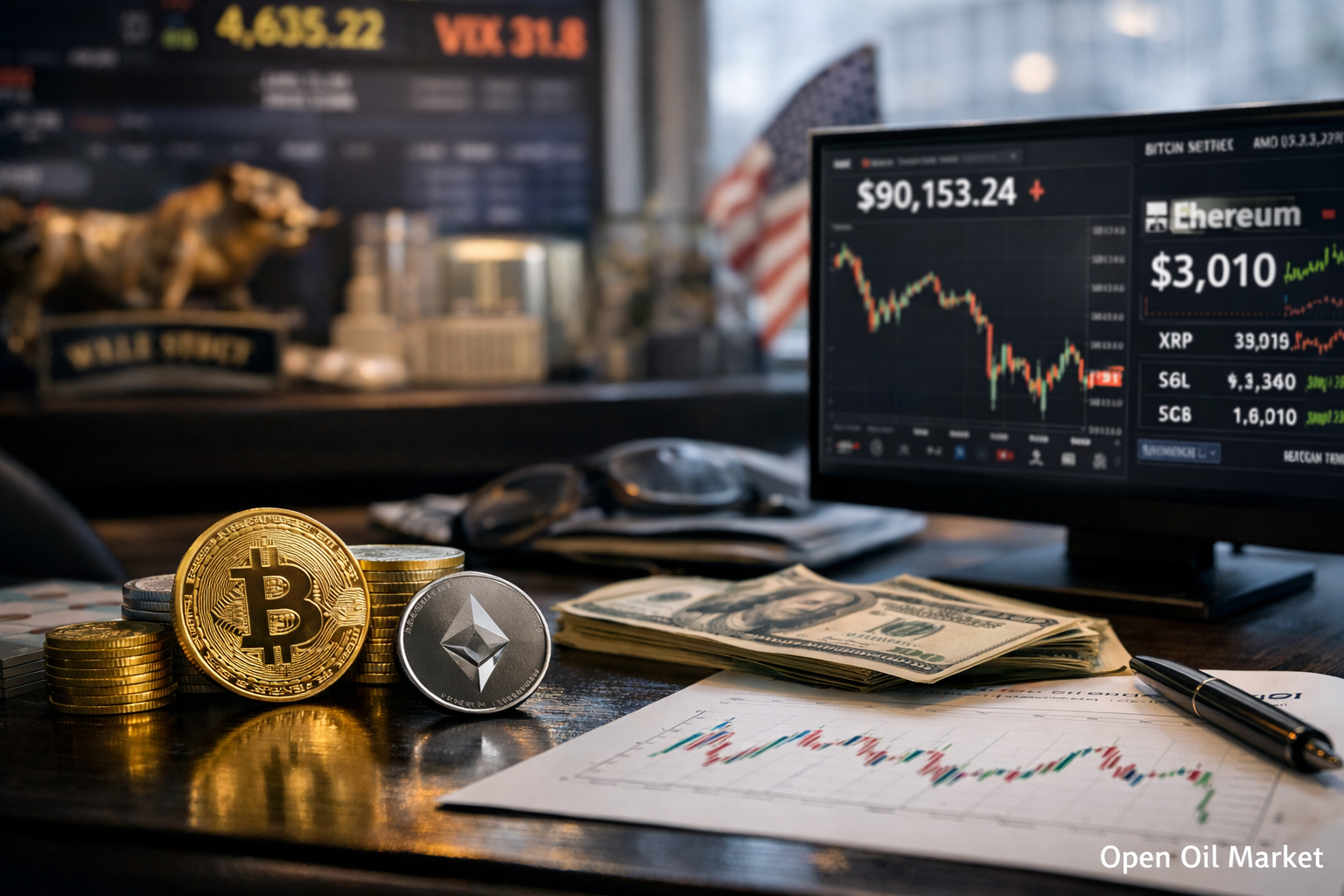
As the week draws to a close, the global cryptocurrency market is attempting to stabilize following a significant correction over the past few days. Bitcoin (BTC) is holding steady around the critical mark of $90,000, which is crucial for determining the market's future direction. Ethereum (ETH) and several other leading altcoins are seeking support to recover from recent declines. The total cryptocurrency market capitalization has shrunk to approximately $3 trillion amidst heightened macroeconomic uncertainty, with the Fear and Greed Index falling into the 'fear' territory, reflecting investors' cautious sentiment. Nevertheless, major institutional players are taking advantage of price dips to accumulate positions, providing support to the market and instilling hope for a swift stabilization.
Bitcoin Fights for the $90,000 Level
The flagship cryptocurrency, Bitcoin, is trading around $90,000 at the end of the week, having retreated from its all-time high of approximately $100,000 reached in early January. Over the past few sessions, BTC experienced a prolonged decline (about 10% from its peak), marking the longest pullback in the past year. The pressure on Bitcoin arose from a general decline in risk appetite across global markets: geopolitical and economic factors triggered sell-offs that extended to digital assets. However, the ~$90,000 mark serves as a key support level. As long as BTC remains above this threshold, the market stands a chance of avoiding a deeper drop. Some analysts note signs of a potential 'bottom': technical indicators suggest oversold conditions, and large investors are starting to actively purchase coins around current prices. A successful defense of the $90,000 area could pave the way for Bitcoin’s recovery, with bulls targeting the psychological barrier of $100,000, whose breach would reignite more confident bullish sentiment in the market.
Altcoin Market: Stabilizing After Decline
Alternative cryptocurrencies (altcoins) experienced significant declines alongside Bitcoin, but by Friday, initial signs of stabilization are emerging. Ethereum (ETH), the second-largest cryptocurrency by market capitalization, previously dropped below $3,000 but is currently trying to consolidate around this level. Over the last week, ETH has lost about 5%, reflecting the vulnerability of altcoins to the overall market correction. The broad market has also been under pressure, with the vast majority of the top 100 tokens experiencing losses in recent days, prompting investors to partially shift funds into stablecoins as a refuge from volatility. For instance, XRP (Ripple’s token) stabilized around ~$1.85–1.90 after a continuous seven-day decline; Binance Coin (BNB) fell approximately 6% over the week (to the $840–850 range); Solana (SOL) retreated to ~$130 despite a record ~70% of staked coins in the network. However, if Bitcoin maintains its current levels, pressure on altcoins may ease, allowing many of them to find a local bottom and cautiously transition to recovery. Investors are closely monitoring BTC as a key indicator: the stabilization of the leading coin often serves as a signal for resuming purchases in the altcoin segment.
Top 10 Most Popular Cryptocurrencies
As of today, the top ten largest and most popular cryptocurrencies by market capitalization include the following digital assets:
- Bitcoin (BTC) – the leading cryptocurrency, dominating the market (about 60% of the total capitalization). The price of BTC is holding near $90,000; after a powerful rally in 2025, Bitcoin is undergoing a correction from its all-time high but still confidently holds the first position and sets the tone for the entire crypto market.
- Ethereum (ETH) – the second-largest crypto asset and the foundational platform for smart contracts (decentralized finance, NFTs, and other applications). The current price of ETH is around $3,000; Ethereum is under pressure following Bitcoin but retains its key role in the industry. Many experts expect interest in Ethereum to grow in 2026 due to network developments (new upgrades, scalability) and expanded use cases.
- Tether (USDT) – the largest stablecoin pegged to the US dollar (1 USDT ≈ $1). The capitalization of USDT is approximately $80 billion; this stablecoin is widely used by market participants for hedging risks and preserving capital during periods of high volatility – during uncertain times, funds flow into digital dollars, maintaining its stable position in the top three.
- BNB (BNB) – the native token of the Binance ecosystem (the largest cryptocurrency exchange and BSC blockchain network). The price of BNB is around $850; due to its wide usage on the Binance platform and related services, BNB consistently remains among the top five cryptocurrencies. In recent days, the token has declined slightly amidst the overall negative market sentiment but continues to play a crucial infrastructural role in the crypto-ecosystem.
- USD Coin (USDC) – the second-largest stablecoin issued by the Centre consortium (Circle) and fully backed by reserves in US dollars (capitalization about $50 billion). USDC is widely used for payments, trading, and on DeFi platforms as one of the most reliable digital dollars. During periods of market turmoil, demand for such stablecoins rises, underscoring their significance in the industry.
- XRP (XRP) – a cryptocurrency associated with the fintech company Ripple (solutions for international payments). The price of XRP is around $1.90; in 2025, following Ripple’s notable victory over the SEC, this token surged in price and re-entered the leaderboards. The current market correction has somewhat diminished XRP's gains, but it still retains its position thanks to its active community and usage in payment applications.
- Solana (SOL) – a rapidly growing blockchain platform focused on high speed and transaction throughput. The price of SOL is around $130; Solana has solidified its position in the top ten thanks to its booming ecosystem development (DeFi, NFTs, etc.). Notably, a record ~70% of the entire SOL supply is staked, indicating community trust and long-term engagement from holders.
- Tron (TRX) – a popular smart contract and decentralized application blockchain platform known in Asia, also serving as a basis for issuing stablecoins and fast transfers with minimal fees. The price of TRX hovers around $0.30; the active use of the Tron network (including operations with USDT stablecoins) allows this token to maintain its place among the largest cryptocurrencies in the world.
- Dogecoin (DOGE) – a meme cryptocurrency originally created as a joke but has gained massive popularity over time. The price of DOGE is approximately $0.12; despite its ironic origin, Dogecoin remains one of the most capitalized coins. Its price is characterized by high volatility and largely depends on community sentiment and celebrity mentions; however, fan loyalty and a long history allow DOGE to maintain its position in the top ten.
- Cardano (ADA) – a blockchain platform for smart contracts that develops with a focus on a scientific approach and phased technological upgrades. The ADA token trades around $0.36; the project continues to implement technical improvements (for instance, recent upgrades enhanced the network’s scalability), which sustains investor interest. Thanks to the steady development of its ecosystem and an active community, Cardano remains among the leaders in the crypto market.
Geopolitical and Macroeconomic Factors
External conditions continue to significantly influence the sentiment of crypto investors. At the World Economic Forum in Davos (held from January 19-23), geopolitical issues took center stage: an unexpected escalation of trade tensions between the US and Europe has raised concerns about a new wave of protectionism. A statement by the US president at the forum, issuing an ultimatum to the EU regarding Greenland and potential tariffs, prompted a sharp reaction from European leaders. This confrontational rhetoric has brought transatlantic relations to the brink of a trade war, heightening investor concerns worldwide. As a result of this geopolitical noise, market participants have become averse to risk assets (stocks, cryptocurrencies), shifting towards traditional "safe havens."
Added pressure on the crypto market is also stemming from macroeconomic factors. Yields on US and EU government bonds remain elevated, reflecting expectations of tightening financial conditions. Precious metal prices have reached new heights: gold has surpassed its historical record, rising above $4,600 per ounce, while silver has also seen significant price increases. Meanwhile, the VIX volatility index remains at recent highs, signaling heightened uncertainty in financial markets. Ahead of the upcoming Federal Reserve meeting (scheduled for the end of January), investors are exercising caution – expectations for further comments on interest rates and inflation are dampening risk appetite. The combination of geopolitical tensions and a tough macroeconomic backdrop has led to a "risk-off" environment, in which cryptocurrencies are temporarily losing allure for some global investors.
Investor Sentiment and Volatility
Recent events have significantly impacted the sentiments of market participants in the cryptocurrency sector. The Fear & Greed Index has dropped into the 'fear' territory, indicating a prevailing sense of caution: investors are concerned about the potential continuation of the correction. Since the beginning of the week, the overall capitalization of the crypto market has declined by approximately $200 billion; however, the fall has paused in the last 24 hours. Volatility remains high: sharp price fluctuations have led to mass liquidations of margin positions. According to analytical services, excessive leverage was largely eliminated during several days of sell-offs, with positions worth over $2 billion liquidated in total. This, on one hand, intensified the short-term decline, and on the other, cleared the market of overheating. Many short-term speculators have exited the market, while long-term investors are holding their positions, banking on fundamental growth factors. It is worth noting that the current drop (around 10–15% from recent peaks) appears relatively mild in the historical context of cryptocurrency cycles. Several experts highlight that in comparison to past "crypto winters," this decline has been shallow, with the market exhibiting signs of maturity – broader institutional participation and regulatory frameworks are mitigating the amplitude of the fall. Nevertheless, short-term sentiment remains fragile, and any new negative news could again amplify volatility.
Institutional Investments and Adoption
Even amidst the current volatility, the interest of major players in digital assets remains high. The cryptocurrency industry continues to attract long-term investments and integrate into the traditional financial system:
- The American corporation MicroStrategy, one of the largest corporate holders of Bitcoin, increased its BTC reserves by approximately $2 billion this week, taking advantage of lower prices. According to the company, it now owns about 3% of the total Bitcoin supply – this demonstrates institutional business trust in cryptocurrency even during price downturns.
- Another large treasury company, Bitmine, made a significant purchase of Ethereum, increasing its holdings to an equivalent of ~3.5% of the total circulating supply of ETH. This move indicates that institutional investors see long-term value not only in Bitcoin but also in leading altcoins, and are prepared to build positions during price dips.
- Legislation initiatives, known as the Clarity Act, are being discussed in the US aimed at creating clear rules for the crypto industry. Despite delays in passage (last week the bill faced hurdles in the Senate), market participants expect it to be adopted in the foreseeable future. The emergence of clear regulatory frameworks (for example, for crypto exchanges and stablecoins) could significantly enhance market transparency and attract new institutional players.
- Traditional financial institutions continue to implement solutions related to crypto assets. Major banks and exchanges are launching products for investing in digital assets – from spot Bitcoin ETFs (several of which are already operational in the US, managed by leading firms with total assets in the tens of billions of dollars) to platforms for trading tokenized securities. Meanwhile, central banks are exploring the possibilities of digital currencies: for instance, in China, the functionality of the state digital yuan (e-CNY) is expanding, indirectly stimulating interest in fintech solutions worldwide. Such initiatives indicate that notwithstanding short-term price fluctuations, the integration of cryptocurrencies into the global economy is steadily progressing.
The combination of these factors confirms that major investors and organizations perceive the current correction more as an opportunity than a threat. The inflow of institutional capital and the development of infrastructure (regulation, new products, services) lay the foundation for future growth in the cryptocurrency market.
Outlook and Forecasts
The key question currently facing market participants is: how prolonged will the current correction be and what will follow it? The further prospects for cryptocurrencies will largely depend on the external environment and Bitcoin's ability to hold above key levels. The optimistic scenario suggests that the correction is temporary: after necessary 'breathers,' the market may resume its growth. For this to occur, easing external negativity is desirable – de-escalation of geopolitical conflicts and softer signals from central banks (slowing rate hikes or more favorable economic forecasts) could restore investor confidence. In this case, Bitcoin might attempt to rise again to levels above $100,000 in the coming weeks, which would pull the entire crypto market upwards.
However, a pessimistic scenario remains: if the pressure from negative factors intensifies, the decline could deepen. If the support around $90,000 breaks, analysts do not rule out Bitcoin sinking to around ~$75,000 and below. In an extremely negative scenario, levels as low as $50,000 are mentioned, although such a sharp decline would require a confluence of several adverse circumstances. For now, the market shows relative resilience: the current drawdown is significantly smaller than typical 'bear' cycles from previous years, and long-term investors and institutions continue to believe in the potential of cryptocurrencies. Many observers see the current situation as a phase of market healing – the exit of speculative capital and the transition of assets into "stronger hands." As external turbulence settles and volatility decreases, the cryptocurrency sector may gain momentum for growth based on accumulated fundamental factors. The expansion of institutional participation, technological development of blockchain platforms, and new use cases (ranging from global payments to asset tokenization) are creating premises for the next bullish market phase in the future. As a result, most investors are currently adopting a wait-and-see approach, ready to increase their investments as soon as signs of sustainable stabilization and recovery trends emerge.