Cryptocurrency News for Tuesday, June 23, 2026: Bitcoin Holds Around $64,000, Ethereum Remains Under Pressure, Stablecoins Gain Regulatory Momentum, and Investors Assess the Top 10 Cryptocurrencies and Prospects for Real Asset Tokenization
The cryptocurrency market is approaching Tuesday, June 23, 2026, in a state of cautious consolidation. After weeks of volatility, Bitcoin is holding close to the $64,000 mark, Ethereum is under pressure from weak altcoin dynamics, and global investors are increasingly attentive to not only price movements but also regulatory news, ETF inflows, stablecoins, and the tokenization of real assets.
For investors, the key question now is not whether a new rally has begun, but whether the cryptocurrency market can establish a stable base after the correction. Liquidity, demand from institutional players, regulation of digital assets, and the state of the largest cryptocurrencies in the top 10 are taking center stage.
The Main Market Picture: Consolidation Instead of Euphoria
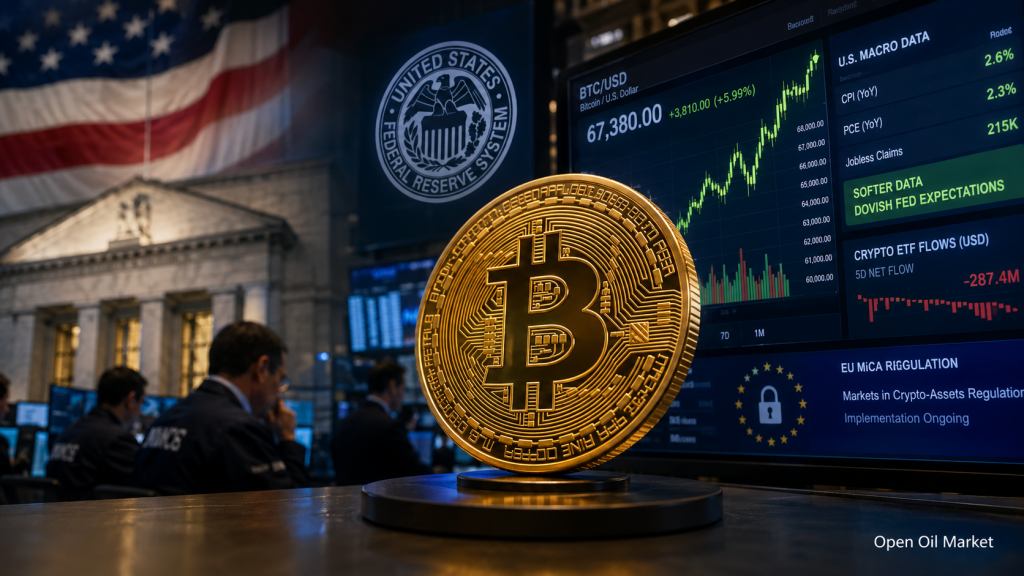
Bitcoin is trading around $64,300, remaining the main indicator of sentiment in the digital asset market. The intraday range for BTC indicates that buyers are attempting to keep the market from a deeper correction, but there is not yet enough strong upward momentum. Ethereum is hovering around $1,730, indicating weaker dynamics for the second-largest crypto asset compared to Bitcoin.
Major cryptocurrencies are displaying a mixed picture:
- Bitcoin maintains its status as a safe haven asset within the crypto market;
- Ethereum remains under pressure despite interest in tokenization and smart contracts;
- BNB shows relative resilience due to ecosystem demand;
- Solana and XRP remain volatile as investors tread cautiously with altcoins;
- Stablecoins USDT and USDC continue to serve as the market's settlement infrastructure.
For investors, this indicates that cryptocurrencies are currently not in a phase of mass risk appetite but rather in a phase of selecting quality assets. Money is concentrating in the largest coins, liquid stablecoins, and foundational blockchains.
Bitcoin: The Market Awaits a Breakout from Range
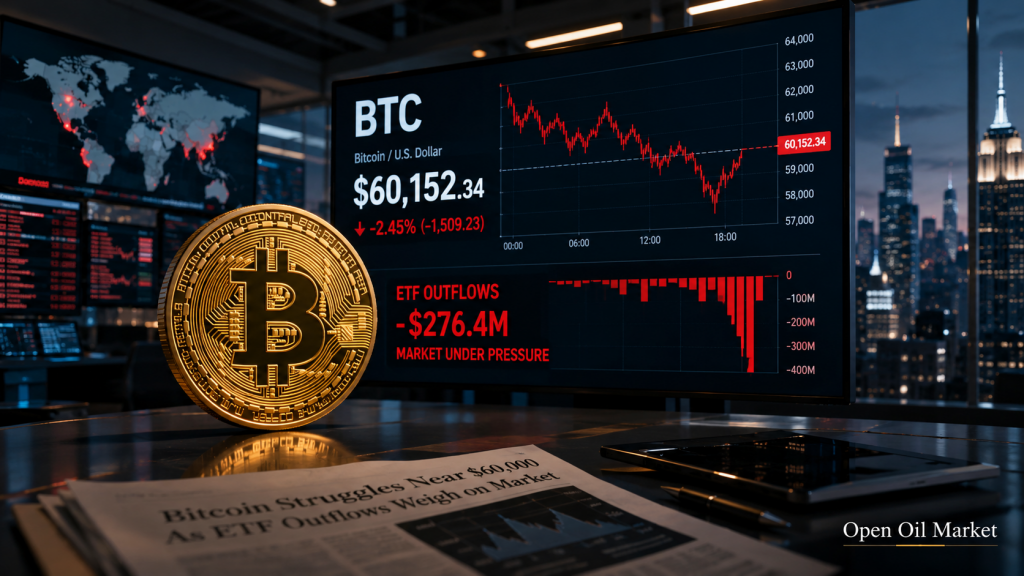
Bitcoin remains in the spotlight for global investors. The main technical zone for BTC is currently between support around $60,000 and resistance around $68,000. As long as the price remains within this corridor, the cryptocurrency market retains a cautiously neutral character.
Pressure on Bitcoin is linked to several factors. First, investors are evaluating ETF inflow dynamics: after a period of active institutional demand, the market has faced a pause and outflows from some Bitcoin funds. Second, macroeconomic uncertainty remains high: interest rates, inflation, dollar liquidity, and geopolitical risks continue to influence demand for risk assets.
Despite this, long-term holders of BTC are not exhibiting panic selling. This is an important signal for the market: despite the correction, Bitcoin is still viewed by major investors as a core digital asset rather than a short-term speculative instrument.
Ethereum: Weak Price but Strong Infrastructure Role
Ethereum appears weaker than Bitcoin in price dynamics; however, the fundamental role of the network remains significant. ETH is trading around $1,730, and investors continue to assess Ethereum's prospects in several areas: tokenization of real assets, DeFi, stablecoins, corporate blockchain products, and smart contracts.
The primary positive factor for Ethereum is the growing interest from traditional financial companies in issuing regulated investment products on the blockchain. The launch of tokenized funds based on Ethereum and Solana signals that public blockchains are increasingly being viewed not only as crypto infrastructure but also as a technological foundation for future financial markets.
For investors, Ethereum now represents an asset with a contradictory profile: the price remains under pressure, but the infrastructural value of the network is intact. This makes ETH an important asset for long-term observation, especially if the sector of real asset tokenization continues to grow.
Stablecoins: Regulation Becomes the Main Driver
Stablecoins remain one of the most resilient segments of the cryptocurrency market. USDT and USDC continue to hold leading positions in terms of capitalization and liquidity, serving as the digital dollar for traders, exchanges, DeFi protocols, and international settlements.
The main news for the sector is the easing of the regulatory approach to stablecoins in the UK. Regulators have moved away from strict individual ownership limits and adopted a model that restricts the overall issuance volume of systemically important stablecoins. The reserve requirements that issuers must hold in a central bank have also been reduced, making the business model of stablecoins more viable.
This is an important signal for the global market. If major financial jurisdictions build clear rules for stablecoins, the sector could become a bridge between traditional finance and cryptocurrencies. For investors, this raises the significance of assets like USDT, USDC, as well as the foundational blockchains through which the main turnover of stablecoins occurs.
RWA Tokenization: A New Institutional Market Theme
Tokenization of real-world assets, or RWA, is becoming one of the major investment themes of 2026. This involves converting bonds, funds, treasury instruments, private credit, and other financial assets into a blockchain format.
For investors, this direction is important for three reasons:
- It brings the cryptocurrency market closer to traditional finance;
- It creates new demand for blockchains with high reliability and liquidity;
- It could increase the role of Ethereum, Solana, and other networks in institutional infrastructure.
Whereas previously cryptocurrencies were perceived primarily as a speculative market, blockchain is increasingly being utilized as a technological shell for regulated financial products. This shifts the investment focus: not only are the prices of coins important, but so is the real-world application of networks.
Top 10 Most Popular Cryptocurrencies for Investors
The largest and most popular cryptocurrencies continue to serve as the main benchmarks for investors assessing liquidity, capitalization, ecosystem resilience, and market demand. On June 23, 2026, the following digital assets are in focus:
- Bitcoin (BTC) — the leading digital asset of the market, a benchmark for the entire cryptocurrency sector.
- Ethereum (ETH) — the leading smart contract platform for DeFi and asset tokenization.
- Tether (USDT) — the largest stablecoin, a primary tool for liquidity and settlements.
- BNB (BNB) — the ecosystem token linked to exchange and blockchain infrastructure.
- USD Coin (USDC) — a regulated dollar stablecoin popular among institutional participants.
- XRP (XRP) — a token for payment infrastructure and cross-border settlements.
- Solana (SOL) — a high-performance network for dApps, DeFi, NFTs, and tokenization.
- TRON (TRX) — a blockchain actively used for stablecoin transfers.
- Hyperliquid (HYPE) — a rapidly growing asset linked to on-chain trading and derivatives.
- Dogecoin (DOGE) — the largest meme cryptocurrency maintaining high recognition and liquidity.
Additionally, Cardano (ADA) is worth watching, as it remains popular among retail investors and could return to the top ten depending on capitalization dynamics and demand for altcoins.
Altcoins: Cautious Demand and High Volatility
Altcoins remain the riskiest part of the cryptocurrency market. Solana is trading around $73, XRP at $1.13, Dogecoin at $0.083, Cardano at $0.159, and TRON at $0.332. This dynamic shows that investors are not yet ready to return en masse to risky digital assets without a new market catalyst.
The main risks for altcoins are:
- Weak liquidity outside of the largest coins;
- Dependence on retail trader sentiment;
- Regulatory uncertainty;
- Strong correlation with Bitcoin during market downturns;
- High likelihood of sharp movements on news and liquidations.
In contrast, altcoins could show leading growth if risk appetite returns. For investors, it is important to distinguish between infrastructure projects, stablecoin networks, meme tokens, and speculative assets with weak fundamental bases.
Macroeconomics and Geopolitics: Why the Crypto Market Depends on the External Environment
Cryptocurrencies remain sensitive to global liquidity. Investors are monitoring inflation, interest rate expectations, dollar dynamics, stock market performance, oil prices, and geopolitical risks. In times of increasing uncertainty, capital tends to flee from volatile assets to cash, bonds, gold, or defensive stocks.
For Bitcoin and Ethereum, signals from central banks are particularly important. If the market begins to price in a softer monetary policy, cryptocurrencies could receive support. Conversely, if interest rate expectations tighten again, pressure on digital assets may persist.
An additional factor is competition for capital. In 2026, some investors are shifting their focus to artificial intelligence, large tech IPOs, and megacorporation stocks. This is reducing the inflow of new money into cryptocurrencies and making the market more dependent on institutional buyers.
What Investors Should Focus on June 23, 2026
On Tuesday, June 23, 2026, investors should closely monitor not just the Bitcoin price but also market structure. The key focal points for the day are:
- Will Bitcoin hold the range around $64,000;
- Can Ethereum recover after weak dynamics;
- Will the pressure on Bitcoin-ETF continue or will there be signs of returning capital inflows;
- How will the market react to developments in stablecoin regulation;
- Will institutional news on RWA tokenization support Ethereum and Solana;
- Will the stability of USDT and USDC as key liquidity instruments persist;
- Will there be demand for altcoins outside the top 10.
The overall picture remains cautiously neutral. The cryptocurrency market does not appear overheated, but it is also not exhibiting a full upward turnaround. For investors, a prudent strategy now is to focus on liquid assets, manage exposure to high-risk altcoins, and carefully track news on ETFs, stablecoins, regulation, and real asset tokenization.
The key takeaway: the market enters June 23 with moderate recovery but without signs of stable euphoria. Bitcoin remains the main indicator of trust, Ethereum serves as an infrastructural bet on blockchain development, while stablecoins and RWA tokenization are becoming critical themes that may define the next stage of growth for digital assets.