Current Cryptocurrency News as of March 2, 2026: Dynamics of Bitcoin and Ethereum, Flows into Bitcoin ETFs, Institutional Demand, Situation in the Global Crypto Market, and a Review of the Top 10 Most Popular Cryptocurrencies for Investors
The cryptocurrency market greets March in a "stress test" mode: investors are simultaneously digesting the strengthening global risk-off sentiment while closely monitoring whether institutional demand is returning through Bitcoin exchange-traded funds (ETFs). This is crucial for the market: during such periods, it is not individual news that moves quotes, but a combination of capital flows, liquidity expectations, and regulatory background.
The key intrigue of the day is whether the positive momentum in inflows into spot Bitcoin ETFs will be maintained and if the largest assets can hold their demand structure after a volatile week.
Macroeconomics and Global Risks: Why "Risk" is Under Pressure Again
Cryptocurrencies continue to trade as assets highly sensitive to moods in global markets. When risk appetite declines, correlation with the tech sector and high-beta assets strengthens, while safe-haven assets gain relative advantage.
What This Means for Investors
- Focus on Trade Policy and Geopolitics: such issues often change inflation and rate expectations, thus affecting the cost of capital for risky assets.
- Change in Volatility Regimes: in risk-off periods, short-term "liquidity wipes" due to stop-losses occur more frequently, especially in altcoins.
Bitcoin: The Market Balances Between "Digital Gold" and Risk Asset
Bitcoin enters the week amid discussions about whether it is losing its role as a "safe" asset in the eyes of some investors. In practice, it has become noticeable in recent sessions that when uncertainty rises, BTC can decrease in sync with risk assets — and this is critical for portfolio positioning.
Three Observations on BTC
- Liquidity Premium is More Important than Narrative: when risk is reduced, money flows out of high-beta segments faster than long-term beliefs change.
- Levels are Secondary Without Flows: the technical picture often "breaks" during large capital movements through ETFs and derivatives.
- Attention to Corporate Holders: the activity of large public players supports the theme of long-term demand but does not negate short-term declines.
Institutional Demand: Bitcoin ETFs Back in Focus
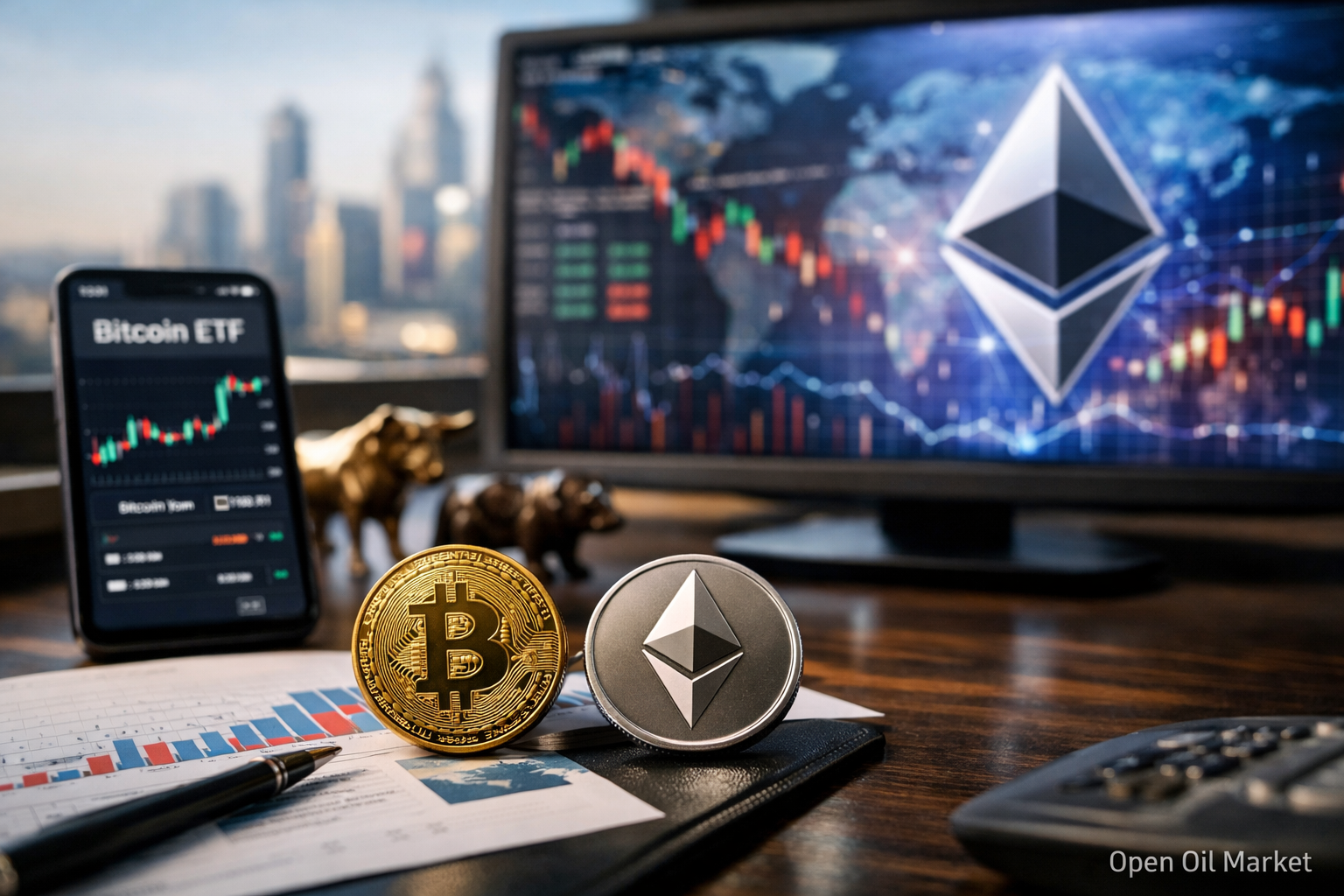
For the market, this is one of the main indicators of "real money." Amid volatility, there are signs of improving weekly flow dynamics into Bitcoin ETFs — a factor that can stabilize prices even during a nervous macroeconomic backdrop.
Why the Turnaround in Flows is Important
- ETFs are Measurable Demand: unlike sentiments on social media, flows provide a quantitative picture.
- Support for Liquidity: stable inflows reduce market fragility during sell-offs.
- Signal for Managers: a return of inflows is often perceived as a confirmation of interest in strategic positions.
Corporate Purchases: Betting on Bitcoin as a Long Cycle
Public companies that continue to increase their positions in BTC remain a separate "layer" of demand and simultaneously a source of discussions about risks. Purchases during declines support the thesis of long-term faith in the asset but also increase such companies' sensitivity to Bitcoin's volatility and market expectations.
How to Interpret This
- Positive: demonstration of readiness to hold/buy during declines strengthens the narrative of "strategic asset."
- Risk: concentration and leverage (direct or indirect) can amplify the volatility of stocks and debt instruments of holding companies.
Ethereum: Roadmap 2026 and the Theme of "Simplifying User Experience"
Ethereum enters March with a heightened focus on network development plans for 2026. The market is carefully reading signals regarding scaling, security, and enhancing user experience — factors that will determine how quickly the ecosystem can expand real applications (DeFi, tokenization, corporate scenarios).
What's Potentially Driving the ETH Ecosystem
- Scaling: reduced costs and increased throughput enhance the competitiveness of L2 and applications.
- Account Abstraction: simplifying "crypto-UX" can broaden the mass adoption of wallets and on-chain services.
- Security and Resilience: strengthening protections and research into long-term threats enhance institutional trust.
Altcoins: Selectively Strong Stories and Increased Risk Discipline
Rotation within altcoins remains "spotty": in a risk-off environment, investors often prefer liquid assets and clear cases (infrastructure, scaling, payment tokens), while speculative segments quickly lose demand at the first wave of profit-taking.
Position Management Practices in Altcoins
- Bet on Liquidity: during moments of stress, spreads widen, and exiting illiquid tokens becomes more costly.
- Limit Position Size: high beta requires a smaller weight in the portfolio amid an uncertain macro backdrop.
- News Triggers: listings, protocol updates, regulatory decisions, and project reports can provide short "windows" of volatility.
Stablecoins and DeFi: Barometer of Trust and Activity
In a mature market, stablecoins are not just "digital dollars," but indicators of how much capital is ready to remain within the crypto ecosystem. Growth in stablecoin usage and activity in DeFi often signals sustained interest in on-chain yields and payment scenarios, even when the spot market is jittery.
What to Look Out For
- Capitalization Dynamics of Major Stablecoins: inflow/outflow is an early signal of changes in demand for risk.
- Yield Rates in DeFi: spikes in yields can indicate liquidity stress or increased borrowing demand.
- Smart Contract Risks: during periods of volatility, the cost of errors and exploits rises, making security discipline critical.
Top 10 Most Popular Cryptocurrencies: The "Core" of the Market and Portfolio Logic
For global investors, the "top by market capitalization" remains a liquidity and market representativeness benchmark. Even if strategies differ, the market core is typically formed by the largest assets and stablecoins, around which trading and settlement infrastructure is built.
Top 10 by Market Capitalization (Market Benchmark)
- Bitcoin (BTC)
- Ethereum (ETH)
- Tether (USDT)
- Binance Coin (BNB)
- XRP (XRP)
- USD Coin (USDC)
- Solana (SOL)
- TRON (TRX)
- Dogecoin (DOGE)
- Cardano (ADA)
Investor’s Plan for the Day
On Monday, March 2, the market will be testing resilience after a volatile week: will inflows into Bitcoin ETFs be confirmed, and will interest in the "core" of the market — BTC and ETH — remain? At the same time, the macro backdrop remains decisive: any surge in uncertainty can quickly pull liquidity away from altcoins to the largest assets and stablecoins.
A working strategy for the day: maintain focus on flows (ETFs), news regarding global risks, and events in the Ethereum ecosystem; for altcoins — heightened discipline in position size and prioritizing liquidity.