Cryptocurrency Market on 23 May 2026: Bitcoin, Ethereum, Solana, Stablecoins, ETF, Digital Asset Regulation, Tokenisation and Mining in Focus for Global Investors
Cryptocurrencies approach Saturday, 23 May 2026, in a state of measured equilibrium: after the volatile moves of recent days, investors are assessing not just the performance of bitcoin and ethereum, but a broader set of factors — digital asset regulation in the United States and Europe, demand for crypto ETFs, the evolution of the stablecoin market, institutional investor interest, and the state of global risk appetite.
The main theme for the crypto market now is not the short-term rise of individual tokens, but the question of sustainability for the entire digital sector. Investors are increasingly viewing the crypto market as part of the global financial system, where bitcoin, Ethereum, Solana, XRP, BNB, stablecoins and other digital assets react to interest rates, inflation expectations, geopolitics, liquidity and regulatory decisions.
For global investors, cryptocurrencies remain a high-risk but strategically important asset class. The market continues to see demand for bitcoin as the leading digital asset, competition among blockchain platforms intensifies, and stablecoins are becoming a key infrastructure for settlements, trading and cross-border liquidity.
Bitcoin remains the primary indicator of investor sentiment
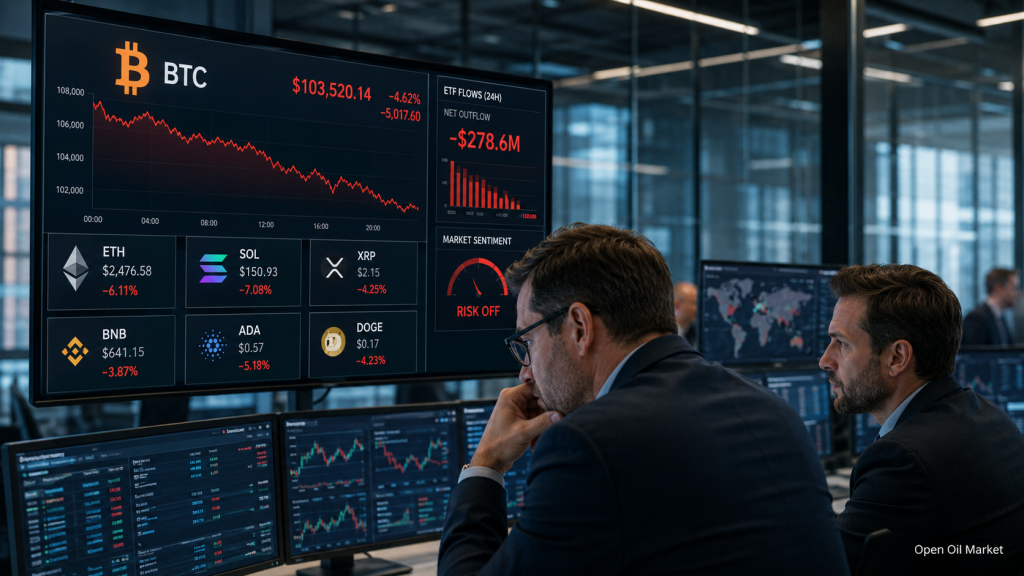
Bitcoin continues to serve as the main barometer of the cryptocurrency market. After recent fluctuations, investors are assessing whether BTC can hold above important psychological levels and regain a confident upward momentum. For now, the market appears cautious: buyers have not fully retreated, but there is no aggressive inflow of capital into risk assets either.
For institutional investors, bitcoin remains the most straightforward digital asset. It is perceived as a diversification tool, a potential hedge against the long-term depreciation of fiat currencies, and a highly liquid asset within the crypto market. However, in the short term, BTC is increasingly dependent on global macroeconomics: rate expectations, bond yields, equity index movements, and demand for risk.
The key factor for bitcoin in the coming days is the market's ability to sustain buyer interest without a sharp rise in leverage. If the recovery is accompanied by moderate volume and declining volatility, this could indicate accumulation. If growth is driven solely by speculative positions, the risk of another correction remains high.
Ethereum and infrastructure blockchains: focus on DeFi, tokenisation and fees
Ethereum remains the second centre of attention after bitcoin. For investors, ETH is important not only as a cryptocurrency, but as an infrastructure asset linked to DeFi, tokenisation of real-world assets, NFTs, corporate blockchain solutions and staking. It is around Ethereum that the market assesses the prospects for digital assets to move from a speculative environment into a more mature financial infrastructure.
At the same time, competition is intensifying. Solana continues to draw attention thanks to its high throughput, activity in consumer applications, DeFi and meme tokens. BNB Chain retains its significance due to the Binance ecosystem, while TRON remains an important channel for stablecoin transfers and cross-border payments.
For investors, it is important to distinguish between two groups of assets:
- infrastructure blockchains, where value depends on network activity, fees, developers and applications;
- speculative tokens, where price movement is more often determined by liquidity, news and short-term demand.
In 2026, the market will increasingly evaluate not only project market capitalisation, but also real usage metrics: transaction count, stablecoin volume on the network, validator revenue, developer activity and ecosystem resilience.
US regulation becomes a central driver of the crypto market
One of the key themes for cryptocurrencies on 23 May 2026 is the progress of digital asset regulation in the United States. The market is closely watching initiatives that could provide clearer rules for crypto exchanges, tokens, stablecoins, ETFs and institutional products.
For the crypto market, regulatory clarity has a dual effect. On one hand, it can reduce uncertainty and open the door for large institutional investors, banks, asset managers and payment services. On the other hand, stricter rules could increase pressure on certain tokens, exchanges and DeFi platforms, especially if regulators demand disclosure, reserves, risk controls and compliance with investor protection requirements.
Investors are particularly focused on three areas:
- the legal status of cryptocurrencies and the classification of tokens into commodity, payment and investment instruments;
- rules for crypto ETFs and other regulated investment products;
- the regulatory regime for stablecoins and requirements for issuer reserves.
If the United States can establish a more predictable regulatory framework, this could become an important factor of long-term support for the digital asset market. However, in the short term, any legislative news may amplify volatility.
Tokenisation of equities and real-world assets moves into the spotlight
A separate important trend is tokenisation of traditional financial instruments. The market is increasingly discussing the possibility of trading tokenised versions of equities, bonds, funds and other assets through crypto infrastructure. For investors, this potentially changes the architecture of the global capital market.
Tokenisation can offer several advantages: round-the-clock trading, faster settlement, fractional ownership, lower costs, and access to assets for a broader audience. But at the same time, questions arise: who is responsible for investor rights, how is token backing verified, will holders receive dividends and voting rights, and how are such instruments regulated across different jurisdictions.
For the crypto market, this direction is especially important because it connects blockchain not only with digital coins, but with real financial infrastructure. If tokenisation receives support from major regulators and institutions, demand for blockchain networks, stablecoins and infrastructure tokens could grow significantly.
Stablecoins become a systemic part of the digital economy
Stablecoins remain one of the most important segments of the cryptocurrency market. Tether, USDC and other dollar-pegged tokens are used for trading, settlements, moving capital between exchanges, storing liquidity and cross-border payments. For many investors, stablecoins have already become not just a supplementary tool, but a basic infrastructure of the digital asset market.
Regulators in the United States, United Kingdom, Europe and Asia are paying increasing attention to stablecoins. The main questions relate to reserves, transparency, asset quality, potential impact on the banking system, and risks of mass withdrawals during periods of stress.
For investors, it is important to understand: stablecoins are not a capital growth instrument, but they are critically important for crypto market liquidity. If stablecoin regulation becomes more clear, this could boost confidence in digital payments. If rules prove too stringent, some liquidity may shift to less regulated jurisdictions.
Crypto ETFs and institutional capital
Crypto ETFs remain one of the main channels for institutional investors to enter the digital asset market. After the introduction of regulated products on bitcoin and ethereum, asset managers, family offices, pension funds and professional investors gained a more familiar way to work with cryptocurrencies without directly holding tokens.
There is continued interest in expanding the range of ETFs and derivative instruments. Potential products on Solana, XRP, Cardano, Chainlink and other major assets could be the next stage of crypto market institutionalisation. However, investors will evaluate not only the asset's name, but also its liquidity, legal status, market depth, quality of custodial infrastructure and network resilience.
ETFs change the demand structure for cryptocurrencies. In the past, the market was more dependent on retail traders and speculative cycles. Now, capital flows through regulated funds, supply and demand balances, asset manager reports and the behaviour of large institutional participants are becoming increasingly important.
Top 10 most popular cryptocurrencies for investors
Below is an indicative top 10 of the most popular and significant cryptocurrencies by market role, capitalisation, liquidity and global investor attention. The list reflects market structure but is not an investment recommendation.
- Bitcoin (BTC) — the leading digital asset and primary indicator of sentiment in the crypto market.
- Ethereum (ETH) — the largest infrastructure network for DeFi, tokenisation, staking and smart contracts.
- Tether (USDT) — the largest stablecoin and a key instrument for dollar liquidity.
- BNB (BNB) — the token of the Binance ecosystem and one of the largest exchange infrastructure assets.
- XRP (XRP) — a digital asset associated with payments and cross-border settlements.
- USDC (USDC) — a regulated dollar stablecoin in demand among institutional participants.
- Solana (SOL) — a high-performance blockchain platform for DeFi, applications and consumer services.
- TRON (TRX) — a network with high activity in the stablecoin and cross-border transfer segment.
- Dogecoin (DOGE) — the largest meme asset with high brand recognition and speculative liquidity.
- Cardano (ADA) — a blockchain platform focused on formal development, scalability and long-term ecosystem growth.
For global investors, this list serves as a market map: BTC and ETH form the foundation, stablecoins provide liquidity, Solana, BNB Chain, TRON and Cardano compete in infrastructure, while XRP and Dogecoin reflect different demand models — from payment use cases to retail speculation.
Macroeconomics and geopolitics remain a risk for digital assets
Cryptocurrencies are increasingly less isolated from traditional markets. Bitcoin and Ethereum are more frequently reacting to the same factors as technology equities: rate expectations, inflation data, treasury bond yields, dollar liquidity and geopolitical risks.
If investors anticipate monetary tightening, demand for risk assets may decline. If the market sees signs of central bank policy easing, cryptocurrencies typically receive support. Therefore, in the coming days, investors will watch not only blockchain industry news, but also global macroeconomic indicators.
Particular importance is placed on:
- US interest rate expectations;
- dollar and bond yield dynamics;
- capital flows into crypto ETFs;
- news on digital asset regulation;
- geopolitical events affecting overall risk appetite.
For investors, this means that crypto analysis must include not only blockchain metrics, but the macroeconomic picture.
What investors should monitor on 23 May 2026
Entering Saturday, 23 May 2026, the crypto market lacks a clear signal: the long-term institutional story remains strong, but short-term dynamics depend on macroeconomics, regulation and liquidity flows. It is important for investors not to overreact to individual news and to view the overall market structure.
Five areas remain at the centre of attention:
- Bitcoin — holding key levels and the behaviour of institutional demand.
- Ethereum — network activity, ETF prospects, staking and the DeFi sector.
- Stablecoins — regulation, reserves, market share of USDT and USDC.
- Altcoins — Solana, XRP, BNB, TRON, Cardano and Chainlink as indicators of demand for infrastructure projects.
- Regulation — decisions by the United States, United Kingdom and other key jurisdictions on digital assets.
The main takeaway for investors: in May 2026, the cryptocurrency market can no longer be viewed as an isolated speculative niche. It is becoming part of the global financial market, where bitcoin, Ethereum, stablecoins, ETFs, tokenisation and regulation are shaping a new investment infrastructure. But along with this, requirements for risk analysis are also growing: liquidity, legislation, volatility and macroeconomics become as important as the technological prospects of blockchain projects.
Saturday, 23 May 2026, could be a day of consolidation and reassessment of expectations for the crypto market. For long-term investors, this is a period to observe structural trends; for short-term participants, it is a time of heightened discipline, risk control and a cautious attitude toward market noise.