Current Cryptocurrency News for Thursday, December 18, 2025: Bitcoin Dynamics, Altcoin Market Situation, Top-10 Cryptocurrencies, Investor Sentiment, and Key Global Trends in Digital Assets.
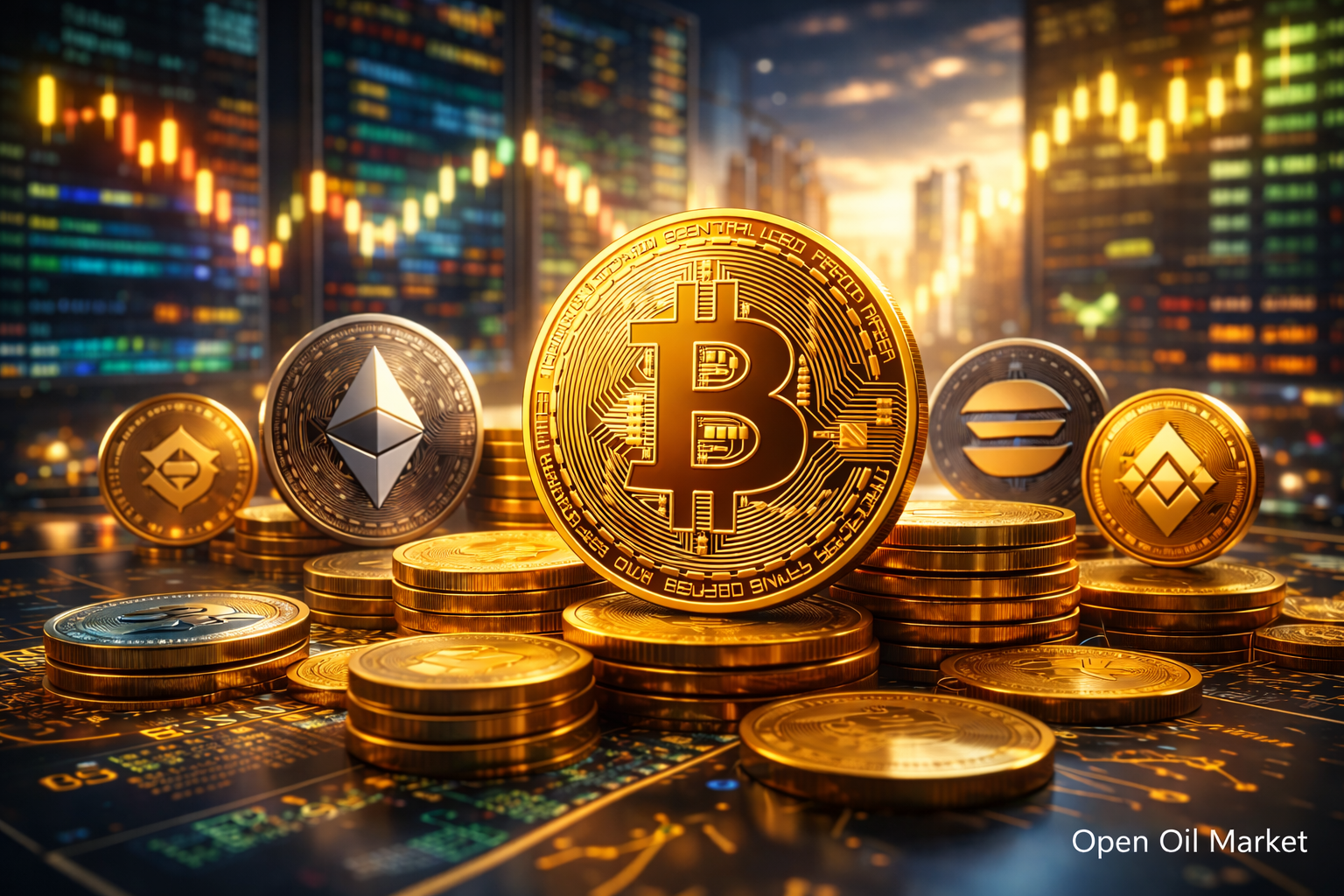
The cryptocurrency market is entering the end of 2025 with increased volatility. Following a recent correction, the flagship Bitcoin (BTC) is consolidating around the $85,000–$86,000 mark, maintaining its position above key support levels. Investors exhibit caution, as the fear and greed index has reached a record duration in the "extreme fear" zone, reflecting the prevailing nervousness in the market. Nevertheless, despite the sell-offs in altcoins, institutional interest in cryptocurrencies remains intact, and regulators are gradually providing more clarity in the playing field.
Market Overview: Correction and Investor Sentiment
Just a few months ago, the cryptocurrency market was on the rise, with Bitcoin reaching an all-time high of about $126,000 in mid-2025. However, a significant correction followed—around 30%, bringing it down to the current ~$85,000 per BTC. The total market capitalization of cryptocurrencies has decreased to around $3 trillion, indicating the scale of profit-taking and capital outflow from risk assets. Investor sentiment has noticeably deteriorated: the fear and greed index has remained in fear mode for an extended period, signaling that market participants are concerned about further declines. This is partly linked to the macroeconomic backdrop—despite the Federal Reserve starting to lower interest rates (the current range has dropped to 3.5%–3.75%), worries about the economy and year-end have driven many to exercise caution. However, several analysts point out that such strong fear often precedes market bottoms, indicating possible oversold conditions in the market.
Bitcoin: Consolidation After Rally
Bitcoin is holding its ground in the mid-$80,000 range, showing relative stability after a swift rally and subsequent correction. Sellers have dominated recently: short-term holders who realized significant profits during the rise have transferred thousands of BTC to exchanges, inciting a price drop to a recent low of about ~$84,000–$85,000. This pullback has also impacted traditional markets—for instance, shares of MicroStrategy, which holds a large BTC reserve, fell in sync with BTC prices, highlighting the interconnection between cryptocurrencies and the stock market. However, below $80,000, Bitcoin has seen demand from long-term investors: market participants report that large "whales" and even some nations (like El Salvador) have taken advantage of the downturn to purchase additional BTC. Analysts highlight areas around ~$70,000 as significant long-term support, while for a bullish trend to resume, Bitcoin needs to break the psychological barrier at $100,000. Overall, despite the current downturn and prevailing fear, Bitcoin is still significantly more expensive than it was a year ago, reflecting its steady growth and status as "digital gold" in the eyes of many investors.
Ethereum and the Altcoin Market
Following Bitcoin, major altcoins have also come under pressure. The second largest cryptocurrency by market capitalization, Ethereum (ETH), has dropped below the psychologically important $3,000 mark. Volatility has heightened with a sharp surge in liquidations of margin positions, temporarily driving ETH down to its lowest values in recent weeks. Nevertheless, Ethereum remains the foundational platform for decentralized finance (DeFi) and NFTs, and interest in the network is unwavering—recent updates have improved its scalability, and developers continue to enhance the protocol's efficiency.
Other altcoins have shown a mixed dynamic, primarily leaning towards declines. Many top assets have recorded substantial one-day losses during the recent sell-off; for instance, the price of Solana (SOL) fell nearly 9%, briefly testing a level around $125. Pressure on Solana increased following reports of another DDoS attack on its network; however, the platform withstood the load, and SOL prices stabilized, remaining among the top ten coins. The XRP token has retraced by about 8% from recent local highs—earlier, XRP was nearing $2 on a wave of positive news regarding Ripple's victory in a court battle with the SEC, but general market sentiment left no chance for the coin to avoid correction. Among other significant altcoins, BNB is trading around $850, holding most of its gains made throughout the year despite legal risks surrounding the Binance exchange. TRON (TRX) demonstrates relative stability (around $0.28), benefiting from ongoing network usage for stablecoins and remittances, especially in the Asian region. Even "meme" cryptocurrencies like Dogecoin (DOGE) have felt the overall decline in sentiment—DOGE is fluctuating around $0.13 without significant surges, although the community remains loyal to the coin. Overall, the altcoin segment is influenced by a general flight from risk: investors are trimming positions in more volatile assets, anticipating market stabilization. The only exceptions are some DeFi projects—thanks to recent news about regulation (see below), certain decentralized platforms have managed to limit their drawdown, indicating sustained confidence in the prospects of the DeFi sector.
Regulatory News: New Course and Precedents
The regulatory landscape surrounding cryptocurrencies is gradually becoming clearer, creating both risks and new opportunities for the market. In the United States, the Securities and Exchange Commission (SEC) is signaling a more active regulation of the industry: recently, the SEC unexpectedly closed a lengthy four-year investigation into the DeFi platform Aave without filing charges. This step has been perceived by market participants as a positive precedent, indicating the possibility of peaceful coexistence between decentralized financial services and regulatory requirements. Simultaneously, regulators continue to pursue malicious actors: for instance, Terraform Labs founder Do Kwon (responsible for the collapse of the Terra/Luna ecosystem in 2022) faces new lawsuits and potential sentences, underscoring the authorities' resolve worldwide to hold accountable participants in major crypto scandals.
In Europe and the UK, a clearer regulatory course is taking shape. The UK has announced that it will finalize a comprehensive regulatory system for cryptocurrencies by 2026, which will integrate digital assets into the legal framework alongside traditional finances under the supervision of the Financial Conduct Authority (FCA) by 2027. These initiatives are aimed at ensuring greater transparency and investor protection, although they may lead to tighter requirements for the crypto business. At the same time, cryptocurrencies are attracting attention at the highest political levels: US President Donald Trump recently stated that he would consider the possibility of pardoning Bitcoin wallet developer Samourai, convicted of violating financial regulations. This unusual gesture illustrates how deeply the topic of cryptocurrencies has penetrated the socio-political agenda. Overall, it is expected that in 2026, regulators will intensify their focus on the crypto industry—establishing clear “rules of the game” could reduce the level of uncertainty for major investors and accelerate institutional adoption of cryptocurrencies.
Institutional Investors and Integration into Traditional Business
Despite a temporary cooling of retail interest, major institutional players continue to invest in cryptocurrencies and implement blockchain technologies. Recently, investment giant Fidelity confirmed that it has been actively building positions in Bitcoin during the price decline. Fidelity's CEO Abigail Johnson publicly referred to Bitcoin as "the gold standard" of digital assets, stating that she personally holds BTC—such statements from prominent financiers bolster confidence in the cryptocurrency market among conservative investors. Significant progress is also seen on the institutional front with the emergence of Bitcoin exchange-traded products: leading asset managers, including BlackRock, have launched exchange-traded funds (ETFs) and notes linked to Bitcoin. This provides traditional financial institutions with a simplified and regulated way to gain exposure to crypto-assets, which has already attracted billions of dollars in new investments into the industry.
The integration of blockchain into existing financial infrastructure is also gaining momentum. A notable example is Visa's collaboration with the Solana network: according to representatives of the Solana Foundation, banks have begun using the Solana blockchain for instant international payments, with transaction volumes through Visa based on Solana reaching $3.5 billion annually. This case demonstrates the practical application of crypto technologies in global payments, reducing costs and transaction times. Major tech and financial companies are increasingly exploring ways to apply cryptocurrencies and blockchain, recognizing their potential.
It is also worth highlighting the strategies of some public companies associated with crypto-assets. For example, the previously mentioned MicroStrategy, which owns one of the largest corporate "treasuries" of Bitcoin, continues to adhere to a "buy and hold" strategy despite the drop in price. Mining companies are also seeking new avenues for development: for instance, major miner Hut 8 is diversifying, having signed a $7 billion deal aimed at launching data centers for artificial intelligence—this indicates that the crypto industry is beginning to intersect with other high-tech sectors. In aggregate, the activity of institutional investors and corporations points to long-term confidence: even during a correction phase, they see cryptocurrencies as a strategic asset and a foundation for innovation.
Top 10 Most Popular Cryptocurrencies: Market Leaders
Despite market fluctuations, time-tested crypto-assets occupy leading positions by market capitalization. Below is the top 10 largest cryptocurrencies as of the end of 2025, along with their key characteristics:
- Bitcoin (BTC) – The first and largest cryptocurrency, with BTC accounting for about 60% of the entire market. The current price is around $86,000 per coin; Bitcoin serves as a digital analogue of gold and a barometer of sentiment across the entire industry.
- Ethereum (ETH) – The second-largest cryptocurrency by market capitalization (~11–12% of the market). A smart contract platform that underpins the DeFi and NFT ecosystems. The price of ETH is around $3,000; the coin powers thousands of decentralized applications.
- Tether (USDT) – The largest stablecoin pegged to the US dollar 1:1. The market capitalization of USDT exceeds $180 billion, reflecting huge demand for the digital equivalent of the dollar for trading and hedging risks in the crypto market.
- Binance Coin (BNB) – The token of the largest cryptocurrency exchange Binance and the native currency of the BNB Chain blockchain. Market capitalization is around $120 billion at a price of ~ $850. BNB is used to pay fees and participate in ecosystem projects, remaining one of the most sought-after utility tokens.
- XRP (XRP) – A cryptocurrency tied to the Ripple payment platform aimed at cross-border bank transfers. XRP has regained its place in the top 5; its market capitalization is ~ $118 billion, and the price is close to $2 after progress in Ripple's legal battle with regulators.
- USD Coin (USDC) – The second-largest stablecoin issued by a consortium led by Circle. Market capitalization is approximately $78 billion. Like USDT, USDC is strictly pegged to $1 and is used by institutional players due to its reputation as a transparent and regulated asset.
- Solana (SOL) – A high-performance blockchain known for its fast transactions and low fees. SOL confidently holds its place in the top ten, with an approximate market capitalization of $73 billion and a price around $130. In 2025, Solana attracted attention through its partnership with Visa and the growth of DeFi projects based on its infrastructure.
- TRON (TRX) – A blockchain platform focused on entertainment and content, primarily known for its active use in the stablecoin sector (USDT on the TRON network). The market value of TRX is approximately $26 billion, with a price around $0.28. Tron is popular in Asia and continues to witness stable growth in users.
- Dogecoin (DOGE) – The most popular "meme" cryptocurrency, which began as a joke but has become a part of the top 10. Market capitalization is ~ $20 billion at a price of ~$0.13. Supported by enthusiasts and periodically mentioned by renowned entrepreneurs, this leads to price spikes.
- Cardano (ADA) – A blockchain platform emphasizing a scientific approach to development. The market capitalization is ~ $14 billion, with a price around $0.39. Despite its more modest price compared to historical highs, Cardano maintains a strong community and continues to release technological updates, keeping its place among the top cryptocurrencies.
Perspectives and Conclusions
The current state of the crypto market is characterized by contradiction: on one hand, price charts and sentiment indices indicate caution and fear; on the other hand, fundamental factors appear more positive than they might seem. An extended period of "extreme fear" and a significant correction could signal the market approaching a local bottom. Historically, periods of panic (low fear and greed index values, sharp price pullbacks) have often preceded upward trend reversals. Many analysts believe that in 2026, amid an improving macroeconomic situation and increasing institutional involvement, cryptocurrencies could resume their upward momentum. For instance, Grayscale anticipates that Bitcoin could reach a new all-time high in the first half of 2026, coinciding with the traditional four-year market cycle and further integration of blockchain into global finance.
Nevertheless, market participants should consider the ongoing volatility and possible new shocks. Regulatory activity will remain one of the key factors: clarity on the rules of the game could expedite the influx of institutional capital, yet stringent oversight could temporarily curb risky innovations. In the coming months, both technical price rebounds within the correction and periods of consolidation may occur, especially if Bitcoin continues to trade below the psychological level of $100,000. At the same time, long-term trends—such as the next Bitcoin halving in 2028, the expansion of crypto market infrastructure, and integration with the traditional economy—serve as drivers capable of giving the market new momentum.
In conclusion, despite temporary hardships, the cryptocurrency market remains global and dynamic. Business-minded investors are currently carefully assessing risks and opportunities: some see the current situation as necessary corrections in an overheated market, while others view it as an opportunity to enter a promising market at more favorable prices. The cryptocurrency industry is entering a new phase of maturity—with clearer rules, participation from larger funds, and real use cases. This indicates that in the coming year, it will continue to be in focus for both novice and professional investors worldwide.