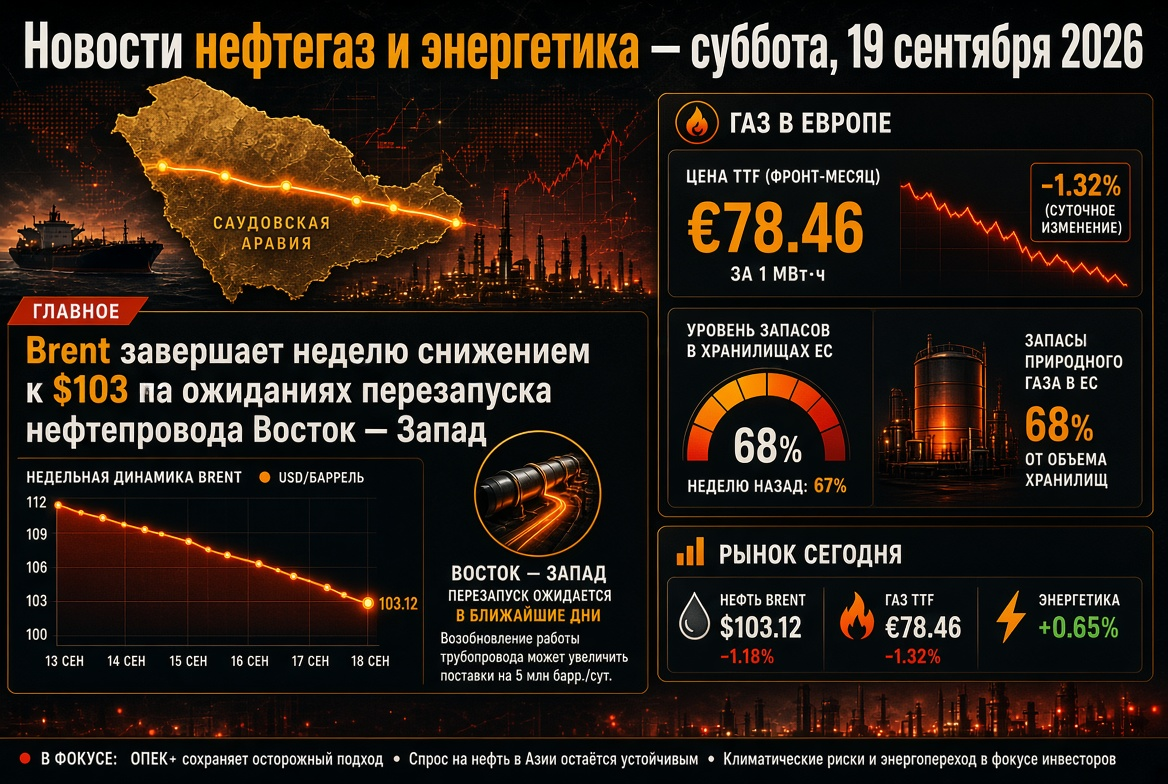
Key Economic Events and Corporate Reports for Thursday, March 12, 2026: Monthly IEA Oil Market Report, Speech by the Governor of the Bank of England, Turkish Central Bank Rate Decision, US Trade Balance, Labor Market and Construction Statistics, as well as Reports from Major Public Companies
The trade framework on March 12 will revolve around three main themes:
- Energy and oil — highlighted by the monthly IEA report;
- Monetary policy — centered around the speech by the Governor of the Bank of England and the Turkish Central Bank's rate decision;
- The state of the US economy — analyzed through trade balance, housing starts, and initial jobless claims.
Should the data from the US exceed expectations, the market may witness a rise in yields and a more hawkish interpretation regarding the future interest rate trajectory. On the other hand, weaker statistics could shift the focus towards safe-haven assets, declining yields, and a more cautious assessment of global growth. In this context, the reports of major companies will serve as a litmus test for the technology sector, cybersecurity, and European energy infrastructure.
Oil Market: Monthly IEA Report in Focus
The key event in the first half of the day is the release of the IEA's monthly oil market report. For commodity markets, this is one of the critical benchmarks for global demand, supply, inventories, and the balance expected in the coming months. Investors will evaluate how the agency revises its 2026 oil consumption forecast, the stability of non-OPEC+ supplies, and whether there are indications of market balance loosening or tightening.
Particular attention should be paid to the following aspects:
- Evaluation of global demand for oil and petroleum products;
- Supply dynamics from the US, the Middle East, and non-OPEC+ countries;
- Comments on commercial inventories and refining;
- The impact of price conditions on oil and gas company stocks.
For the Russian market and energy sector stocks, the IEA report is especially important, as any changes to the oil balance are quickly reflected in exporter quotations, foreign currency receipts, and expectations regarding budget flows. If the report's tone is constructive, it could support not only Brent oil but also the stocks of oil companies, as well as those of equipment and transportation infrastructure suppliers.
Monetary Block: Bank of England and Turkish Central Bank Rate Decision
The next significant component is the speech by the Governor of the Bank of England. For global markets, this is not just a commentary on the British economy but an additional signal regarding inflation, business activity, and the sentiments of central banks in developed countries. Investors will look for hints on the persistence of inflation in the service sector, labor market developments, and whether softer monetary policy conditions are possible later in 2026.
A separate point of volatility will be the Turkish Central Bank's rate decision. Turkish monetary policy traditionally influences not only the local debt and currency markets but also the perception of risk regarding emerging economies as a whole. For international investors, it is crucial whether the regulator will maintain a strict course towards disinflation or allow for a softer tone. This could affect risk appetite in the emerging markets segment.
US: Trade Balance, Housing Construction, and Jobless Claims
The American statistics block on this day is particularly dense. Three indicators are capable of influencing the currency market, stock indices, and interest rate expectations.
- US Trade Balance for January. This indicator is important for assessing external demand, imports, and the contribution of trade to the US economy's growth in the first quarter.
- Housing Starts. Data on the initiation of housing construction remains a sensitive indicator of the domestic demand state, credit conditions, and investment activity in real estate.
- Initial Jobless Claims. Weekly applications for unemployment benefits provide one of the most timely indicators of cooling or resilience in the US labor market.
For the S&P 500 index and global risk appetite, the combination of these data points is especially significant. A strong labor market and stable construction activity could strengthen the dollar and increase the likelihood that the Fed will be cautious with easing policy. Conversely, weaker figures could bolster the technology sector and growth stocks due to expectations of a more lenient monetary environment.
US Gas Market: EIA Weekly Gas Storage
In the afternoon, the focus will shift to the EIA’s natural gas storage data in the US. For energy investors, this release is as important as oil statistics, as it sets the short-term tone for gas futures, energy companies, and related industries. This publication is particularly significant during periods of heightened seasonal volatility, when the market reacts sharply to deviations from average gas withdrawal or injection values.
If the data shows a more significant drawdown in inventories than expected, this could enhance interest in gas producers and infrastructure stories. Conversely, softer statistics may cool speculative demand in the commodity segment.
US Corporate Reports: Focus on Technology and Cybersecurity
Among the major public companies reporting results on March 12, the focus for investors will be on the American technology sector. Notably, Adobe, a key player in the software and digital services segment, will be under scrutiny. Its results are traditionally seen as a barometer for corporate spending on creative, marketing, and AI tools.
Investors should evaluate:
- Revenue growth rates and margins for Adobe;
- Subscription model dynamics;
- Demand for AI products and solutions for corporate clients;
- Management comments regarding the forecast for the 2026 financial year.
Also in the market's focus is SentinelOne. For the global stock market, this report is especially significant as the cybersecurity sector remains one of the fastest-growing segments of software. Any signals of order slowdown, pressure on ARR, or, conversely, an acceleration in corporate demand will be quickly reassessed across the entire technology sector.
European Companies: Energy and Infrastructure Reports
In Europe, a notable event will be the publication of annual results from Rubis. For investors, this report is significant as the company is tied to energy logistics, distribution, and infrastructure, and its figures help provide better insights into demand resilience and operational margins in the European energy sector.
On this day, the European market will not only be looking at the actual results but also the management's comments on:
- Demand dynamics for energy carriers in 2026;
- Pricing policy and profitability;
- Capital expenditures and dividend agenda;
- The impact of global commodity market volatility on the business.
This report is vital for the Euro Stoxx 50 index and the broader European market as an additional marker of corporate profit status in cyclical sectors.
Asia and Russia: Impact on Trading and Corporate Landscape
During the Asian session, the main focus will remain on the reaction to previously published reports from major companies in the region and the overall global risk appetite ahead of American statistics and technological earnings. For investors tracking the Nikkei 225 and Asian exporters, any signals regarding external demand health are particularly important amid fluctuations in the dollar and commodity prices.
For the Russian market, on Thursday, the main driver is likely to be not the dense stream of new reports but the reassessment of the oil and gas sector following the IEA report, as well as the overall external environment. For the Moscow Exchange index, this means heightened sensitivity to oil prices, the ruble exchange rate, and demand for commodities from energy companies. If the external backdrop remains stable, stocks in oil and gas, metallurgy, and infrastructure stories could maintain relative stability.
What Investors Should Focus on by Day's End
On Thursday, March 12, 2026, investors should particularly watch whether a unified picture emerges regarding global growth and corporate profits. If the IEA report confirms sustained demand for oil, US macro statistics are neutral or strong, and the reports from Adobe and SentinelOne support the appetite for technology, the markets may conclude the day on a constructive note.
Key takeaways for the day will include:
- Oil and gas will shape the sentiment in the energy sector;
- US macro statistics will set the direction for the dollar, bonds, and growth stocks;
- Reports from technology companies will illustrate whether corporate demand for software and AI remains strong;
- The Turkish Central Bank's decision will help assess the resilience of risk appetite in emerging markets.
For investors from the CIS, this is a day when it is especially important to look not at individual releases but at the collective signal: how commodity prices, central bank rhetoric, the state of the US economy, and the corporate results of major public companies align. This interplay will provide a clearer understanding of the mode in which global markets are entering the second half of March.