Economic Events and Corporate Reports on Sunday, June 21, 2026: China's LPR Rate Decision, PCE Inflation Expectations in the U.S., Business Activity, Stock Markets, and Key Benchmarks for Investors
Sunday, June 21, 2026, unfolds for global markets in a state of reduced business activity: major stock exchanges in the U.S., Europe, Japan, and Russia are closed, and the corporate earnings calendar for large public companies remains almost empty. However, for investors, this day cannot be considered entirely neutral. The focus is on China’s monetary policy, the state of consumer demand in the Asia-Pacific region, political risks in Latin America, and preparation for a busy macroeconomic week, where the key event will be the publication of PCE inflation index in the U.S.
For the CIS investor audience, the Sunday calendar is more about shaping expectations ahead of the new week than about immediate trading signals. The economic events of June 21 help assess how the global environment is entering the last full week of the month: is there ongoing pressure on rates, how resilient is demand in China, and how will markets reassess the Federal Reserve’s trajectory following the June meeting?
Main Context of the Day: Calm Calendar, But High Significance of Expectations
Sunday tradition typically features a low density of macroeconomic publications and a lack of major corporate reports. This is particularly noticeable in the calendars of the S&P 500, Euro Stoxx 50, Nikkei 225, and MOEX: large public companies usually disclose their results before the opening or after the closing of trading sessions on weekdays.
Nevertheless, investors will assess several factors:
- China’s decision on the Loan Prime Rate;
- Consumer activity dynamics in New Zealand;
- Political risk in Colombia in light of the second round of presidential elections;
- Inflation expectations for PCE, PMI, the housing market, and durable goods orders in the U.S.;
- Prospects for corporate reports from FedEx, Micron Technology, Paychex, Jefferies, Darden Restaurants, and other issuers during the week.
Thus, June 21 is a day for portfolio preparation, risk parameter reassessment, and evaluation of the global investment environment.
China: LPR Rates as an Indicator of Economic Support
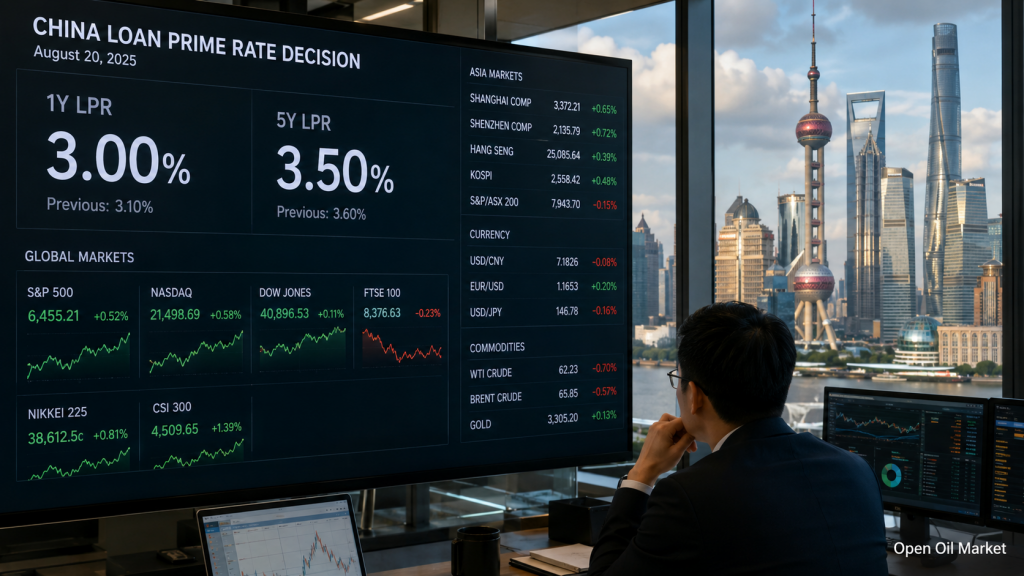
The main macroeconomic event of the day is the publication of China’s lending rates. The calendar includes a five-year Loan Prime Rate at around 3.50% and the PBoC’s Loan Prime Rate at about 3.00%. For investors, this is an important benchmark regarding the state of the world’s second-largest economy, particularly against a backdrop of weak domestic demand, pressure on the real estate market, and ongoing business caution.
If the People's Bank of China maintains rates unchanged, the market may perceive this as a signal of moderate, but not aggressive support. For commodity markets, including oil, metals, and industrial goods, it is crucial not only to consider the rate level itself but also the regulator's tone: is Beijing prepared to ramp up stimulus or does it prefer targeted measures?
For CIS investors, the Chinese rate has direct significance through several channels:
- China’s demand for raw materials and energy;
- The dynamics of the yuan and developing market currencies;
- Sentiment on Asian stocks and industrial companies;
- Export prospects for countries oriented towards the Chinese market.
New Zealand: Consumer Spending as a Demand Signal
In the Asia-Pacific region, attention is also drawn to credit card spending data in New Zealand. This indicator is not among the largest global indicators, but it helps evaluate the state of consumer demand in a small open economy sensitive to rates, mortgage conditions, and external trade dynamics.
For the currency market, the data can be relevant through the New Zealand dollar, especially if the actual figure deviates significantly from previous trends. For global investors, this adds another piece to the puzzle: is consumer resilience being maintained in economies where high interest rates have been limiting credit and household spending for an extended period?
Latin America: Political Risk in Colombia
Among the day’s events, the second round of presidential elections in Colombia stands out. While this is not an event on par with the Fed or ECB, it is important for emerging market investors in terms of currency risk, the debt market, and the prospects for the energy sector.
Colombia remains a significant producer of oil and raw materials, so the political agenda may influence expectations regarding taxes, budget policy, mining regulations, and the investment climate. For portfolios that include emerging markets, such events are significant not in isolation, but in connection with dollar liquidity, U.S. Treasury yields, and risk appetite.
U.S.: The Market Awaits PCE Data and New Responses to the Fed's Stance
Following the June Fed meeting, investors enter a new week with heightened attention to inflation. The key indicator is the Personal Consumption Expenditures (PCE) price index, which is considered one of the main benchmarks for the American regulator. The publication is expected to occur in the week following June 21 and may become the central event for the stock market, bonds, and currencies.
The most important data for the U.S. this week includes:
- Preliminary S&P Global PMI indices for manufacturing and services;
- New home sales for May;
- Weekly jobless claims;
- PCE index and core PCE for May;
- Final U.S. GDP estimate for the first quarter;
- Durable goods orders;
- Personal income and spending of Americans;
- Final University of Michigan consumer sentiment index.
For the S&P 500 and Nasdaq, it is especially important whether the data will confirm the scenario of a resilient economy under ongoing inflationary pressure. If the PCE turns out higher than expected, the market may increase bets on a more hawkish Fed policy. Conversely, softer data could support growth stocks, the technology sector, and long bonds.
Europe: PMI, Germany, and Business Activity Expectations
The European agenda at the beginning of the week will focus on PMI indices for Germany, France, the eurozone, and the UK, as well as German indicators of business and consumer climate. For the Euro Stoxx 50, this is an important set of data, as the European market remains sensitive to a weak industrial cycle, export dynamics, and energy costs.
Investors should pay attention to three blocks:
- German Industry. Weak PMIs may heighten concerns about corporate margins in industrial firms.
- Consumer Demand. Confidence indices will show how willing households are to increase spending.
- ECB Policy. Any signs of economic slowdown may alter expectations regarding eurozone interest rates.
For CIS investors, European data is critical through the euro exchange rate, demand for raw materials, export chains, and the dynamics of global safe-haven assets.
Corporate Reports on June 21: No Major Publications
For Sunday, June 21, 2026, no significant earnings reports from S&P 500, Euro Stoxx 50, Nikkei 225 or MOEX are scheduled. This is a standard situation for the weekend: American, European, Japanese, and Russian blue chips usually publish their results on weekdays to allow investors to assess the reports within an active trading session.
For the corporate reports section on June 21, the correct formulation is as follows:
- S&P 500: No major reports are expected on Sunday;
- Euro Stoxx 50: No significant financial results publications are scheduled for this date;
- Nikkei 225: Major Japanese issuers do not disclose earnings on this day;
- MOEX: No substantial corporate reports from the largest Russian public companies are expected on Sunday;
- Other Public Companies: The calendar shows no notable scheduled earnings for this day.
The absence of reporting does not diminish the significance of preparing for the week. Investors will proactively evaluate consensus forecasts, margin dynamics, and management comments from companies that will release results later.
Weekly Reports: FedEx, Micron, Paychex, Jefferies, and Darden in Focus
While June 21 does not provide major corporate releases, the following week will be important for assessing the state of specific sectors. Among the companies to watch are FedEx, Carnival, Korn Ferry, Micron Technology, Paychex, Jefferies, Darden Restaurants, McCormick, TD Synnex, and Apogee Enterprises.
For investors, these reports are crucial as indicators across several sectors:
- FedEx — logistics, global trade, shipping costs, and corporate demand;
- Carnival — consumer spending, tourism, and recovery in the discretionary segment;
- Micron Technology — semiconductors, memory, artificial intelligence, and Big Tech capital expenditures;
- Paychex — U.S. small and medium businesses, labor market, and demand for HR services;
- Jefferies — investment banking, capital markets, and deal activity;
- Darden Restaurants — restaurant sector, cost inflation, and consumer resilience.
Special attention will be given to Micron Technology, as the memory sector remains one of the beneficiaries of the investment cycle in artificial intelligence. Any comments regarding demand for DRAM, HBM, and data center infrastructure could impact not only the company's stock but also the broader technology sector.
Commodities, Rates, and Geopolitics: Background for Global Markets
Besides macroeconomic publications and corporate reports, it is crucial for investors to consider the commodity and geopolitical context. Global markets continue to evaluate the impact of the situation in the Middle East, oil transportation, insurance premiums, and energy prices. For inflation, this is a critical factor: even with declining oil prices, the effects of previous spikes can remain in transport tariffs, production costs, and consumer expectations.
For Russian and CIS investors, this block is particularly important, as oil, gas, metals, fertilizers, and logistics directly influence export revenues, currency rates, and the dynamics of commodity company stocks. Therefore, on Sunday, June 21, it is essential to look not only at the formal calendar but also at the market's preparation for the week's opening.
What to Watch for the Investor
Sunday, June 21, 2026, is a day without major corporate reports but carries important analytical weight. Investors should use this time to review portfolios, assess risks, and prepare for a week where central themes will include U.S. inflation, business activity, reports from technology and cyclical companies, and market reactions to global monetary policy.
Key Benchmarks for Investors:
- Assess China’s LPR decision and its impact on commodity markets.
- Monitor the dynamics of Asian currencies and stocks after Chinese rate publication.
- Consider political risks in Latin America, especially in the emerging markets segment.
- Prepare for U.S. PCE data as the key inflation indicator of the week.
- Keep an eye on PMIs in the U.S., Europe, and Asia to evaluate the business cycle.
- Individually analyze reports from FedEx, Micron, Paychex, Jefferies, and Darden Restaurants.
- Control exposure to the technology sector, commodities, dollar bonds, and emerging market stocks.
The main conclusion of the day: June 21 is not a day of active reporting, but a day for fine-tuning investment strategy. For the stock market, currencies, bonds, and commodities, the decisive events will unfold in the coming week. Investors should proactively define scenarios: a strong PCE and a hawkish Fed could intensify pressure on growth stocks, while softer inflation and resilient corporate reports may support risk appetite in global markets.