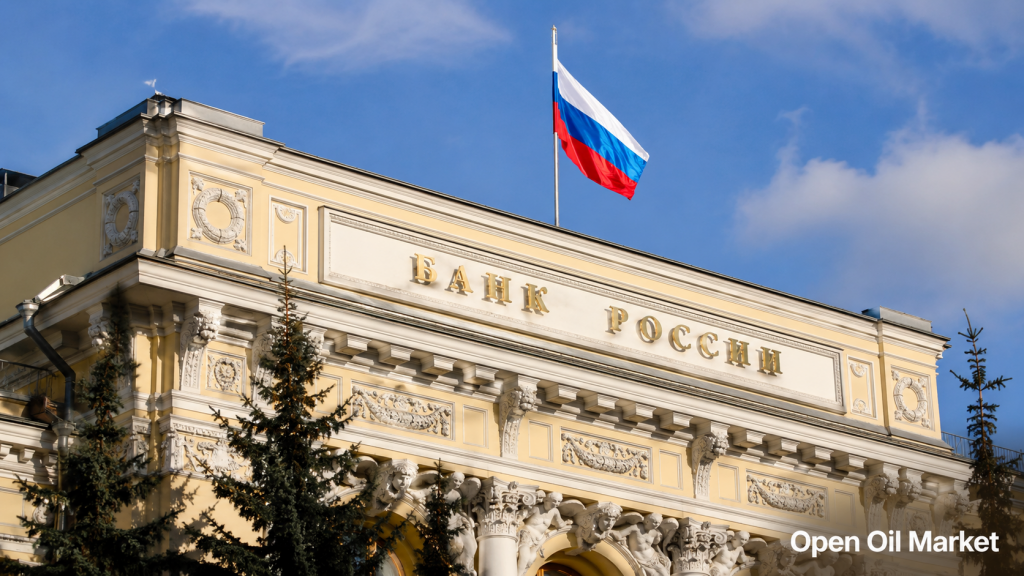
Economic Events and Corporate Reports on Friday, June 19, 2026: The Central Bank of Russia's Key Rate Decision, Bank of Russia Press Conference, Japan's CPI, Germany's PPI, and the Closure of Markets in the USA, China, and Hong Kong
Friday, June 19, 2026, promises to be an unconventional trading day for global investors. The focus will not be on the corporate reports of major companies but rather on macroeconomic events: data on consumer inflation in Japan, producer inflation in Germany, and the meeting of the Central Bank of Russia regarding the key interest rate. Simultaneously, liquidity in global markets will be constrained due to the closure of trading in the USA, China, and Hong Kong. For CIS investors, this signifies an increased significance of local factors, the dynamics of the ruble, expectations regarding monetary policy, and the reaction of the MOEX market to the decision of the Central Bank of Russia.
The Main Intrigue of the Day: The Central Bank of Russia's Rate and Signals for the Russian Market
The key event of the day for the Russian stock market will be the meeting of the Board of Directors of the Bank of Russia concerning the key interest rate. The decision is anticipated to be published at 13:30 Moscow time, with a press conference from the regulator scheduled for 15:00. This event will be the main driver for the MOEX index, the banking sector, government bonds, developers, and dividend stocks on Friday.
Investors will assess not only the decision regarding the rate itself but also the wording from the Central Bank of Russia. Three parameters are particularly important:
- how seriously the Bank of Russia evaluates inflation risks;
- whether the regulator is ready to continue the cycle of easing monetary policy;
- how the Central Bank of Russia perceives the dynamics of consumer demand, lending, and the ruble exchange rate.
For the stock market, a rate cut or dovish signal may boost interest in companies focused on domestic demand, construction, banks, and high-dividend stocks. Conversely, a more cautious rhetoric could limit the growth of the MOEX index and strengthen demand for defensive assets.
Economic Events Schedule for June 19, 2026
| Time (MSK) | Country / Region | Event | Importance for Investors |
|---|---|---|---|
| All day | China | No trading: Dragon Boat Festival | Reduced liquidity in Asia, limited activity in Chinese stocks and commodity contracts |
| All day | Hong Kong | No trading: Tuen Ng Day | Trading pause for Chinese tech and financial companies through Hong Kong |
| All day | USA | No trading: Juneteenth | Major US exchanges closed, including NYSE and Nasdaq |
| 02:30 | Japan | Consumer Inflation CPI for May | Important indicator for Nikkei 225, yen, and expectations for the Bank of Japan's policy |
| 09:00 | Germany | Producer Inflation PPI for May | Signal for Euro Stoxx 50, DAX, euro, and assessment of inflationary pressure in the eurozone |
| 13:30 | Russia | The Central Bank of Russia's key rate decision | Main driver for MOEX, government bonds, banks, developers, and the ruble |
| 15:00 | Russia | Press conference of the Central Bank of Russia | Focus on inflation forecast, rate rhetoric, and economic assessment |
Japan: CPI for May and Implications for the Nikkei 225
The publication of consumer inflation data in Japan will be the first significant macroeconomic event of the day. For the Nikkei 225 index and the Japanese yen, this indicator is crucial due to its connection with the Bank of Japan's policy. If inflation exceeds expectations, the market may again factor in the likelihood of a tighter regulator stance. This could strengthen the yen and apply pressure on Japanese exporters' stocks.
For investors, it is important to monitor not just the total CPI but also the core inflation. Sustained price growth increases the likelihood that the Bank of Japan will take a more cautious approach to stimulating the economy. For Japan's technology, automotive, and industrial companies, this means heightened sensitivity to currency exchange rates and bond yields.
Germany: PPI for May as an Indicator of Industrial Pressure in Europe
Germany's producer inflation for May will be important for assessing the state of the largest economy in the eurozone. The PPI shows how producer prices are changing and often serves as an early signal of future consumer inflation. For the Euro Stoxx 50 and DAX, this indicator is particularly relevant in the context of energy costs, raw material prices, and industrial demand recovery.
If the PPI exceeds expectations, it may heighten concerns regarding the profitability of European companies, particularly in the chemical, engineering, automotive, and energy sectors. Conversely, weaker data could support expectations for easing financial conditions in the eurozone and improve sentiment towards cyclical stocks.
The USA: Market Closure and Shift in Focus from S&P 500 to Global Macrostats
US equity and bond markets will be closed on June 19 due to the Juneteenth holiday. This means a lack of usual liquidity for S&P 500, Nasdaq 100, and Dow Jones stocks. For CIS investors, it is essential to consider that the reaction of the American market to Friday's events may only become apparent after trading resumes.
A notable aspect of the day is that the corporate earnings calendar for the USA is practically empty for major companies. Among S&P 500 issuers, no significant publications are expected on June 19. Therefore, investors will analyze reports released earlier in the week as well as macroeconomic signals from Japan, Germany, and Russia.
China and Hong Kong: Market Absence Reduces Asian Liquidity
Chinese and Hong Kong markets will also be closed due to the holiday calendar. For the global market, this reduces trading volume during the Asian session and limits responses to news regarding the Chinese economy, industrial demand, commodities, and the technology sector.
The pause in China and Hong Kong is significant for investors who are monitoring:
- raw material assets and industrial metals;
- stocks of Chinese technology companies;
- the dynamics of the yuan and Hong Kong dollar;
- export-oriented markets in Asia;
- demand for oil, gas, coal, and electricity.
With markets in China, Hong Kong, and the USA closed, significant price reactions may be postponed until the next trading week.
Corporate Reports: Few Major Publications in S&P 500, Euro Stoxx 50, Nikkei 225, and MOEX
The corporate calendar for June 19 will be significantly weaker than the macroeconomic one. Due to the closure of US markets, no major reports are expected from companies within the S&P 500. In Europe and Japan, the earnings season is also not providing a large number of significant publications for this date. For major companies in the Euro Stoxx 50 and Nikkei 225, investor attention will be focused not on new quarterly results but on previously released reports, annual documents, dividend events, and management forecasts.
For the Russian market, the corporate agenda will also take a backseat to the decision of the Central Bank of Russia. For companies within the MOEX index, investors will primarily assess the business's sensitivity to interest rates:
- banks — through funding costs and lending dynamics;
- developers — through mortgage demand and debt burdens;
- retail — through consumer activity;
- energy and raw material companies — through the ruble exchange rate and export margins;
- telecommunications and infrastructure companies — through their debt profiles and dividend expectations.
Therefore, Friday, June 19, is a day when the corporate reports of large public companies take a backseat, and the main factor for investors becomes the macroeconomic calendar and central bank policies.
How the Day's Events May Affect Currencies, Bonds, and Stock Indices
The combination of closed markets in the USA, China, and Hong Kong along with significant publications from Japan, Germany, and Russia creates an unusual structure for the trading day. Liquidity will be lower than usual, and local movements may be sharper. In the currency market, the yen, euro, and ruble will come into focus. In the bond market, investors will monitor the yields on government bonds and expectations regarding the trajectory of the Central Bank of Russia's key interest rate.
Potential market scenarios include:
- Dovish decision from the Central Bank of Russia. This may support Russian stocks, particularly in interest-sensitive sectors.
- Hawkish rhetoric from the Central Bank of Russia. This may heighten investor caution and increase interest in short-duration bonds.
- High CPI in Japan. This may strengthen the yen and increase pressure on Japanese exporters.
- High PPI in Germany. This may worsen expectations for the margins of European industrial companies.
- Low liquidity due to holidays. This may enhance volatility in specific instruments.
What Investors Should Pay Attention to on June 19, 2026
The main focus for investors on Friday will be the decision of the Bank of Russia and the tone of the press conference. For the Russian market, this event is more important than corporate reports, as the rate directly influences the cost of capital, stock valuation, bond attractiveness, and dividend models. Investors should closely monitor the MOEX index's reaction, the banking sector, developers, government bonds, and the ruble's exchange rate.
In the global context, the key benchmarks will be Japan's CPI and Germany's PPI. These indicators will help assess how persistent inflationary pressure remains in developed economies and how it may affect future central bank policies. The closure of trading in the USA, China, and Hong Kong makes the day less liquid but not less important: part of the global market's reaction may extend into Monday.
For CIS investors, the optimal strategy for June 19 is not to chase short-term movements but to assess three key blocks: the trajectory of the Central Bank of Russia's interest rate, inflation signals from Japan and Germany, and the potential delayed reaction of the S&P 500, Euro Stoxx 50, Nikkei 225, and MOEX after full market liquidity is restored.