Global News in the Oil, Gas, and Energy Sector as of January 13, 2026: Venezuela, Geopolitics, Oil, Gas, Coal, Oil Products, Refineries, and Key Events in the Global Energy Sector for Investors and Market Participants.
Recent events in the fuel and energy complex (FEC) as of January 13, 2026, create a mixed picture for investors and market participants. A significant geopolitical shift has occurred in Venezuela: the US-backed new leadership of the country aims to restore oil production, instilling cautious optimism about the growth of global supply. At the same time, global oil prices continue to be pressured by excess supply and weakening demand—Brent prices are hovering around $60 per barrel after a significant drop last year. The European gas market is demonstrating resilience even amid a cold winter: EU gas storage facilities are over 80% full, and record LNG supplies are helping to keep prices at moderate levels. The global energy transition is accelerating—many countries are recording new generation records from renewable energy sources (RES), although governments are not abandoning traditional resources to ensure the reliability of their energy systems. In Russia, authorities are extending fuel export restrictions and taking measures to stabilize the domestic oil product market after recent price spikes. Below is a detailed overview of key news and trends in the oil, gas, electricity, and raw materials sectors as of this date.
Oil Market: Excess Supply and Weak Demand Continue to Pressure Prices
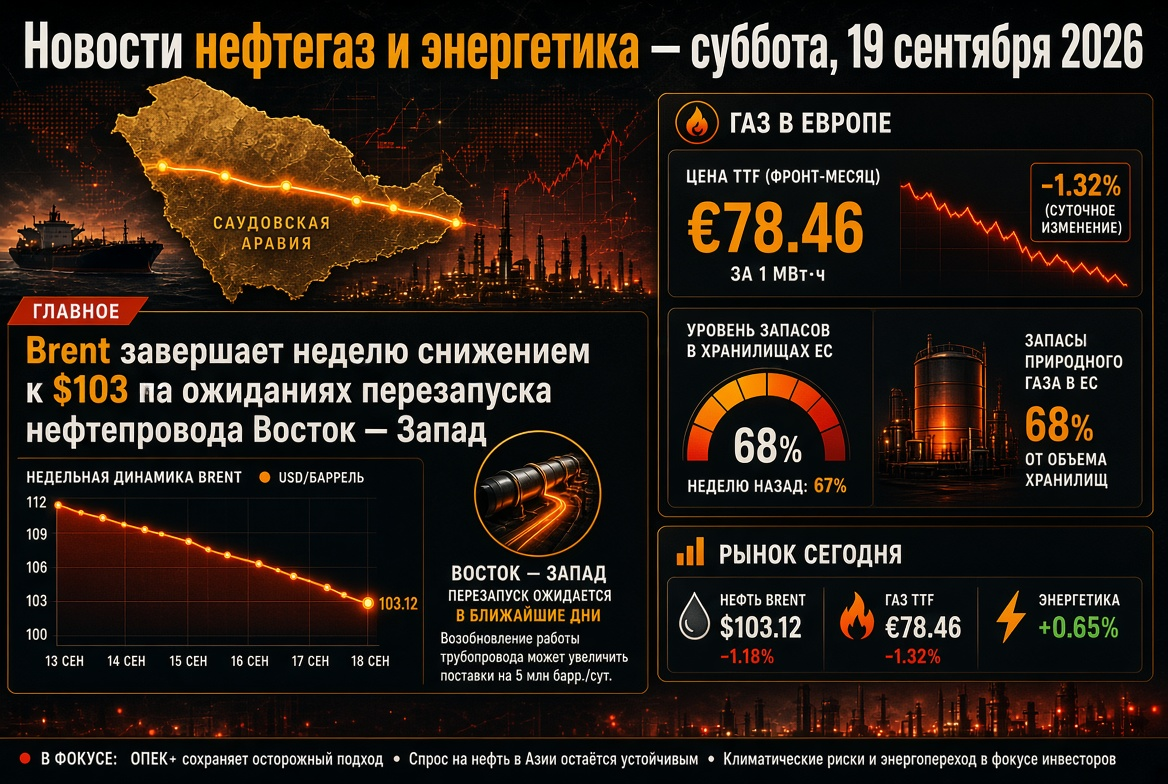
The global oil market at the beginning of 2026 is experiencing relative price weakness amid excess supply. The benchmark Brent crude is trading around $60 per barrel, while the US WTI is in the range of $55–57, corresponding to the lowest levels in the last four years. Over 2025, oil prices declined by approximately 20%, marking the weakest year since the pandemic of 2020. The main reasons for this are the recovery of production and increased exports by key players, coupled with simultaneously slowing demand growth.
Following the peak of the energy crisis in 2022, many producers have ramped up supplies: OPEC+ countries have gradually lifted previously imposed production restrictions, and US production reached a record 13.6 million barrels per day in 2025 (a slight decline is expected in 2026). New projects are also contributing to the increase in global supply, with rising oil production in Brazil, Guyana, Canada, and other countries. Over the past weekend, OPEC+ maintained its quotas unchanged to protect the market from sharp fluctuations, but analysts still estimate oil surplus at 0.5–3 million barrels per day in the coming months. Overall, supply currently outstrips demand, and until new factors emerge, the balance remains skewed towards excess supply, keeping oil prices at moderate levels.
Gas Market: Europe Endures Cold Winter Thanks to Stocks and LNG
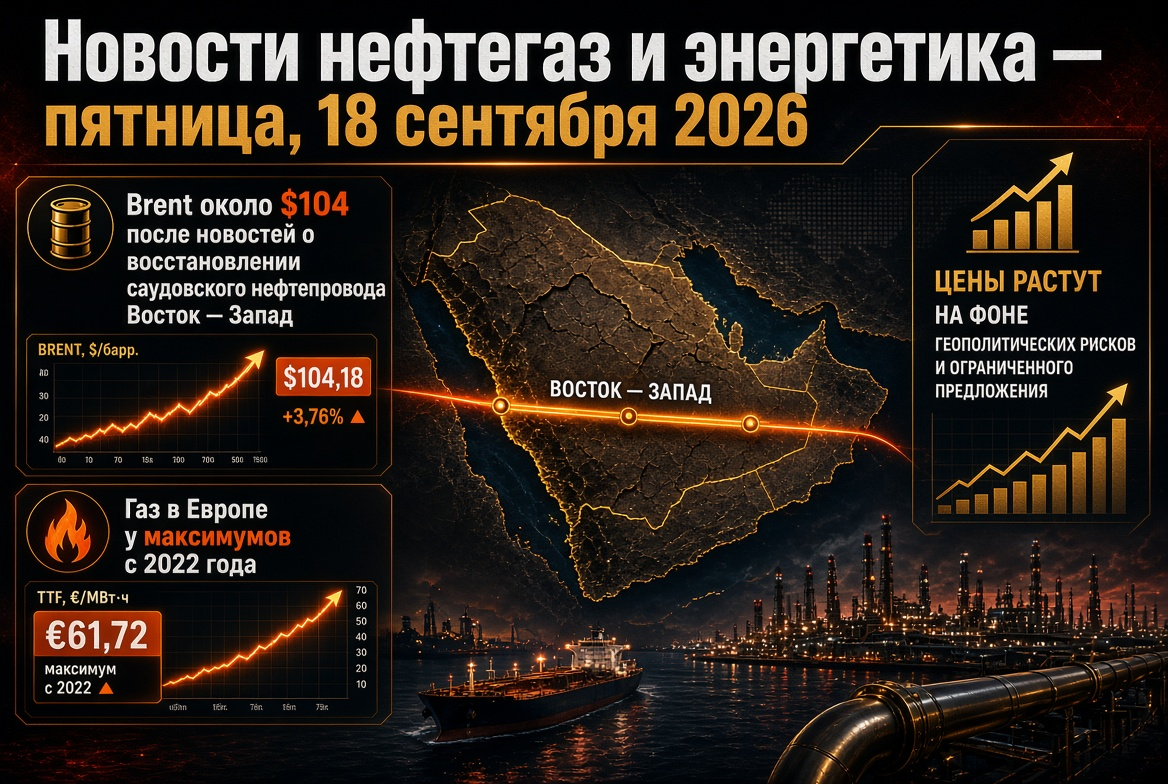
The gas market's main focus is on Europe, which is experiencing the early months of winter without the previous upheavals. Despite an abnormally cold December, European countries managed to maintain high stocks: according to Gas Infrastructure Europe, EU underground gas stores are approximately 85% full at the beginning of January. This impressive level of reserves is the result of a mild winter start, record import volumes of liquefied natural gas (LNG) from the US and Qatar, as well as energy conservation measures and reduced industrial consumption. Even an Arctic cold wave that hit Central Europe at the end of December only slightly increased the drawdown of gas from storage, which was quickly compensated by rising LNG supplies. Gas prices in the region remain at moderate levels, significantly lower than the peaks of 2022, and analysts forecast an end to the heating season with a comfortable reserve (expected at least 50–60% storage filling by spring). This demonstrates the increased resilience of the European gas market due to supply diversification and infrastructure reforms.
On a global scale, the situation in the gas market is also relatively stable. Demand in Asia is steadily growing, but without sharp jumps: China and India are increasing LNG imports under long-term contracts, which insulates them from the volatility of spot prices. Simultaneously, new gas export capabilities are coming online—from LNG facilities in North America to projects in the Middle East—expanding the available supply in the global market. This balance allows countries to avoid gas shortages even amid localized weather or geopolitical risks, keeping global gas prices within a relatively narrow range.
International Agenda: Sanctions Against Russia and Cautious Continuation of Dialogue
Relations between Russia and the West continue to impact the energy sector, although there has been no direct progress in resolving the sanctions confrontation. After the change of administration in Washington in 2025, contacts between the US and Russia have intensified: in August, the presidents of both countries met in Alaska, indicating a readiness to continue dialogue. However, fundamental disagreements remain, and all major sanctions against the Russian energy sector are still in place. Moreover, in January, the US imposed targeted restrictions against several intermediaries transporting Russian oil, seeking to enhance control over compliance with the price cap.
Nevertheless, analysts believe that the Trump administration will avoid harsh measures that could spike global oil and gasoline prices in the US; keeping fuel prices down for consumers remains a priority. Meanwhile, Europe is set on a long-term reduction in dependence on Russian energy resources: the European Union plans to extend mandatory targets for filling gas storage facilities and legislate the cessation of pipeline gas imports from Russia. Russia itself has redirected oil and gas exports to alternative markets—primarily in Asia—offering significant price discounts to buyers in China, India, and other countries. This redistribution of flows mitigates the impact of sanctions, although it reduces export revenues for Russian oil and gas companies.
Venezuela: Power Shift and Return of Oil to the Global Market
At the beginning of the year, Venezuela, which has the largest oil reserves in the world, is in the spotlight. In January, a sharp power shift occurred in the country: as a result of a US-backed operation, President Nicolás Maduro was overthrown and taken into custody, and a provisional government in Caracas is led by Delcy Rodríguez. The Trump administration promptly announced plans to attract up to $100 billion in investment to restore Venezuela's deteriorating oil sector and rapidly increase production. Initial export deals for Venezuelan oil are already being made: major trading houses Vitol (Netherlands) and Trafigura (Singapore) have received special licenses and have begun shipments of crude from previously accumulated stocks.
Under an agreement with the provisional authorities, up to 50 million barrels of Venezuelan oil will be sold to American refineries and other buyers in the coming weeks, providing the country with much-needed cash inflows. Major international oil companies, however, are acting cautiously: after years of sanctions, Venezuela has accumulated debt issues, and its oil infrastructure has seriously deteriorated. Experts note that even with US political support, restoring production to levels seen in the early 2010s (over 2 million barrels per day) will take several years. Nevertheless, Venezuela's return to the global oil market is already exerting psychological pressure on prices, intensifying expectations of a prolonged surplus.
Asia: India and China Between Imports and Domestic Production
- India: Under increasing pressure from Western sanctions and striving to secure its energy supply, New Delhi has reduced purchases of Russian oil and gas in recent months. The Indian government is diversifying imports, emphasizing supplies from the Middle East and its traditional partners. Simultaneously, the country is stimulating domestic oil and gas production, attracting investment in the exploration of new fields. For India's rapidly growing economy, ensuring stable fuel supplies is a key priority, so India is trying to navigate between beneficial prices from sanctioned barrels and the risk of falling under secondary sanctions.
- China: As the world's largest importer of energy resources, China continues to increase its hydrocarbon production, seeking to reduce reliance on external sources. In 2025, China's oil production grew and approached historical highs; however, internal production covers only about 30% of the country's needs. Beijing is actively buying oil in external markets, taking advantage of favorable prices. China remains a major buyer of discounted Russian oil, although the total volume of imports has stabilized due to an economic slowdown. The Chinese government is simultaneously investing in strategic oil reserves and entering long-term contracts for gas supplies to secure energy supply against the backdrop of geopolitical uncertainty.
Energy Transition: RES Records and the Role of Traditional Generation
The global transition to clean energy continues to accelerate. By the end of 2025, several countries recorded record levels of electricity generation from renewable sources. For instance, in the EU, the combined share of solar and wind in generation briefly exceeded 60% in the summer of 2025; in China, annual installations of solar and wind capacity reached a new historical maximum; and in the US, renewable sources generated over 20% of the total electricity volume for the first time in a year. Investment in RES remains on an upswing worldwide, driven by both environmental goals and a desire for energy independence.
At the same time, ensuring the reliability of energy systems requires the retention of traditional generation. Due to the variability of solar and wind energy, many countries are forced to keep gas and coal power plants on standby to cover peak loads and prevent outages. Governments are postponing the decommissioning of some coal-fired power plants and expanding energy storage capabilities; however, it currently seems impossible to completely abandon oil, gas, and coal in the energy balance. Traditional energy resources continue to play a key role in meeting basic demand, complementing the rapidly growing sector of RES.
Coal: Steadily High Demand and Role in Energy Balance
Despite the growing focus on clean energy, the global coal market remains surprisingly resilient. Global demand for coal in 2025 was around record levels, and only a slight decline is expected in 2026. The main growth in consumption is driven by Asian economies—primarily China and India—where coal remains one of the main sources of electricity due to its availability and stable output. These countries continue to commission modern coal-fired power plants to meet increasing demand, compensating for the decrease in coal use in Europe and North America.
Coal prices in the international market remain relatively high, but without sharp spikes, reflecting the balance of supply and demand. Major exporters—such as Indonesia, Australia, and Russia—maintain a consistently high level of production and exports, which allows them to meet buyers' needs. For many developing countries, coal remains a vital part of the energy balance in the near future, providing energy supply for industry and households until alternative sources have scaled sufficiently.
The Russian Fuel Market: Measures for Price Stabilization and Supply Assurance
In the domestic market for oil products, Russian authorities continue to take steps to prevent price spikes and fuel shortages. After a surge in wholesale gasoline and diesel prices last fall, the government imposed export restrictions, which have been extended several times. In particular, the temporary ban on the export of automotive gasoline has recently been extended until the end of February 2026.
These measures aim to saturate the domestic market and reduce price tensions: previously, certain regions experienced supply disruptions and the introduction of limits on fuel distribution at gas stations. Concurrently, regulatory agencies have increased the norms for fuel sales on exchanges for oil companies and adjusted the damping mechanism for subsidies to make domestic supplies more attractive for refineries. As a result, by early 2026, the situation began to stabilize: wholesale prices ceased to rise, and retail prices at gas stations slowed their growth. The government has stated its readiness to continue applying necessary tools—from increased export duties to direct interventions—to keep domestic fuel prices under control.