Oil and Gas and Energy News as of April 1, 2026: Oil Price Growth, Gas Market Tension, and Key Trends in Power Generation and Renewables
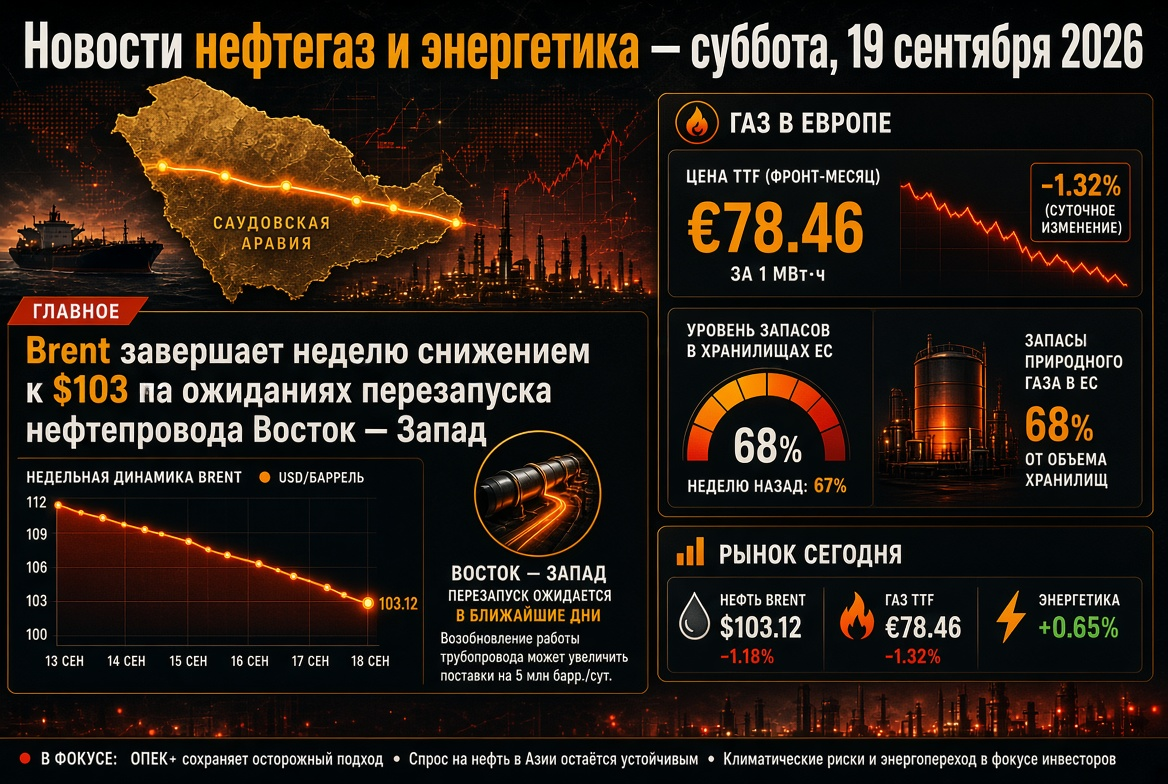
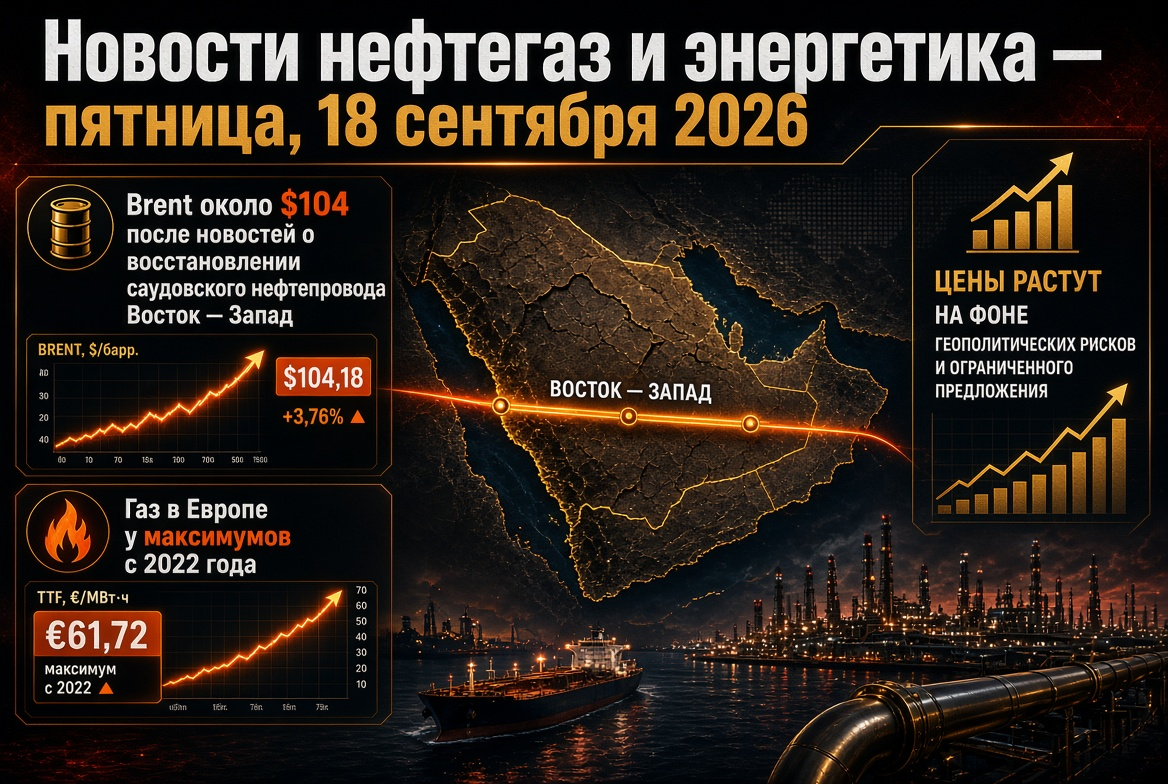
The global oil market ended March in a state of tight supply expectations. The primary reason is supply disruptions in the Middle East and growing concerns regarding the sustainability of exports through the Strait of Hormuz. For the market, this is not merely a geopolitical backdrop but a direct factor in pricing, as a significant portion of global oil and LNG trade passes through this route.
- Brent is entering April at significantly higher levels than at the beginning of March.
- The main driver of growth is the threat of prolonged marine logistics disruptions and supply reductions from the region.
- Investors are increasingly monitoring not only quotes but also the real physical balance of the market.
For oil companies and exporters, this creates strong price support; however, it also increases volatility. If tensions persist in the coming days, the oil market may continue to price in not a temporary spike but a more prolonged regime of expensive raw materials. Conversely, this increases pressure on the margins, the subsidy budget, and the cost of petroleum products for importers.
OPEC and Supply: Production Decline Alters Q2 Balance
The situation regarding oil production deserves particular attention. March revealed that even formally existing plans to increase supply could be undermined by force majeure. A reduction in production volumes in OPEC countries is reverting the market to a deficit structure at precisely the moment when consumers were expecting a gradual easing of the balance.
- Production cuts enhance support for Brent and other benchmark grades.
- The market receives a signal that supply remains vulnerable not only to sanctions but also to military risks.
- Oil traders and refineries are forced to incorporate a higher insurance premium into their procurement strategies.
This is especially important for oil refining participants. If raw materials rise in price faster than petroleum products, refinery margins come under pressure. However, if the deficit also affects the diesel, gasoline, and jet fuel markets, refiners in export-oriented regions, conversely, have the opportunity to improve their economics.
Petroleum Products and Refineries: Refining Takes Center Stage
The petroleum products market is entering April with heightened sensitivity to any export restrictions and changes in diesel flows. In such an environment, major export refineries capable of quickly redirecting supplies between regions play a crucial role. For the global market, this signifies the increasing importance of Asia, particularly India, as a balancing supplier of diesel and other light petroleum products.
- Diesel exports become one of the key indicators of the actual state of the fuel market.
- Refineries with access to flexible raw materials and stable marine logistics are gaining strong positions.
- Import-dependent countries are increasingly prioritizing the domestic fuel market over export benefits.
For fuel companies, this means that April may begin with an expansion of spreads between various regional markets. For investors in the refining sector, three indicators remain the most important: raw material costs, diesel export margins, and supply chain stability.
Gas and LNG: Europe and Asia Enter Quarter with Tight Balance
The gas market remains the second most significant risk area after oil. The European gas market has already felt rising tensions, while Asia faces the risk of LNG shortages during peak demand periods. The primary question at the start of April is how long the uncertainty surrounding supplies will last and whether importers can quickly substitute lost volumes.
The current situation for the LNG market can be summarized as follows:
- Europe must approach storage replenishment and energy policy coordination more cautiously.
- Asia is actively protecting energy security through diversification of imports and reassessing its fuel balance.
- High gas prices are heightening interest in alternative generation sources, including coal and nuclear energy.
For oil and gas companies and the power generation sector, this means that gas will remain not just a raw material but a strategic resource in the coming weeks. For the electricity market, expensive gas raises generation costs and exacerbates disparities between regions with varying fuel balance structures.
Electric Power: Shift in Priority from Ecology to System Reliability
In the electric power sector, there is a noticeable shift towards a more pragmatic model. Countries that recently prioritized decarbonization are increasingly placing first importance on the reliability of energy supply, fuel availability, and network stability. For this reason, coal, nuclear, and backup capacities are regaining prominence on the energy agenda.
The following trends are particularly important:
- Increased demand for electricity from data centers and digital infrastructure.
- Greater emphasis on network resilience and the flexibility of energy systems.
- Reassessment of the role of baseload generation in the context of expensive gas and unstable LNG logistics.
For energy companies, this creates a new investment logic. The market begins to value not only the "green profile" of an asset but also its capacity to deliver stable power amidst system overloads. This is an important signal for investors in the power sector, especially in the segments of generation, networks, and balancing capacities.
Coal: A Return to the Energy Balance as a Crisis Tool
Amidst high gas prices and risks associated with LNG, coal is once again strengthening its position as a last-resort fuel for several Asian economies. This does not signal a long-term victory for coal generation, but it does indicate a rise in its tactical significance. For the coal market, April may begin with improved demand expectations, especially in regions where governments strive to minimize the risk of electricity disruptions.
- Coal remains an important insurance tool for energy systems.
- Coal importers gain more leverage in negotiations related to the fuel balance.
- Energy companies are temporarily willing to sacrifice climate goals for the sake of supply reliability.
For investors, this means that the coal segment should not be excluded from short-term analyses of the energy sector, even if the long-term trajectory of global energy remains in favor of renewables and low-carbon sources.
Renewables and the Energy Transition: Structural Growth Continues Despite Commodity Stress
Despite the oil and gas shock, renewable energy sources continue to strengthen their positions in the global energy landscape. This is a key paradox of the current period: in the short term, the market is reverting to oil, gas, and coal as instruments of crisis stabilization, but strategically renewables and network modernization remain the primary lines of investment.
For the renewables segment, three conclusions are particularly relevant right now:
- High fossil fuel prices enhance the economic attractiveness of solar and wind generation.
- Growth in installed renewable capacity strengthens the resilience of countries with diversified energy balances.
- Without investments in networks, storage, and backup generation, rapid growth in renewables does not solve the problem of systemic reliability.
For this reason, the market increasingly views the energy transition not merely as a replacement of one technology with another but as a comprehensive restructuring of the entire energy sector infrastructure: from extraction and generation to networks, storage, and flexible demand.
What This Means for Investors on April 1, 2026
As the new quarter begins, investors and participants in the energy sector should not only watch the direction of prices but also the quality of this movement. Oil, gas, electricity, petroleum products, refineries, coal, and renewables enter April in different phases of the cycle; however, they are united by one thing—the premium for reliability is becoming the main market asset.
Key focal points for the day include:
- Whether the growth in oil prices can be sustained without further physical supply expansion;
- How gas quotes in Europe and Asia respond to LNG risks;
- The extent to which the role of export refineries is increasing in balancing the petroleum products market;
- The signals provided by governments regarding subsidies, stockpiles, and the priority of the domestic market;
- Whether the reassessment of the power sector is favoring reliable generation capacities and network infrastructure.
The main conclusion for April 1, 2026, is that the global oil and gas market is once again being evaluated through the lens of energy security. For oil, this means high volatility and a steady risk premium. For gas and LNG, it indicates increased importance of stockpiles, routes, and long-term contracts. For the electricity sector, this translates into an increased value of sustainable generation and flexible networks. For renewables, it signifies the retention of strategic advantages, but already connected with infrastructure and reserves. Such a market structure today shapes new growth points and new risks for all participants in the global energy sector.