Current News in the Oil, Gas, and Energy Sector as of April 10, 2026, with Market Analysis of Oil, Gas, LNG, Refineries, and Renewable Energy Sources
The global fuel and energy complex is entering Friday, April 10, 2026, in a state of rare divergence between market expectations and the physical market. Following political signals of de-escalation in the Middle East, some speculative premiums in oil futures have begun to decline. However, for investors, oil companies, fuel traders, refineries, gas, and electricity players, the key remains not the movements in paper markets, but the actual availability of raw materials, fuels, LNG, and logistical capacities. This is why the oil, gas, petroleum products, electricity, renewables, coal, and processing markets are currently moving in an unsynchronized manner: in some areas, tensions are easing, while in others, they are just beginning to manifest in margins, premiums, and replacement costs.
For the global energy sector, the current moment is significant for three reasons:
- Firstly, the energy sector is transitioning from a phase of price shock growth to a phase of assessing damage to infrastructure and supply chains;
- Secondly, the oil and gas sector increasingly depends not only on extraction but also on the resilience of ports, pipelines, LNG capacities, refineries, and energy grids;
- Thirdly, the rise in electricity demand and acceleration of investments in renewable energy sources are amplifying structural changes in global energy balance.
Oil Market: Futures Cool, But Physical Oil Remains Expensive
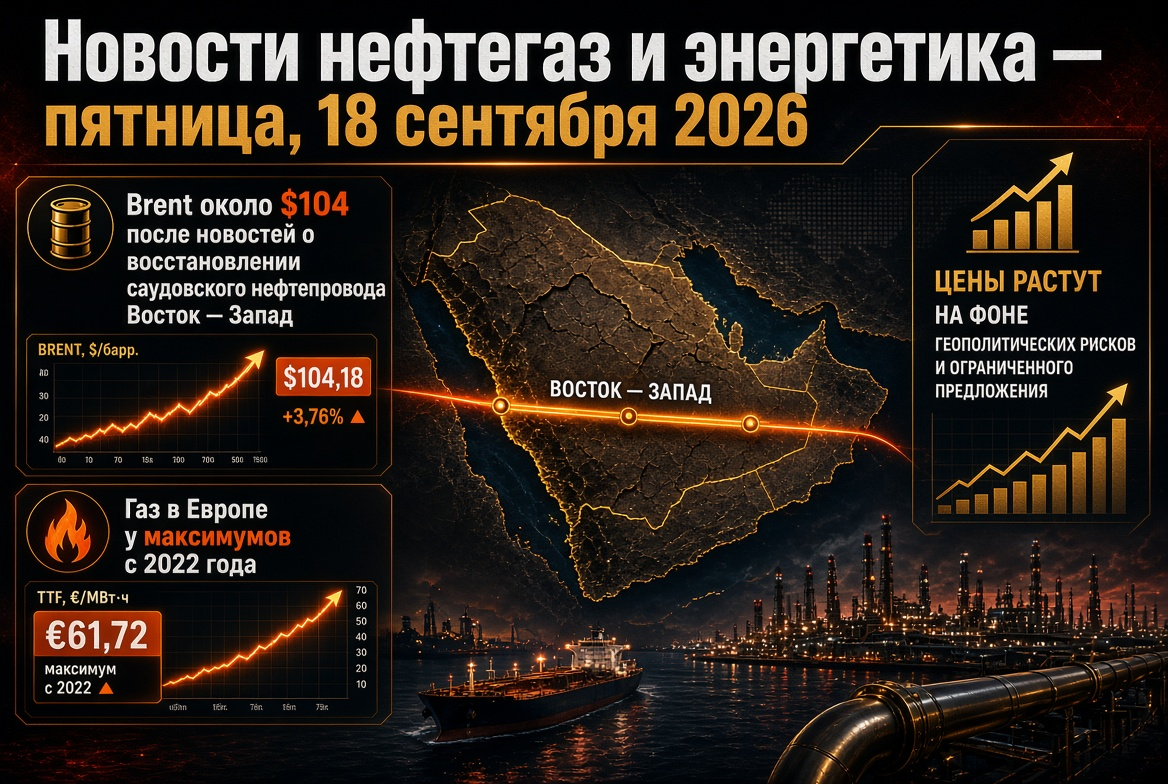
The main characteristic of the oil market as of April 10 is that the decline in futures quotes does not indicate normalization of the physical balance. Following sharp volatility, investors have seen a retracement in market prices; however, premiums for physical grades in Europe and Africa remain elevated. This suggests that oil companies, refiners, and traders continue to factor in the risk of supply disruptions and limited availability of cargoes.
For market participants, this means the following:
- A declining futures price does not guarantee a reduction in the actual price of crude oil for refineries;
- Spreads between regions may remain widened longer than the market expects;
- Volatility in petroleum products may prove more stable than in crude oil.
In practice, this creates a mixed picture for investors: upstream may receive support from still high sales prices, while downstream and independent refineries face the risk of expensive raw materials and unstable utilization.
OPEC+ and Supply: Political Signals Are Present, but No Immediate Additional Barrels
The decision by OPEC+ to increase quotas for May appears to be an important signal to the market, but not an immediate source of new volumes. If logistics and infrastructure remain constrained, a formal increase in quotas does not automatically translate into additional oil supplies to the global market. For oil companies and investors, this means that the balance will still be determined not only by the cartel's policy but also by the actual ability of exporters to restore shipments.
Key takeaways for the sector include:
- Available capacities are only valuable when export infrastructure is accessible;
- OPEC+'s production discipline remains a supporting factor for the oil market;
- Countries with diversified logistics benefit from premiums and market share more rapidly than others.
This is why the topic of supply in the energy sector is now shifting from the question of "how much can be produced" to "how much can safely be delivered to the client."
Gas and LNG: The Market Maintains a Premium for Supply Reliability
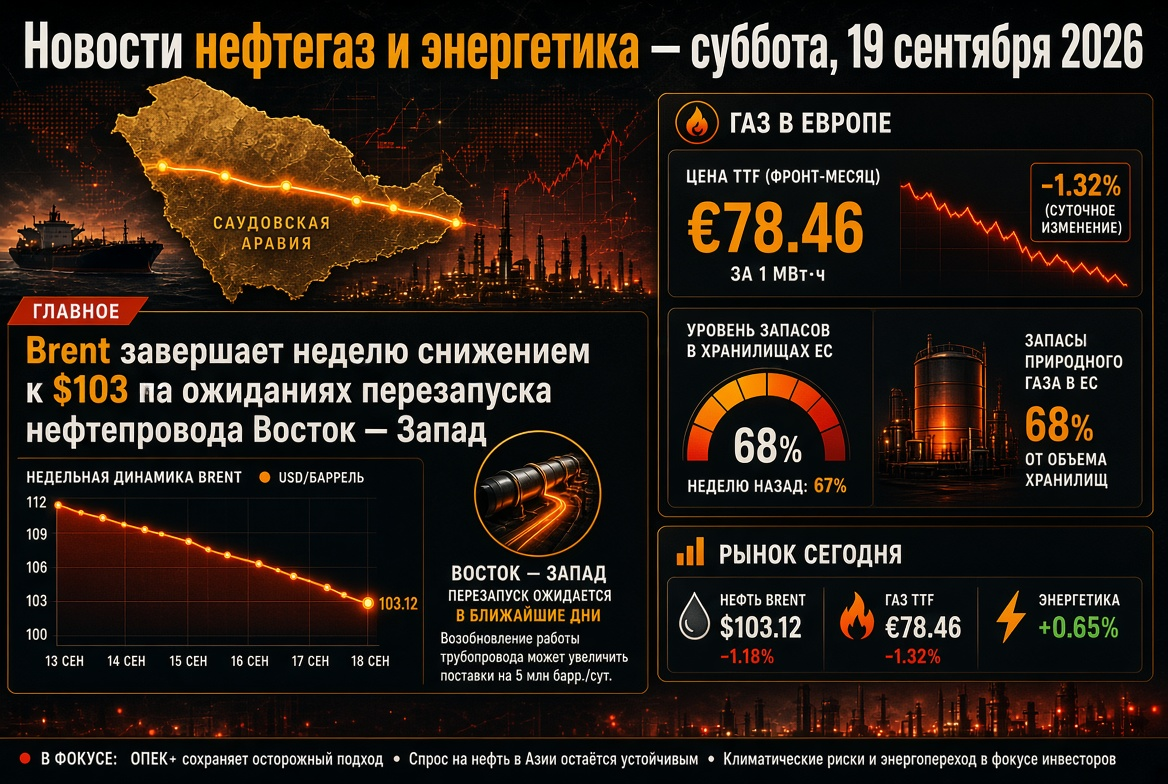
In the gas sector, the implications of the crisis appear even more prolonged. Even with a reduction in military escalation, the global LNG market has already received an important signal: the reliability of supplies from key exporting regions is no longer taken as unconditional. For Asia, this means a higher cost of insuring the energy balance, while for Europe, it signals a more nervous gas storage injection season.
The European market enters the summer stockpiling period in a less comfortable position than a year ago. This intensifies competition for LNG cargoes and increases price sensitivity to any new disruptions. For the global oil and gas sector, this means that gas remains not only a transitional fuel but also a strategic tool for energy security.
The most important implications for the gas market include:
- The LNG premium for flexibility and fleet availability remains elevated;
- Europe is compelled to compete more aggressively with Asia for spot cargoes;
- Gas companies with a resilient portfolio of contracts look stronger than those dependent on spot markets.
Petroleum Products and Refineries: Refining Becomes the Bottleneck
For the petroleum products and refinery market, the key risk lies in the fact that refining is failing to adapt as rapidly as the financial market. If the availability of raw materials is disrupted, and some refining and export capacities are operating unstably, the deficit may transition from crude oil to gasoline, diesel, aviation fuel, and naphtha.
This is particularly important for fuel companies, traders, and industrial consumers. During such periods, refinery margins may behave unevenly:
- Enterprises with guaranteed raw materials and stable logistics benefit;
- Plants reliant on spot supplies must reduce their utilization;
- The petroleum products market becomes far more sensitive to local disruptions than the crude oil market.
For the energy sector, this indicates a return of interest in those assets where the entire value chain—from raw materials to final fuel—matters, not just the barrels.
Electricity: Demand is Growing Faster than the Market Can Reassess System Capacity
The electricity sector in 2026 becomes one of the central topics for global investors. The growth in electricity consumption is accelerating not only due to the economy but also because of data centers, artificial intelligence, digital infrastructure, and the electrification of transport and heating. This changes the demand structure for gas, coal, nuclear generation, and renewable energy sources.
For electricity companies and grid operators, this signifies a new cycle of capital investment:
- In generation and backup capacities;
- In grids and substations;
- In storage systems and peak load management.
Investors must consider that the growth in electricity demand is now not a temporary episode but a structural driver for the entire energy sector.
Renewable Energy Sources: The Energy Transition Accelerates Not Despite the Crisis, But Largely Because of It
Renewable energy sources continue to gain traction in the global energy balance. Renewables have ceased to be just a climate narrative and are increasingly becoming a response to the question of energy security. The higher the geopolitical premium in oil and gas, the greater the interest in solar generation, wind energy, storage, and local decentralized electricity.
This is important for the market for several reasons:
- Renewables reduce dependence on imported fuels;
- Solar and wind projects enhance the attractiveness of network modernization;
- Companies combining traditional energy with low-carbon assets achieve a more sustainable investment narrative.
Yet, in 2026, oil and gas and renewable energy sources do not appear to be mutually exclusive topics. On the contrary, the global energy sector increasingly demands a mixed model wherein oil, gas, electricity, and renewables work as complementary components of a new market architecture.
Coal: The Role is Diminishing in Developed Systems, but it Remains a Price and Reliability Factor in Asia
The coal sector is gradually losing ground in international maritime trade but is not disappearing from the global energy scene. For Asia, coal remains an important source of baseload electricity and a tool for countering expensive LNG. This signifies that the global coal market is moving not towards rapid disappearance, but towards a more marked regionalization.
For investors and participants in the energy sector, this is an important nuance: the reduction of coal’s share in some countries does not negate the fact that in other jurisdictions, coal remains a factor in energy balance, electricity prices, and industrial competitiveness.
What This Means for Investors and Energy Sector Companies
As of April 10, 2026, the fundamental takeaway for the market appears as follows: oil, gas, and energy have entered a period where the physical resilience of supply chains is more critical than the short-term fluctuations in quotes. For investors, oil companies, gas players, refineries, electricity producers, and raw materials sector participants, priorities are shifting in favor of business models that can withstand logistical disruptions, price spikes, and rising capital expenses.
What to watch for in the coming days:
- The pace of actual recovery in physical oil and petroleum product exports;
- The cost of LNG and the dynamics of the European gas balance;
- The utilization rates of refineries and refining margins;
- Investment signals in electricity, grids, and renewable energy;
- Whether the high premium for supply reliability will persist in the raw materials and energy sectors.
This set of factors is now shaping a new global agenda for the energy sector: the market is becoming less linear, more regional, and significantly more sensitive to the quality of infrastructure. In such an environment, not just oil, gas, and electricity producers win, but those companies that control supply, processing, flexibility of the energy balance, and access to the end consumer.