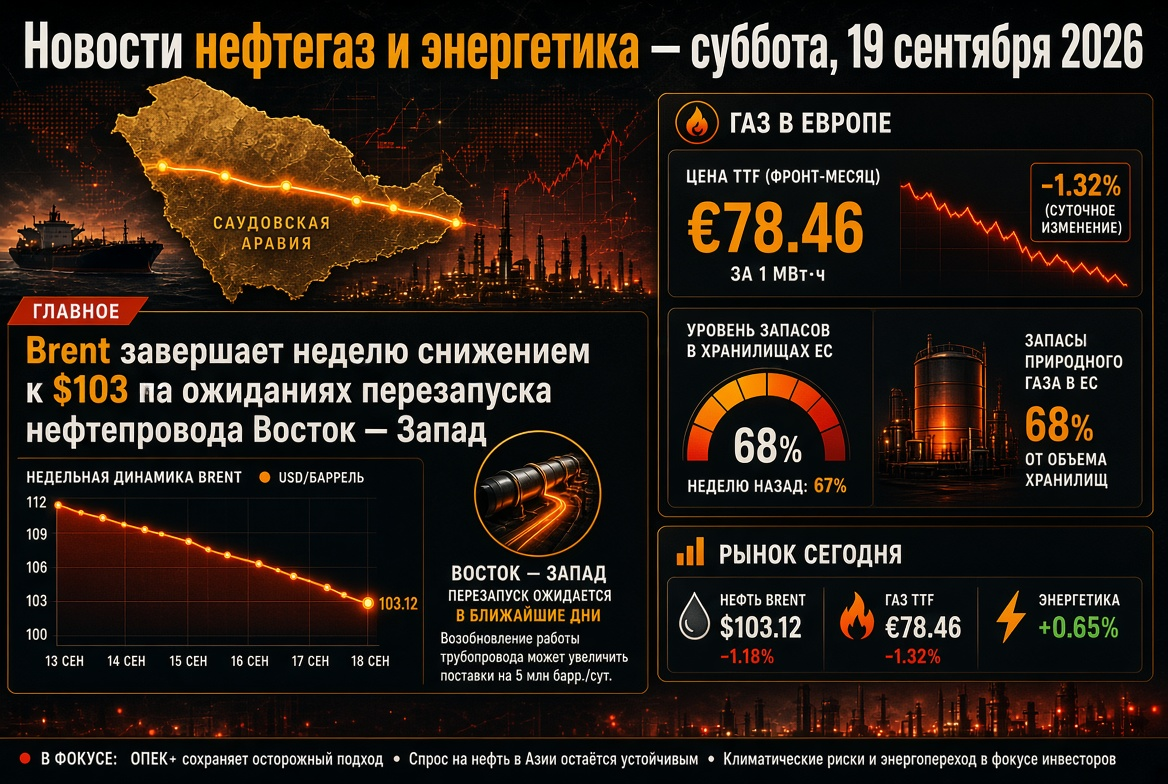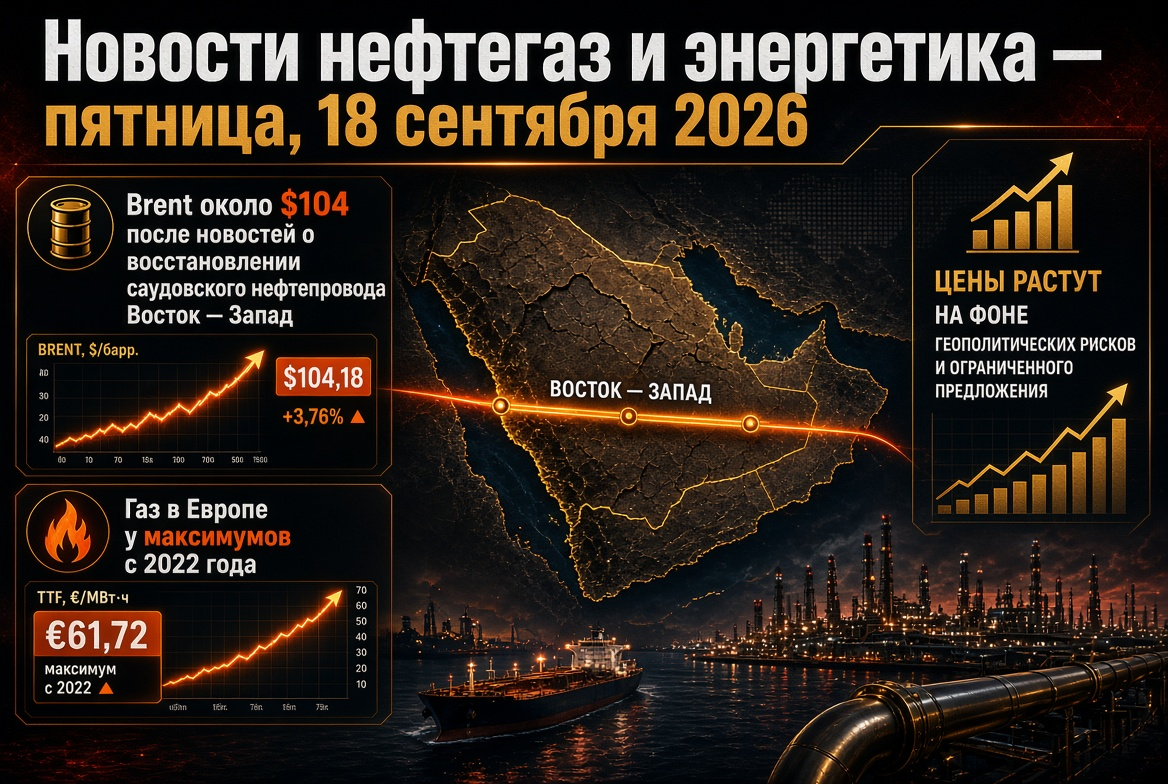
Oil and Gas and Energy News — Thursday, February 26, 2026: Escalation Risks Surrounding Iran, Brent/WTI Dynamics, and Record LNG Flows to Europe
The global energy sector approaches the end of the winter season amid two opposing forces: on one hand, increased risk premiums due to tension in the Middle East and potential threats to logistics in the Hormuz Strait; on the other, signs of oversupply and inventory statistics that temper bullish expectations.
For investors, this signifies that oil, gas, electricity, and petroleum products will be traded more on ‘headlines’ and actual data (inventories, supplies, refinery utilization, weather factors, LNG imports) than on any prevailing trend.
Oil: Brent and WTI Under Pressure from Inventory Data While Geopolitical Premium Persists
Brent and WTI prices remain sensitive to U.S. crude oil inventory data and signals from major producers. The market is simultaneously digesting:
- dynamics of inventories and supply in the U.S., which can quickly diminish the geopolitical premium if data indicates a surplus;
- expectations from OPEC+ regarding potential adjustments to quotas/voluntary restrictions as spring approaches;
- risk premium arising from uncertainty around Iran and supply routes.
The practical takeaway for oil market participants: current volatility does not negate the key inflection point of 2026 — the balance of supply and demand in the second quarter will be defined by growth rates outside of OPEC+ and the discipline of the alliance itself.
OPEC+ and the Middle East: Scenarios for “Insurance” Supply and Risk for Routes
In light of discussions regarding potential limited increases in production by OPEC+, the market has received additional signals that major exporters are prepared to raise supplies as a buffer against disruptions. This enhances the feeling that, in the short term, supply may become more elastic.
For oil prices, it is critically important which scenario becomes the baseline:
- De-escalation Scenario: the geopolitical premium compresses, shifting focus to inventories, refinery utilization, and demand rates.
- Limited Escalation Scenario: the market retains a premium, but it is “dampened” by additional barrels and an increase in exports from countries with spare capacity.
- Logistical Shock Scenario: any threats to passage through the Hormuz Strait instantly elevate the premium, reflected not only in Brent/WTI but also in freight, insurance, and grade differentials.
From a risk management perspective, this creates an environment where hedging oil and petroleum products (diesel, gasoline, jet fuel) becomes a key tool for fuel companies and traders once again.
Gas and LNG: Europe Draws Volumes, U.S. Strengthens Supplier Role, Asia — Softer Demand
The gas market at the end of February is shaped by winter demand and global LNG redistribution. The main feature of the season is Europe’s high attractiveness for spot flows and the increasing role of the U.S. as the primary source of molecules.
Key drivers as of February 26:
- European LNG imports are nearing record monthly levels, stabilizing the balance and reducing the risk of price spikes under mild weather conditions.
- Softer competition from Asia in the spot market increases the likelihood that European storage facilities and traders’ portfolios will be replenished more actively.
- New commercial linkages between traders and majors in the U.S./Europe reinforce a “portfolio” approach to supply: flexibility is more important than being tied to a single direction.
For investors in gas and renewables, this is an important signal: sustained access to LNG reduces the risk of extreme electricity prices in Europe but simultaneously raises the importance of infrastructure — terminals, interconnectors, and “vertical” supply corridors.
Refineries and Petroleum Products: Maintenance Season, Margins Pressured by Diesel, Focus on Gasoline Balance
The oil refining segment traditionally enters the planned maintenance season at the end of winter. This creates a typical set of consequences for petroleum products:
- reduced refinery utilization temporarily limits supply and supports certain “crack spreads”;
- diesel/gasoil in some regions demonstrates weaker dynamics, which could pressurize overall refining margins;
- gasoline gradually begins to “capture” the market’s attention as spring demand rises, particularly in the U.S.
For fuel companies and traders, this is a market where managing inventories of petroleum products and differentials is crucial: under moderate oil prices, spreads on diesel and gasoline can shift profitability in the chain faster than Brent prices themselves.
Electricity and Renewables: Accelerating Permitting Processes, Network and Storage Issues
The electricity and renewables sectors in Europe continue to operate under the logic of “accelerating projects — network prioritization.” The agenda includes simplifying procedures for renewable generation and finding a balance between capacity additions and network infrastructure constraints.
Three practical focuses for the electricity market:
- Permitting reform for renewables increases the likelihood of quicker project rollouts (solar and wind generation) in specific jurisdictions.
- Network limitations become the main “bottleneck”: models are being discussed where new renewable projects receive fewer network privileges in overloaded zones.
- BESS/storage (battery energy storage systems) are transitioning from being an “option” to a “necessity” for smoothing profiles and reducing price volatility in the spot market.
For energy investors, this shift signifies capital moving from “pure generation” towards a combination of “generation + network + storage,” as well as the increasing importance of flexible capacities and balancing services.
Coal and Industrial Fuels: The Role of Base Generation and Regional Reliability Premium
Despite the expansion of renewables, coal remains significant in several energy systems as a source of base generation and a backup during periods of low wind/solar output. At the end of winter, demand for coal and alternative industrial fuels is supported by:
- the need to ensure the reliability of energy systems;
- weather factors and peak loads;
- price signals in gas (especially during LNG volatility).
For coal market participants and energy companies, regional context remains critical: logistics, fuel quality, and emission constraints shape premiums/discounts more than the “average global price.”
Investor Risks and Opportunities: What to Watch on February 26
In the current “headline-driven” environment, investors and industry professionals should focus on a set of indicators that most rapidly translate into price movements for oil, gas, and electricity:
- U.S. oil and petroleum inventory data (crude, gasoline, distillates) — a short-term balance indicator;
- Signals from OPEC+ regarding quotas and voluntary restrictions — an anchor for expectations over the next 2–3 months;
- Spot LNG flows and the competitive dynamics between Europe/Asia — key to gas and electricity pricing;
- Refinery maintenance and the profitability of refining — a driver for diesel, gasoline, and jet fuel;
- Network solutions and renewables regulation — a factor for long-term evaluations of electricity assets.
Conclusion: The Energy Market Between Supply Cushion and Fragile Geopolitics
On February 26, 2026, the global oil and gas market appears both resilient and vulnerable: inventory statistics and the potential “supply cushion” from major exporters are tempering prices; however, geopolitics and logistics bottlenecks can quickly reinstate the risk premium. In gas and LNG, Europe’s ability to attract volumes remains a crucial support, reducing the risk of energy stress but increasing the significance of infrastructure and flexibility.
For investors and energy companies, the optimal strategy is to combine discipline in inventory management and hedging (oil, petroleum products, gas) with selective participation in structural trends: refinery modernization, development of LNG chains, networks, and storage for electricity, as well as renewable projects in areas with predictable connection rules.