Current News in the Oil, Gas, and Energy Sector for Thursday, June 18, 2026: The Situation in the Strait of Hormuz, Oil and Gas Markets, LNG, Petroleum Products, Refineries, Electricity, Renewable Energy, and Coal
The global fuel and energy complex enters a phase of sharp risk reassessment on Thursday, June 18, 2026. Following several months of heightened tension in the Middle East, the oil, gas, LNG, petroleum products, and electricity markets are gradually shifting focus from immediate fears of physical shortages to questions about the pace of supply recovery, logistics resilience, and future marginality for energy companies.
For investors and participants in the energy sector, fuel companies, oil companies, refinery operators, and traders, the key theme of the day is not only the price of Brent or WTI but also the quality of balances: where shortages persist, where future surpluses are forming, which regions benefit from the restructuring of raw material flows, and where risks are rising for industries and consumers.
Key Theme of the Day: Restoring Hormuz Changes Oil Market Balance
The main factor in global energy is the expectation of a gradual normalization of supplies through the Strait of Hormuz. This route remains critically important for the global oil, gas, and LNG market, as a significant portion of Middle Eastern exports passes through it. Any disruptions in the region immediately reflect on oil prices, freight costs, insurance premiums, and refining margins.
The market is now gradually transitioning from a panic assessment of shortages to a more nuanced scenario: supplies may recover, but not instantly. For oil companies, this means sustained volatility, while for investors, it necessitates evaluating not only current quotes but also the ability of companies to ensure stable exports, access to the tanker fleet, and the resilience of their contractual bases.
- In the short term, the oil market remains sensitive to any news from the Middle East.
- In the medium term, focus shifts to stocks, non-OPEC+ production, and refining.
- In the long term, investors are increasingly assessing the risk of future oversupply.
Oil: The Market Balances Between Stock Shortages and Future Oversupply Risks
The oil market presents a dual picture. On one hand, the physical market remains tense: commercial stocks in key economies are under pressure, and consumers continue to compete for available volumes of crude and petroleum products. On the other hand, forecasts for 2027 suggest a significant increase in supply if Middle Eastern supplies are restored and production in the U.S., Brazil, Canada, Argentina, and other countries continues to rise.
For investors, this means that the oil sector may remain profitable in 2026 due to high volatility, shortages of certain grades, and strong refining margins. However, the market is already beginning to factor in the question: will the restoration of supplies lead to downward pressure on prices later?
- In the short term, oil stocks, logistics, and export flows are crucial.
- In the medium term, the key factor will be OPEC+ policy.
- In the long term, investors will evaluate the likelihood of oversupply.
OPEC+ and Production: The Market Awaits Producer Discipline
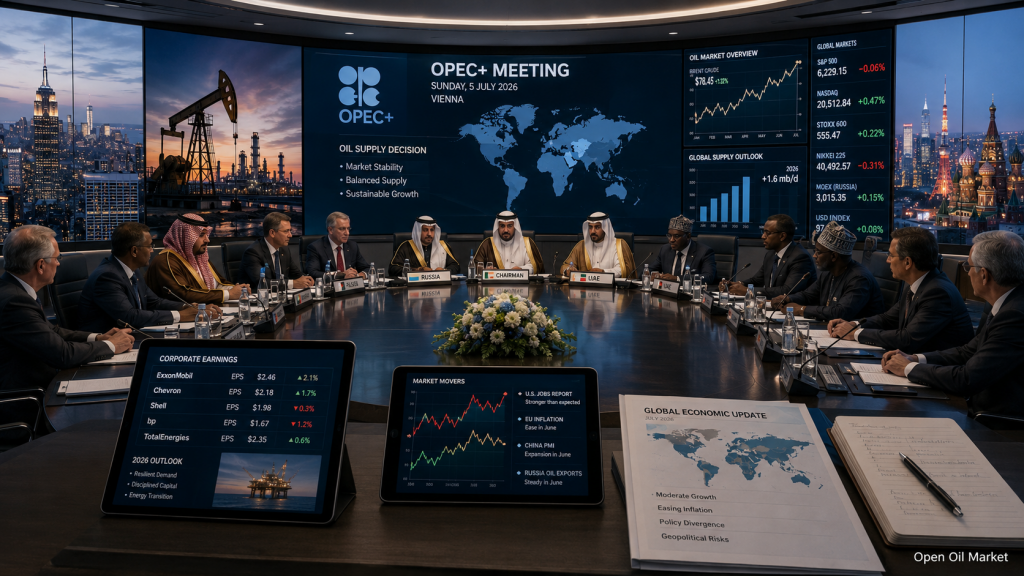
OPEC+ remains the primary regulator of expectations in the oil market. Following a period of geopolitical shock, investors will closely monitor how major producers are prepared to coordinate production and prevent a sharp market reversal towards oversupply. For oil-exporting countries, a comfortable price remains a key condition for budget sustainability, but excessively high prices accelerate demand destruction, increase energy efficiency, and encourage a transition to alternative energy sources.
In this situation, oil companies receive mixed signals. Strong prices support cash flows, dividends, and investment programs, but excessive volatility complicates capital expenditure planning. The market will pay particularly close attention to companies with low production costs, flexible logistics, and access to premium export destinations.
Gas and LNG: Europe Withstood the Stress, But the Market Remains Expensive
The global gas and LNG market remains one of the most sensitive segments of the energy sector. Europe managed the period of intense pressure better than market participants feared: an advanced infrastructure of LNG terminals, interconnectors, and supplies from the U.S., Algeria, and Nigeria helped cushion the blow. However, this does not imply a return to a calm market.
The gas sector is undergoing structural restructuring. Europe is gradually reducing dependence on specific suppliers, Asia is competing for LNG, and emerging economies are not fully prepared to rely on a single source of energy security. For LNG suppliers, this creates long-term opportunities, but for industrial consumers, there is a risk of sustained high prices.
- Europe is enhancing diversification of gas supplies.
- Asia remains a key competitor for flexible LNG cargoes.
- The U.S. is solidifying its role as the largest supplier, but buyers are striving to maintain a balance between American, Middle Eastern, and other gas sources.
Refined Products and Refineries: Refining Margins Become a Central Indicator
The refining sector is coming to the forefront. Even if oil prices stabilize, the refined products market may remain tense due to limited availability of gasoline, diesel fuel, jet fuel, and blending components. High capacity utilization at U.S. refineries indicates that refiners are eager to capitalize on strong margins, but operating at maximum capacity raises the risk of accidents, unscheduled repairs, and deferred maintenance.
For fuel companies and traders, this means that the spreads between crude oil and refined products may be at least as significant as the price of Brent itself. The diesel fuel market remains particularly sensitive as it is directly linked to industry, freight transportation, agriculture, and construction.
Investors should closely monitor:
- Refinery utilization rates in the U.S., Europe, India, China, and the Middle East;
- Stocks of gasoline and diesel fuel;
- Export restrictions and import needs of individual countries;
- Refining margin dynamics and seasonal fuel demand.
Electricity, Renewable Energy, and Coal: The Energy Transition Becomes More Pragmatic
The long-term growth of renewable energy sources (RES), primarily solar and wind generation, continues in the electricity sector. Renewable energy is increasingly occupying space in the global energy balance, reaffirming for investors the sustainability of the decarbonization trend. However, events in 2026 have shown that the energy transition is becoming less ideological and more pragmatic.
When LNG prices rise, and gas supplies become unstable, countries in Asia and certain emerging economies temporarily increase their use of coal to safeguard energy security. This does not negate the long-term growth of renewables but shows that coal remains a backup tool in times of shock. For energy companies, the combination of three factors becomes crucial: affordable generation, grid reliability, and ecological transformation.
Asia: China, India, Japan, and South Korea Intensify Competition for Energy Resources
Asia remains the main center for the growth of global demand for oil, gas, coal, electricity, and petroleum products. China and India continue to determine the direction of commodity flows, while Japan and South Korea focus on the reliability of LNG supplies and the diversification of energy imports.
For the global energy market, this means that even with weakening demand in certain Western economies, the Asian factor will sustain competition for resources. Oil companies, LNG suppliers, coal traders, and electricity equipment manufacturers will look to Asia as a key sales market.
America and Latin America: The U.S., Brazil, Canada, and Argentina Strengthen Their Role in Supplies
Amid disruptions in Middle Eastern flows, the significance of producers outside OPEC+ is rising. The U.S. remains the top supplier of oil, gas, and LNG, but infrastructure limitations demonstrate that even the largest producer cannot always quickly close the global deficit. Brazil, Canada, and Argentina are also becoming increasingly significant sources of production growth.
For investors, this raises interest in companies with assets in the Atlantic Basin, access to export terminals, and projects with low breakeven points. In Latin America, government policy becomes an additional factor: fuel subsidies, tax burdens, and price regulation can affect the profitability of oil and gas projects.
Key Points for Investors and Energy Sector Participants
Thursday, June 18, 2026, marks an important point for reassessing the global energy landscape. The key takeaway of the day is that the energy market remains strong but increasingly heterogeneous. Oil benefits from low inventories and geopolitical risks, gas and LNG maintain a premium for supply security, refined products gain from high refining margins, and electricity continues to trend towards renewable energy while coal retains its role as a backup resource.
Investors should focus on five areas:
- The speed of supply recovery through the Strait of Hormuz;
- The dynamics of oil, gasoline, and diesel fuel inventories;
- OPEC+ policies and production growth outside the alliance;
- The competition between Europe and Asia for LNG;
- Refinery margins, the development of renewables, and the resilience of coal generation in Asia.
For oil companies, fuel operators, and energy investors, the current situation simultaneously creates opportunities and risks. The best positions will be held by those players who can navigate volatility, manage logistics, control inventories, and swiftly adapt to changes in the global energy balance.