Current Oil and Gas and Energy News for Friday, July 3, 2026: Decline in Geopolitical Premiums in Oil, Expectations for OPEC+ Decisions, Gas Market Situation, LNG, Power Generation, Renewables, Coal, Oil Products, and Refineries: Overview for Investors and Participants in the Global Energy Market
Key oil and gas and energy news for Friday, July 3, 2026, present a complex picture for investors: the oil market is rapidly reassessing risks following improved flows through the Strait of Hormuz, the gas market remains dependent on LNG and weather factors, while power generation is increasingly facing network overload amid heat, rising demand, and unstable renewable energy generation.
For energy sector participants, including oil companies, fuel traders, refineries, power producers, and investors, the main takeaway for the day is that the raw materials sector enters July not in a unified trend mode, but rather in a divergence mode. Oil is adjusting due to expectations of rising supply, natural gas retains a premium for logistics and storage, coal maintains its role as backup fuel, and investments in renewables and networks become not only a climate necessity but also an infrastructure imperative.
Oil: Brent and WTI Decline Amid Normalization of Supply through Hormuz
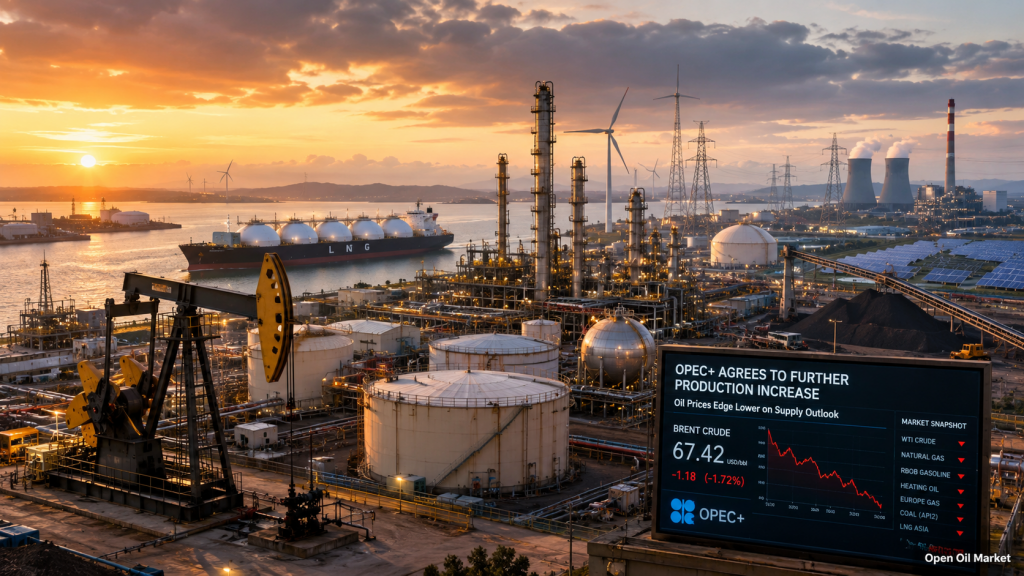
The main event for the global oil market is the decline in geopolitical premiums following improved tanker passage through the Strait of Hormuz. Brent has dropped to around $70 per barrel, while WTI has fallen to below $68, marking one of the most significant movements in recent months.
For oil companies and investors, this indicates a transition in the market from a shortage scenario to a more balanced supply scenario. Just recently, market participants were pricing in the risk of supply disruptions from the Persian Gulf; however, the recovery of shipments from Saudi Arabia and reduced tensions around supply routes have shifted the expectation balance.
- Brent remains under pressure due to increased physical supply.
- WTI reacts to high refinery utilization and reductions in commercial inventories.
- The geopolitical premium is decreasing but not disappearing completely.
- Asian buyers are gaining more opportunities for price arbitrage.
For fuel companies, the current situation is significant from a procurement strategy perspective: as supplies stabilize from the Middle East, spot market premiums may decrease, but any disruptions in negotiations or logistics could quickly reintroduce volatility.
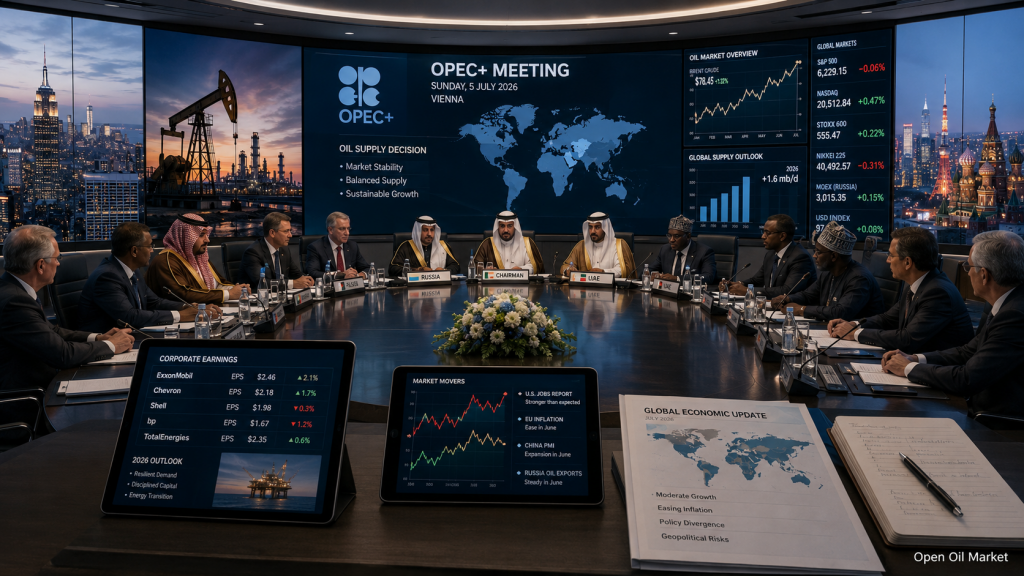
OPEC+: Market Awaits Further Production Increase in August
OPEC+ policy remains in the spotlight. The alliance is expected to increase target production levels by approximately 188,000 barrels per day in August. This continues the trend of gradually restoring part of the previously restricted supply.
For investors in the oil and gas sector, this presents a dual signal. On one hand, increased quotas help stabilize the physical market and reduce the risk of sharp price spikes for petroleum consumers. On the other hand, additional supply limits the growth potential of Brent and WTI, especially if demand in China, Europe, and the US increases more slowly than anticipated.
The most sensitive to OPEC+'s decisions are:
- Oil exporters with high budget dependence on Brent prices;
- Oil service companies operating in the upstream segment;
- Refineries for which lower raw material prices could improve margins;
- Petroleum traders focused on spreads between crude oil, gasoline, diesel, and fuel oil.
Saudi Arabia and Asia: Competition for Buyers Intensifies
The resumption of active shipments from the Saudi port of Ras Tanura holds particular significance. Saudi oil is once again more actively reaching the market, and the shift of some sales to the spot segment is heightening competition for buyers in Asia.
For China, Japan, South Korea, and India, this creates a broader selection of oil grades and increases the bargaining power of importers. For Middle Eastern oil companies, conversely, this necessitates greater flexibility in working with official selling prices, discounts, and delivery timelines.
The Asian market is becoming the main battleground for producers. If Saudi Arabia intensifies its use of spot sales, pressure on alternative suppliers may increase. This is also important for the petroleum products market: changes in raw material costs quickly reflect on refinery margins, especially in countries with a high share of imported oil.
USA: Oil Inventories Decline, Refineries Operating Near Capacity
The American market is sending the opposite signal: commercial oil inventories are decreasing while refinery utilization remains high. According to recent data, crude oil stocks in the US have dropped by about 3.8 million barrels, and refinery capacity utilization has approached 96.6%.
This suggests strong seasonal activity in the refining segment. Summer demand for gasoline, jet fuel, and diesel supports high refinery utilization rates, even amid declining oil prices. For investors, this is particularly important: refining may appear more resilient than production if the margins for petroleum products remain at acceptable levels.
However, the picture is heterogeneous. Gasoline stocks are decreasing, indicating robust consumer demand, while distillate inventories are rising. This could reflect a disparity between transportation demand and industrial activity. For fuel companies, the key indicator in the coming days will be the dynamics of the crack spread for gasoline and diesel.
Gas Market: USA Builds Reserves, Europe Relies on LNG
The natural gas market remains one of the most sensitive segments of the global energy sector. In the US, gas inventories have risen more than expected, putting pressure on Henry Hub prices. Meanwhile, the situation in Europe appears more tense: storage levels remain below comfortable levels for mid-summer, and competition for LNG is intensifying.
Investors are particularly focused on the redirection of American LNG supplies. Europe’s share in US LNG exports fell in June as Asian prices and demand from Egypt made other destinations more attractive. For European energy, this means increased dependence on price arbitrage: if Asia pays more, Europe receives fewer flexible deliveries.
- The US has a more comfortable situation regarding gas reserves.
- Europe remains vulnerable due to low underground gas storage levels.
- LNG is increasingly being redirected to markets with higher prices.
- Gas power plants are once again becoming a key balancing resource.
Power Generation: Heat, Networks, and Data Centers Changing Demand Structure
Power generation is becoming a central part of the global energy agenda. In the US, the largest power system, PJM, has experienced a sharp increase in demand amid heat: load is approaching historical peaks, and wholesale prices in certain nodes of the network have surged. Similar issues are observed in Europe, where high temperatures, weak winds, and generation constraints are strengthening the role of gas and coal plants.
This confirms for investors the long-term thesis: energy transition is impossible without massive investments in networks, backup capacities, and storage. Renewable energy growth reduces carbon intensity in generation, but at the same time raises requirements for flexibility in energy systems. Demand from data centers, artificial intelligence, electric vehicles, and air conditioning is creating new loads that older networks may not always be able to handle.
In power generation, the most promising directions remain:
- Modernization of network infrastructure;
- Energy storage systems;
- Gas generation as a backup for peak demand;
- Digital load management;
- Localized generation for industrial consumers.
Renewables: Growth Continues, but Market Demands Reliability
Renewable energy sources remain the primary focus for capital investments in global energy. Solar and wind generation continue to increase their share in the energy balance of Europe, the US, China, India, and Middle Eastern countries. However, events in recent weeks show that the growth of renewables alone does not solve the reliability problem of energy supply.
During periods of weak wind, heat, and high evening demand, energy systems are forced to connect gas and coal stations. This does not negate the strategic growth of renewables, but it underscores the increasing value of projects that integrate solar generation, storage, flexible consumption, and network infrastructure.
For funds and strategic investors, the renewable energy market is gradually shifting from mere capacity installation to comprehensive solutions. The focus is not only on megawatts but also on the ability of projects to operate in real energy systems: smoothing peaks, reducing network constraints, and ensuring predictable electricity supply.
Coal: Reserve Role Maintains, Especially in Asia
Coal remains a controversial but essential element of the global energy balance. Despite decarbonization efforts, demand for thermal and metallurgical coal is supported by Asia, metallurgy, power generation, and periods of extreme weather. Australia, Indonesia, India, and China continue to set the tone in this segment.
In metallurgical coal, specific interest lies in the growing demand from India, where the expansion of the steel industry is increasing the need for imported raw materials. For investors, this creates a niche opportunity: thermal coal is under pressure from climate policies, but metallurgical coal is still tied to the infrastructure and industrial cycle.
In the short term, coal also maintains its function as a backup fuel for energy systems, especially when gas is expensive, wind is weak, and electricity demand spikes due to heat.
What Matters for Investors and Energy Market Participants
Friday, July 3, 2026, shows that the global energy sector is entering a phase of more complex balance. Oil is pressured by rising supply and logistics normalization, gas remains a hostage of LNG routes and storage, power generation is facing network overload, and renewables demand new investments in flexibility and infrastructure.
Investors should focus on five key factors:
- OPEC+ decision on August production and Brent's response;
- Refinery margins for gasoline, diesel, and jet fuel;
- Gas storage levels in Europe before the fall;
- LNG prices in Asia and Europe;
- The load on electricity networks in the US and EU during summer heat.
The main investment idea of the day is that the energy market is evolving beyond just being a raw materials market. It is becoming a market for infrastructure, logistics, flexibility, and reliability. For oil companies, gas traders, refineries, power producers, and funds, this means the need to evaluate not only the price of a barrel or megawatt-hour but also the resilience of the entire supply chain—from the field and LNG terminal to the electricity grid, fuel storage, and final industrial consumer.