Current Overview of the Global Fuel and Energy Sector as of June 22, 2026: Oil After the Decline of Geopolitical Premiums, Recovery of Supplies through the Strait of Hormuz, Situation in the LNG, Gas, Coal, Electricity, Renewable Energy, Refineries, and Oil Products Markets
The global fuel and energy sector is entering a phase of cautious risk reassessment on Monday, June 22, 2026. The main topic for investors, oil companies, fuel traders, refineries, gas producers, electricity generators, and commodity market participants is the gradual recovery of shipping through the Strait of Hormuz following a period of heightened geopolitical tension. For the global oil market, this means a decrease in the military premium in Brent and WTI prices, but not a complete return to normal balance.
The energy sector remains heterogeneous. Oil is reacting to expectations of increased supplies, while gas and LNG maintain heightened sensitivity to logistics and sanctions. Coal is supported by Asian demand and supply disruptions, while electricity faces a new challenge—rapidly growing network loads due to heatwaves, data centers, industrial electrification, and the expansion of renewables.
Oil Market: Decline of Geopolitical Premium Following News from Hormuz
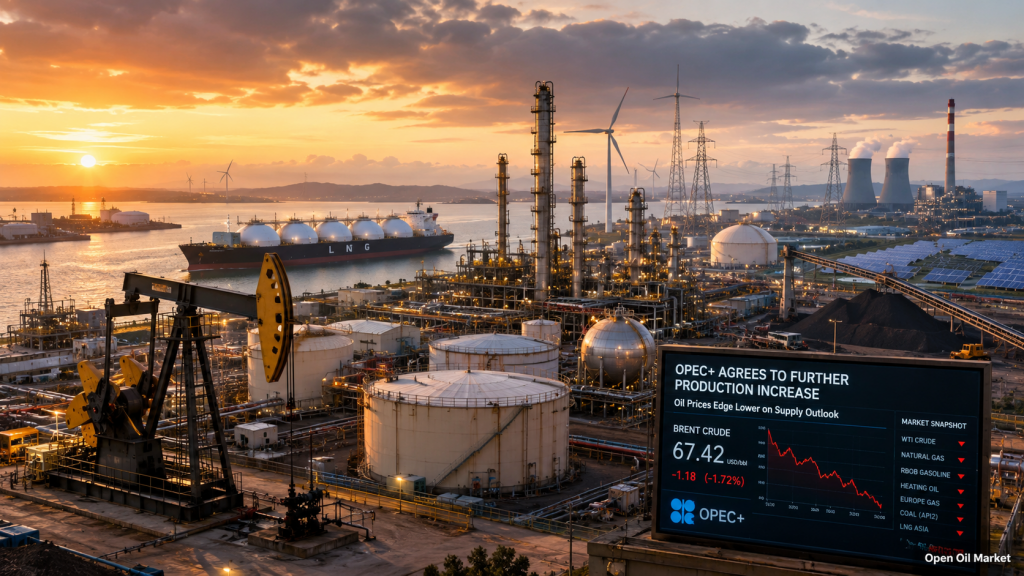
A key event for the oil and gas market has been the increase in tanker movement through the Strait of Hormuz. This route is strategically significant for the global fuel and energy sector, as it carries a substantial portion of oil, petroleum products, and LNG supplies from the Persian Gulf. Following news of the resumption of some shipments, Brent and WTI quotes adjusted from peak levels, as the market began to price in a gradual recovery of supplies.
However, it is premature to speak of complete normalization. Market participants are noting several risk factors:
- shipping remains below pre-crisis levels;
- insurance rates and freights may remain elevated;
- some shipowners will wait for confirmation of safety on the route;
- any new political signal could quickly reinstate the risk premium in oil prices.
For investors in oil companies, this means that short-term volatility will persist. Brent may remain sensitive to news from the Middle East, while the fundamental balance will depend on the speed of returning export flows, oil inventories, and producers' discipline.
OPEC and Demand Forecast: Market Debates Long-Term Balance
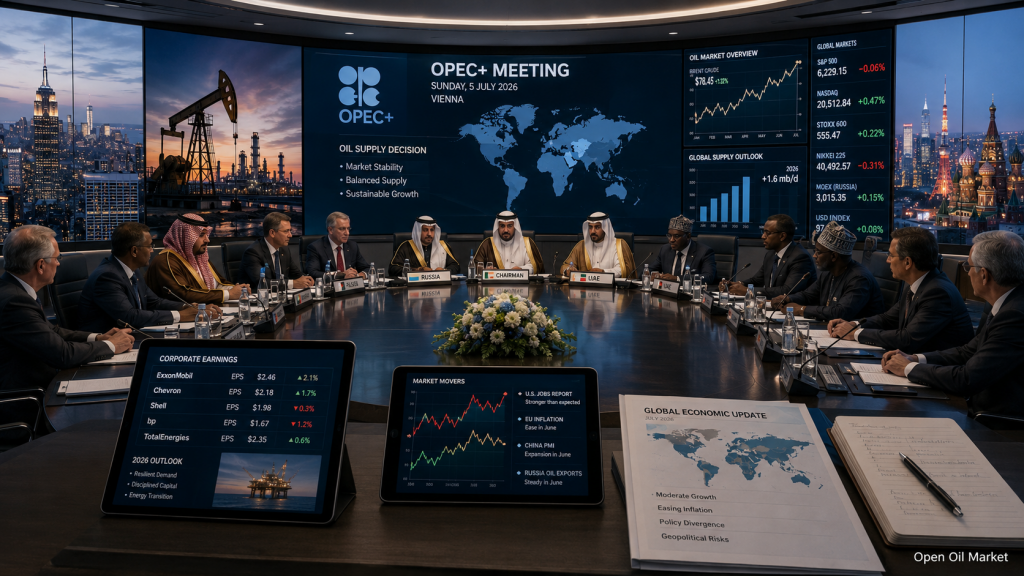
Amid the current price correction, OPEC and international agencies' forecasts remain important benchmarks. OPEC maintains a more constructive view on long-term oil demand, indicating that global consumption may continue to grow into 2030. For oil companies, this supports investment logic in upstream, exploration, production, and transportation infrastructure.
However, the short-term picture is more complex. High fuel prices, logistics constraints, slowing industrial demand, and energy-saving policies are already putting pressure on consumption. This is particularly noticeable in importing countries, where expensive petroleum products directly affect inflation, transportation costs, and business margins.
For the oil market, three questions are currently crucial:
- how quickly will supplies from the Persian Gulf region recover;
- whether demand in Asia will compensate for weakness in certain developed economies;
- whether oil refining can maintain margins amid unstable raw material and product prices.
Oil Products and Refineries: Diesel, Gasoline, and Jet Fuel Remain Sensitive Segments
The oil products sector remains one of the most strained in the global energy landscape. Even if oil prices decline, the gasoline, diesel, and jet fuel markets do not always follow suit. The reasons include processing constraints, logistics, seasonal demand, export quotas, and local measures to protect domestic markets.
Chinese export data for oil products indicate that supplies of gasoline, diesel, and jet fuel can fluctuate sharply under the influence of export restrictions and domestic priorities. For Southeast Asia, South Asia, and Australia, this is a critical factor: regional buyers depend on the availability of Asian supplies, and any reduction in exports increases competition for fuel.
Key indicators for refineries over the coming weeks will include:
- refining margins for diesel and aviation fuel;
- availability of crude oil of various grades;
- gasoline inventory levels prior to the summer transport season;
- demand from aviation, marine logistics, and road transport.
Gas and LNG: Sanctions, Europe, and New Competition for Supplies
The global gas and LNG market continues to be influenced by several factors: the recovery of logistics through the Strait of Hormuz, Europe’s policy of reducing reliance on Russian gas, demand from Asia, and increasing U.S. LNG exports. For Europe, legal clarity regarding the future ban on operations with Russian LNG is especially critical. This changes the calculations for major energy companies operating under long-term contracts.
For gas buyers, the main risk lies not only in price but also in the availability of flexible supplies. If Europe actively replaces Russian LNG with American, Qatari, and other supplies, competition with Asia will intensify. For developing countries, this could mean higher gas prices and a partial return to coal or oil products in electricity generation.
For investors in gas companies and LNG projects, long-term demand for flexible fuel remains a positive factor. Gas continues to play a transitional role between coal and renewables, especially where energy systems require flexible generation.
Electricity: Heat and Data Centers Increase Network Loads
Electricity generation is becoming a central theme in the global fuel and energy sector. The increase in electricity consumption is not only weather-related but also tied to deeper structural changes: the development of artificial intelligence, data centers, electric vehicles, industrial automation, and heating electrification.
Europe's heatwaves are driving up demand for air conditioning, creating additional strain on energy systems. At the same time, the rapid growth of renewables is not always accompanied by sufficient investment in networks, storage, and balancing capacities. The example of the Netherlands illustrates that even developed energy markets face constraints in connecting new consumers and generators.
For electric companies, the key investment focus is shifting towards:
- modernizing grid infrastructure;
- energy storage systems;
- managing peak loads;
- flexible gas generation;
- digitizing energy systems.
Renewables: Solar Energy Grows, but Grid Issues Become Critical
Renewables continue to rapidly increase their share in the global energy balance. Solar and wind generation remain the main investment directions, and the declining cost of equipment makes renewables competitive even without large subsidies. According to forecasts by international energy agencies, by 2030 renewable sources and nuclear energy could account for about half of global electricity generation.
However, the growth of renewables creates a new challenge—not a generation deficit, but a deficit of grid flexibility. During hours of high solar output, prices may drop, but in the evening, as generation falls and demand rises, the energy system again requires gas, hydro, nuclear, or battery capacities.
For investors, this means that not only solar and wind facilities but also the infrastructure around them—grids, storage, demand management systems, smart meters, and balancing services—are becoming increasingly promising.
Coal: Asia Supports Demand Amid High Gas Prices
The coal market remains an important part of the global energy landscape, despite the acceleration of the energy transition. In Asia, coal continues to be used as a base fuel for electricity generation, especially in light of high LNG prices and rising summer electricity demand.
Additional pressure on the market is created by disruptions in China and uncertainty regarding Indonesia's export policy. Meanwhile, Japan, South Korea, and Southeast Asian countries may temporarily increase coal purchases if gas supplies remain costly or unstable. For the global fuel and energy sector, this serves as a reminder that the energy transition does not eliminate the need for backup and affordable sources of generation.
For coal companies, the situation appears contradictory: in the long term, the sector faces climate pressure, but in the short term, it receives support from energy security, weather factors, and restrictions in the gas market.
Geography of the Energy Market: Global Focus on Supply Security
The global energy agenda is increasingly centered around supply security. The U.S. is strengthening its role as an exporter of oil, petroleum products, and LNG. Europe is restructuring its gas balance and accelerating investments in networks. China combines oil and gas imports with the development of coal, renewables, and domestic refining. India aims to maintain access to affordable energy resources while simultaneously boosting domestic production and green generation.
For the global market, this signifies the formation of a more regionalized energy landscape. Raw material flows are becoming less linear, and the trade in oil, gas, petroleum products, and coal increasingly depends on sanctions, insurance, freight, geopolitics, and local industrial priorities.
What is Important for Investors and Participants in the Fuel and Energy Market
For Monday, June 22, 2026, the key picture in the fuel and energy sector is as follows: oil is correcting after a decline in geopolitical premiums, but the market remains vulnerable to news from Hormuz; gas and LNG continue to hold strategic importance for Europe and Asia; coal receives short-term support from energy security; electricity and renewables require substantial investments in networks and flexibility.
Investors, oil companies, fuel traders, refineries, and energy holdings should closely monitor the following indicators:
- the dynamics of Brent and WTI following the restoration of movement through the Strait of Hormuz;
- the cost of tanker freight and insurance;
- the refining margin for diesel, gasoline, and jet fuel;
- European decisions regarding Russian LNG and replacement supplies;
- the demand for electricity in Europe, the U.S., India, and Southeast Asia;
- prices for energy coal and Indonesia's export policy;
- investments in renewables, storage, and grid infrastructure.
The main takeaway for the market: the global fuel and energy sector is transitioning from a supply shock to a phase of cautious recovery, but energy security once again becomes as vital as price. For investors, this creates opportunities in oil, gas, LNG, electricity, renewables, network infrastructure, and refining, but requires more careful risk management.