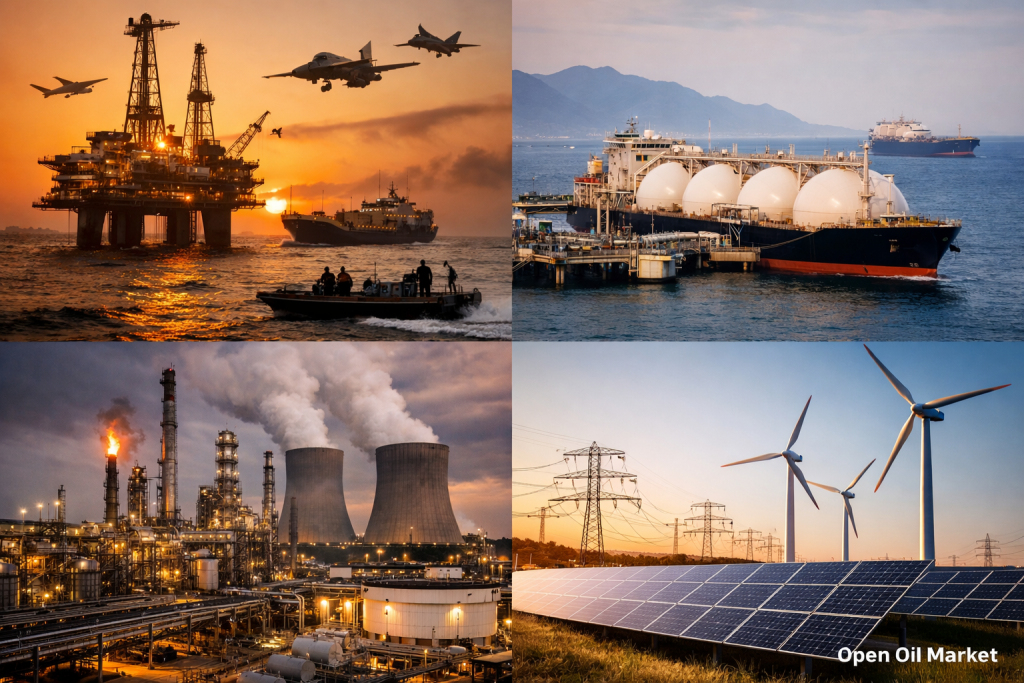
Current News in Oil, Gas, and Energy as of April 13, 2026: Oil, Gas, Refineries, Electricity, and Renewable Energy Amid Geopolitical Tensions and Rising Demand
The global energy market enters Monday, April 13, 2026, in a state of heightened volatility. The main focus for oil, gas, petroleum products, electricity, and the energy sector as a whole is the combination of geopolitical risk in the Middle East, the restructuring of raw material logistics, and the growing demand for energy resources from industries, data centers, and new digital capacities. For investors, oil companies, gas traders, refineries, electricity market participants, and the renewable energy segment, this signifies a market that is not just expensive but structurally more complex.
Three questions have resurfaced as primary concerns:
- How sustainable is the recovery of supplies through key maritime routes?
- Will the oil and gas sectors be able to quickly ramp up supply after disruptions?
- Which segments of the energy sector will benefit from expensive raw materials and the re-evaluation of energy security?
Oil: The Market Operates Under Geopolitical Premium
The oil market begins the week with an exceptionally sensitive reaction to the situation surrounding the Middle East. Even a partial recovery of transit through the Strait of Hormuz does not imply a return to prior norms. Market participants in oil and petroleum products see that physical supplies remain vulnerable, and any news regarding negotiations, military presence, and shipping immediately impacts prices.
Several factors are currently significant for the global oil market:
- Incomplete recovery of maritime logistics;
- Continued high risk premium on physical deliveries;
- Limited rapid compensatory supply capabilities from some producers;
- Revised expectations regarding supply and demand balance for the second quarter.
In practice, this means that even with a temporary easing of tensions, oil may remain expensive longer than consumers expect. This creates a window for strong margins for oil companies and traders, but for processing, transportation, the aviation sector, and parts of the industry, high oil prices remain a direct source of cost pressure.
OPEC+ and Supply: Formal Increase in Quotas Does Not Resolve Physical Shortage Issues
One of the key narratives in oil and gas remains the position of OPEC+. Formally, the cartel and its allies continue to demonstrate a willingness to adjust supply, but the market increasingly understands the difference between quotas on paper and actual supply in physical terms. Given the logistical constraints and ongoing risks in the Persian Gulf, additional barrels may not always be quickly available to the market.
This sends an important signal to investors. The oil market is currently evaluating not just the nominal decisions of OPEC+, but also the operational capacity of the member countries to:
- Rapidly increase production;
- Ensure exports;
- Protect infrastructure;
- Maintain stability in refining processes and petroleum product supplies.
Therefore, in the short term, the key driver remains not so much quota policies but the actual availability of crude oil for the global market. For oil companies, this enhances the significance of upstream assets, export flexibility, and resilient transport infrastructure.
Gas Market: Europe Faces No Immediate Shortage, But High Strategic Caution Costs
The situation in the gas market appears more stable than in the oil market; however, this stability is largely managed rather than natural. Europe enters the gas injection season without signs of an immediate supply crisis but recognizes that the upcoming heating cycle will require discipline in stockpiling, LNG logistics, and pricing contracts.
Several current trends are relevant for the global gas and LNG markets:
- Europe is striving to fill storage facilities in advance;
- The role of LNG remains critically high;
- Competition for spot gas volumes may increase amidst new disruptions in the Middle East;
- Russian gas and LNG continue to be a factor in market balance despite political restrictions and diversification strategies.
For gas companies and consumers, this means that the gas market remains flexible but is expensive in terms of risk insurance. In other words, there may not be a physical shortage, but the reliability premium on supply is still significant. For industries, electricity generation, and large gas importers, this indicates a push towards diversifying supply portfolios and increasing the share of long-term contracts.
Refineries and Petroleum Products: Refining Re-emerges as a Strategic Asset
The segment of refineries and petroleum products is gaining particular significance. When the raw materials market is unstable and oil flows change, refining becomes the center of the struggle for margins and physical fuel availability. Market participants are already factoring in the higher cost of operational supplies, and spreads between individual regions are widening.
For the refining sector, this week is crucial for three reasons:
- The cost of physical crude oil at specific supply points remains elevated;
- Refineries are forced to flexibly adjust raw material baskets;
- The petroleum products market is sensitive to any disruptions in gasoline, diesel, naphtha, and jet fuel supply.
If tensions persist on supply routes, those refineries with resilient logistics, access to alternative oil grades, and high operational flexibility may benefit the most. This is particularly important for fuel companies, as refining under these conditions transforms from merely a production function into a competitive advantage.
Electricity: Rising Demand Alters Investment Logic in the Sector
In the electricity sector, a long-term trend is intensifying: the world is increasingly moving towards increased loads on energy systems. The reasons are extending far beyond the typical industrial cycle. Electricity is becoming increasingly essential for data centers, artificial intelligence, transportation electrification, cooling in hot seasons, and new industrial infrastructure.
This generates several implications for the electricity market:
- Demand for base and balancing generation is rising;
- The value of grid infrastructure is increasing;
- Interest in energy storage systems is growing;
- Gas generation and renewable energy are increasingly seen as complementary rather than mutually exclusive segments.
For investors, this reflects a shift in focus from the simple theme of “cheap generation” to “reliable generation.” In the coming quarters, capital will increasingly seek projects that can simultaneously provide power, system reliability, and acceptable returns.
Renewable Energy: The Energy Transition is Not Halted, But Gains New Momentum
In light of fluctuations in oil and gas prices, the renewable energy market is receiving significant political and investment momentum. Solar generation, wind energy, energy storage, and hybrid projects are increasingly perceived not only as part of a climate agenda but also as components of energy security strategies. This marks a fundamental shift for global energy.
Today, the renewable energy segment is solidifying the following ideas:
- Acceleration of the deployment of solar and wind capacities;
- Increased interest in energy storage systems;
- Demand for local energy solutions for remote industrial sites;
- Development of hybrid models where renewables reduce gas or diesel consumption.
For oil and gas, this does not imply an immediate displacement of hydrocarbons. On the contrary, the current configuration indicates that the global market is entering a phase of coexistence: oil and gas will remain the backbone of the world economy for a long time, but renewables are rapidly capturing a share of new investments and part of the growth in final electricity demand.
Coal and Traditional Generation: Reserve Role Persists Despite ESG Pressures
Coal has once again affirmed its status as a reserve resource in global energy, utilized during times of stress. For many countries, this represents an uncomfortable yet pragmatic solution: when gas is costly, and the energy system requires guaranteed power, traditional generation continues to play a stabilizing role.
This week, market participants will be watching how:
- The competitiveness of coal generation in several regions holds;
- Demand for imported energy coal strengthens;
- Regulatory decisions shift between environmental goals and energy security needs.
For the energy market, this serves as an important reminder: even amidst the rapid growth of renewable energy, the energy transition remains a non-linear, multi-layered process. Traditional energy sources, including coal and gas, still significantly influence electricity pricing.
What Matters for Investors and Energy Market Participants This Week
On Monday, April 13, 2026, the oil, gas, electricity, and petroleum products market is characterized by a rare combination of short-term nervousness and long-term structural trends. For investors, oil companies, refineries, fuel suppliers, gas traders, and renewable energy segment participants, this necessitates monitoring several groups of factors simultaneously.
Key Benchmarks for the Week:
- Oil: News regarding the Strait of Hormuz, physical supplies, and risk premium dynamics.
- Gas: Europe’s preparedness for winter, LNG logistics, and competition for spot volumes.
- Refineries and Petroleum Products: Refining margins, fuel supply resilience, and regional price imbalances.
- Electricity: Signals related to consumption growth, network load, and the role of gas generation.
- Renewable Energy: New investment decisions, capacity rollout rates, and demand for energy storage systems.
The main takeaway for the global energy market is that energy is once again not only trading through the economic cycle but also through security factors. This supports oil prices, enhances the strategic value of gas, strengthens the role of refineries, and simultaneously positions electricity and renewables as key growth areas in the coming years.
Thus, the news in the oil, gas, and energy sectors as of April 13, 2026, paints a mixed yet vital picture for the market: in the short term, geopolitics dominates, while in the long term, companies capable of combining raw material resilience, logistical flexibility, and access to new energy infrastructure will prevail.