The UAE's Exit from OPEC Amplifies Brent Oil Market Volatility, while LNG and Refined Products Shortages Shift the Global Energy Balance April 29, 2026
The global fuel and energy sector approaches April 29, 2026, in a state of structural tension. For investors, market participants in the fuel and energy complex, fuel companies, oil producers, refineries, gas suppliers, power producers, and the renewable energy sector, the primary factors remain a combination of geopolitical risk, supply constraints from the Middle East, expensive oil prices, shortages of certain refined products, and accelerated revisions of energy strategies.
The key topic of the day is the UAE's decision to exit OPEC and OPEC+. This event shifts the balance of power within the oil market, raises questions about future producer discipline, and could become one of the main factors affecting oil prices in the second half of 2026.
Oil Market: The UAE's Exit from OPEC Reshapes Supply Architecture
The main news for the oil and gas sector is the announcement of the UAE's exit from OPEC and OPEC+ effective May 1. For the global oil market, this is not merely a political gesture; it signals a potential shift of some producers towards a more independent extraction strategy. The UAE remains one of the major producers with the potential to increase supply following the normalization of export logistics.
For investors, this implies several important consequences:
- OPEC+ may face more complex coordination challenges;
- The role of Saudi Arabia as the primary market stabilizer may become less straightforward;
- After the restoration of maritime routes, the UAE may seek to increase its share in the global oil market;
- Brent and regional oil price volatility may remain elevated.
For oil companies and traders, this creates a new reality: it is now crucial not only to focus on quotas but also on the actual ability of countries to quickly return barrels to the market.
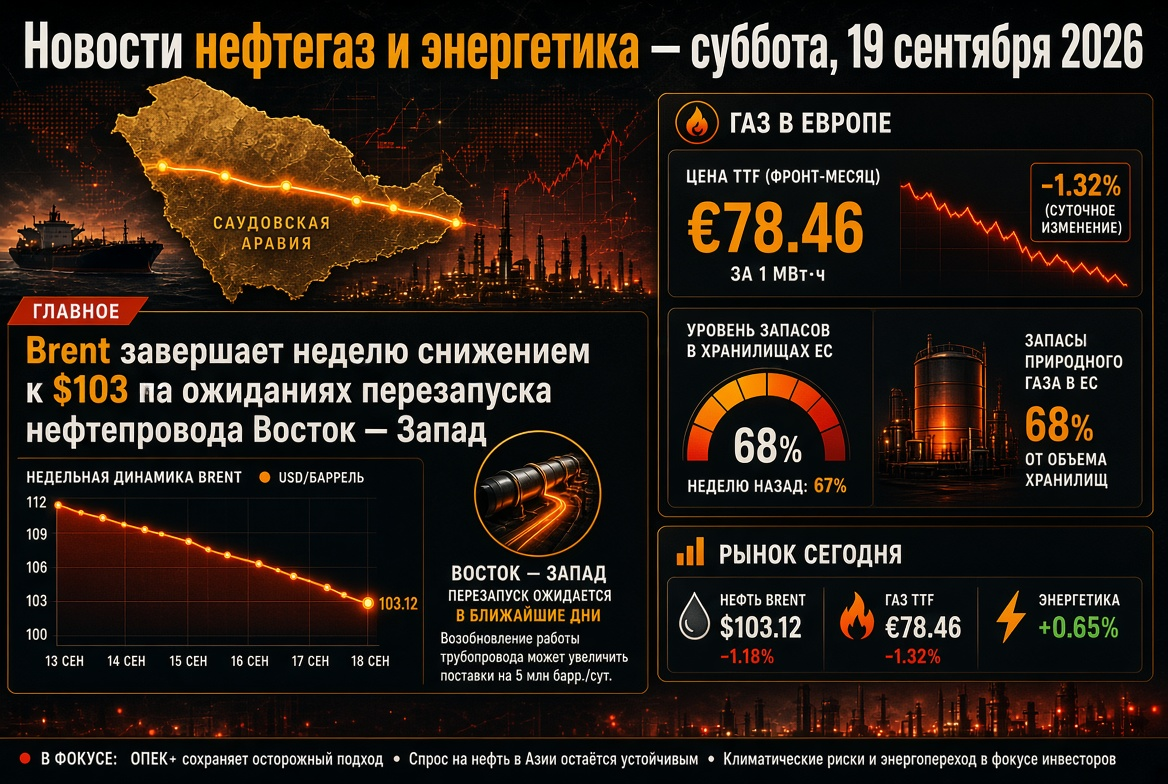
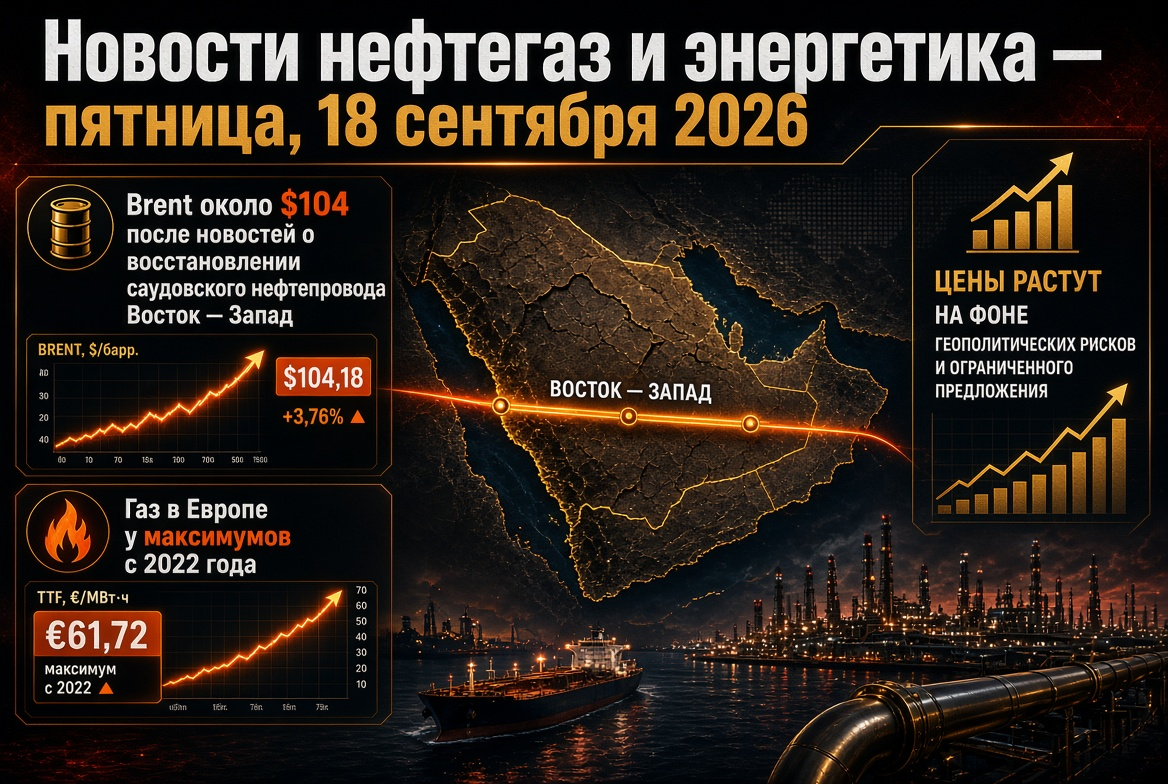
Brent and Global Supply: The Market Continues to Operate with a Risk Premium
Energy agency estimates indicate that restrictions on movement through the Strait of Hormuz and infrastructure disruptions have already led to a significant reduction in supply. In March, global oil supply sharply declined, while oil inventories outside the Middle East region began to decrease actively. This sustains a high risk premium in oil prices.
For the Brent market, not only is the current price significant, but the structure of expectations is also critical. Even if some supplies gradually recover, the oil market has already priced in risks of further disruptions, rising freight costs, increasing insurance expenses, and instability in physical flows. This is especially important for refineries in Europe and Asia, which are competing for alternative batches of crude oil.
Gas and LNG: Flexibility Shortages Enhance the Role of the US and New Routes
The gas and LNG sector remains one of the most sensitive segments of the global energy complex. Supply limitations from the Middle East have heightened Europe's and Asia's reliance on alternative sources. Against this backdrop, the US is increasing its energy influence in Southern and Eastern Europe through long-term LNG agreements and infrastructure projects.
New agreements for LNG supplies to the Balkans and gas pipeline infrastructure projects aimed at reducing certain countries' dependence on Russian gas are of particular significance. For investors, this illustrates that LNG is not merely a commodity but a tool of geo-economic influence.
Key Takeaways on LNG
- Europe will compete with Asia for flexible LNG shipments.
- The US is strengthening its role as a gas exporter and infrastructure partner.
- High LNG prices are incentivizing a return of some demand to coal and nuclear energy.
Refineries and Refined Products: Diesel and Jet Fuel Remain High-Risk Zones
The situation in refining remains heterogeneous. On one hand, high prices for diesel, jet fuel, and gasoline support the profitability of certain refineries. On the other hand, rising costs of raw materials, electricity, gas, and logistics are compressing margins in regions where refiners do not have access to cheap raw materials or a deep technological base.
The aviation fuel segment remains particularly vulnerable. Europe consumes more aviation fuel than it produces and has traditionally covered the shortfall through imports from the Middle East. Currently, supplies from this region have sharply declined, creating a risk of shortages ahead of the summer air travel season.
For fuel companies and traders, this means that premiums on refined products may persist even as crude oil stabilizes. The refined products market is increasingly being traded as a separate crisis segment rather than merely as a derivative of Brent.
Electricity: Gas Dependence as a Factor of Price Vulnerability
The electricity market is witnessing a widening gap between countries with a high share of gas and those where a significant portion of generation is provided by renewable energy sources, hydroelectricity, or nuclear power. Gas-dependent energy systems are more susceptible to rising LNG and pipeline gas prices, while countries with diversified generation enjoy a relative advantage.
For industrial electricity consumers, power pricing is becoming one of the key factors of competitiveness. Metallurgy, chemicals, fertilizer production, data centers, oil refining, and transportation infrastructure are increasingly dependent on the predictability of energy costs.
Renewables and the Energy Transition: Expensive Oil and Gas Accelerate Investment Rationale
Renewable energy is once again gaining a strong market argument. In the context of high gas prices and unstable oil supplies, solar, wind, and hydro generation are becoming not only an environmental but also a macroeconomic tool for protecting against imported inflation.
For investors in renewables, the main conclusion is that the energy transition is increasingly less about just climate agendas. It is increasingly viewed as a matter of energy security, capital costs, and industrial base resilience.
Simultaneously, the growth of renewables necessitates parallel investments in networks, storage systems, balancing capacities, and digital dispatching. Without these, inexpensive generation does not always translate into a stable energy system.
Coal: A Temporary Beneficiary of Expensive Gas and Weather Risks
The coal market has found itself back in the spotlight due to high LNG prices and expectations of weather volatility. The potential intensification of El Niño could raise electricity demand in Asia, primarily due to air conditioning. In countries where coal remains the foundation of generation, this could support demand for thermal coal.
However, for long-term investors, coal remains a controversial asset. In the short term, it benefits from expensive gas but faces regulatory pressures, ESG concerns, competition from renewables, and the development of nuclear energy in the strategic horizon.
Corporate Sector: Oil Majors Refocus on Production
Corporate news confirms the pivot of the largest energy companies towards a more pragmatic strategy. BP reported a strong quarterly outcome amid oil market volatility and increased trading revenues. Shell, on the other hand, is enhancing its resource base through a significant deal in Canada, betting on gas, condensate, and future integration with LNG.
This indicates that oil majors are not abandoning the energy transition; instead, in the context of capital crises and supply instability, they are prioritizing cash flow, extraction, trading, and control over their resource base.
What Investors Should Focus On
For investors, key indicators as of April 29, 2026, include Brent oil prices, supply dynamics from the Middle East, the LNG situation, refinery margins, diesel and jet fuel prices, coal demand in Asia, OPEC+ policies following the UAE's exit, and the speed of investments in electricity and renewables.
Crucial monitoring directions include:
- OPEC+ decisions and Saudi Arabia's response to the UAE's exit;
- Restoration or deterioration of maritime logistics through key straits;
- Spot prices for LNG in Europe and Asia;
- Aviation fuel and diesel inventories in Europe;
- Refinery margins in the US, Europe, and Asia;
- Increased demand for coal during hot weather in Asia;
- Acceleration of investments in renewables, networks, storage, and nuclear energy.
The main conclusion for the global energy sector: the market has entered a phase where energy security is once again valued higher than short-term efficiency. Oil, gas, LNG, coal, refined products, electricity, renewables, and refineries now form a unified risk system, where any supply disruption is quickly reflected in inflation, industry, transport, and investment strategies.