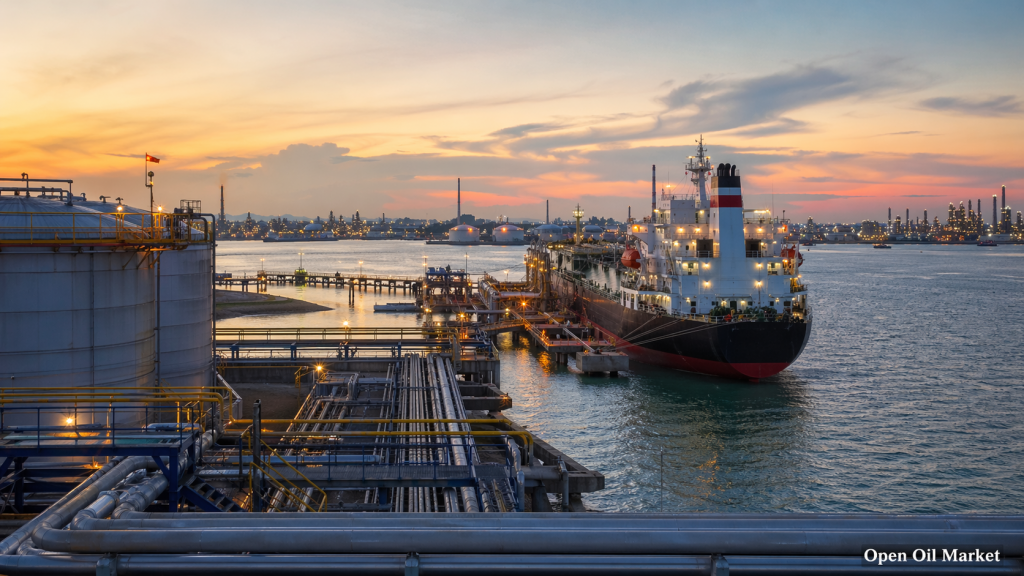
Current News in Oil, Gas, and Energy as of April 25, 2026: Oil Above $100, Tense LNG Market, Pressure on Refineries, and Acceleration of Investments in RES and Power Generation
The global energy sector enters late April in a state of high turbulence. The oil market is pricing in an increased geopolitical premium, the gas and LNG market remains tense, and refining operations in Europe and Asia are forced to adapt to the altered structure of raw material flows. Simultaneously, the energy sector receives a dual signal: on one hand, the demand from industry, digital infrastructure, and households is growing; on the other, renewable energy sources (RES), storage solutions, and nuclear projects are receiving a new investment impetus.
For investors, participants in the energy sector, oil companies, fuel companies, refinery operators, and power assets, a key question currently arises: is the ongoing shock a short-term disruption or does it initiate a longer cycle of restructuring the global energy balance? As of April 25, 2026, the latter scenario seems increasingly likely.
Oil: The Market Holds Above Psychologically Significant Levels
Oil is finishing the week with heightened volatility. The market is simultaneously reacting to supply disruptions, limited passage through the Strait of Hormuz, and diplomatic signals regarding the possible resumption of negotiations. This is why oil prices do not move linearly: each sign of de-escalation quickly reduces prices, but every new logistical risk and supply issue reinstates the premium in Brent and WTI.
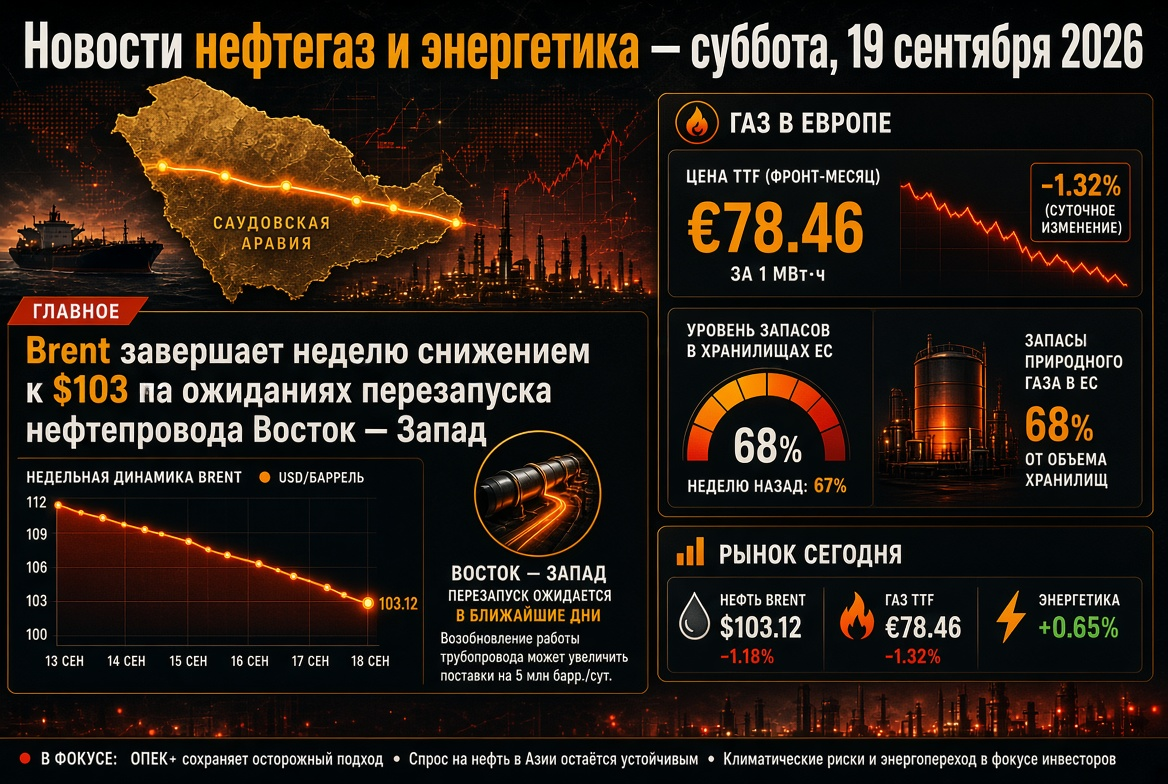
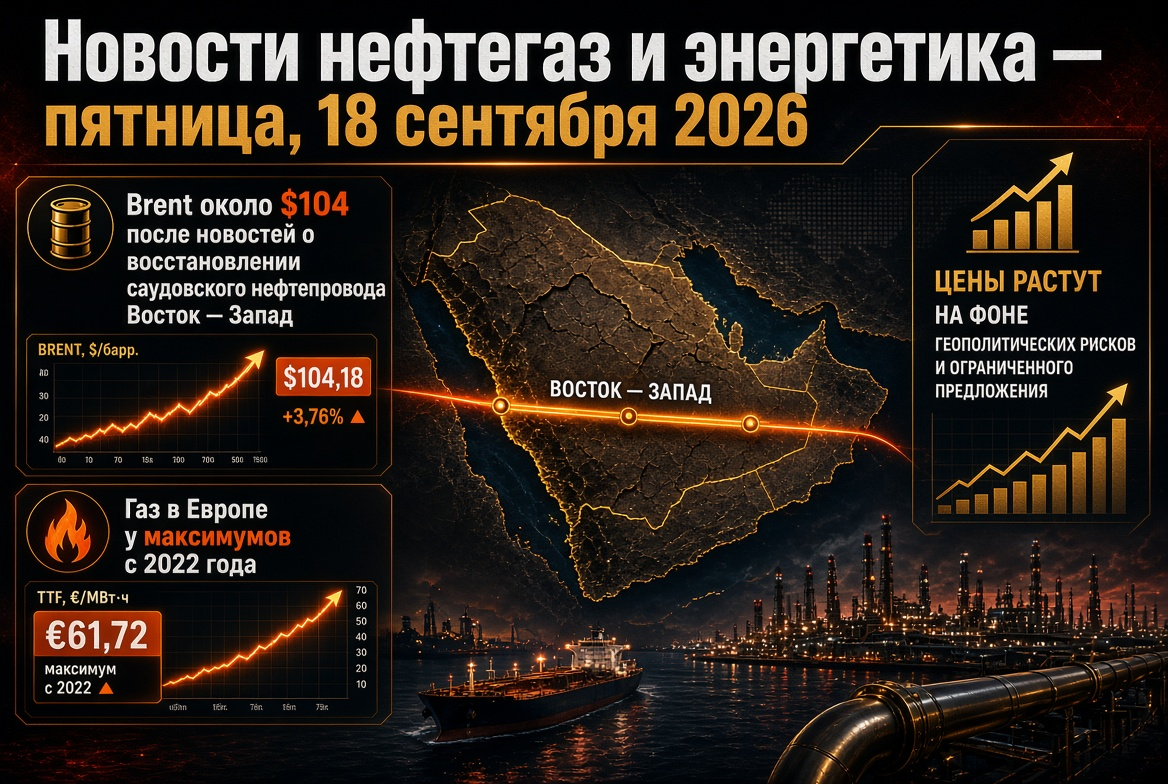
- Brent remains above the $100 mark per barrel, which maintains a tough backdrop for the entire global oil and gas sector.
- WTI is also trading at elevated levels, confirming that the issue is not regional but global in nature.
- For oil companies and traders, the main driver is not only production volume but also the ability to physically deliver raw materials to consumers.
In practice, this means one thing: the oil market is currently evaluating not just the balance of supply and demand but the resilience of the entire chain from extraction to final processing. This represents a fundamental shift for the global energy sector.
OPEC+, Russia, and Strategic Reserves: The Market Expects Managed Supply, Not Words
On the supply side, OPEC+ continues to play a vital role. Russia states that it will maintain shipments and does not propose new initiatives outside of the existing stabilization track, while the market's attention gradually shifts to the next OPEC+ meeting in early May. This indicates that market participants are not currently anticipating sharp turns regarding quotas but are closely monitoring whether the alliance can maintain supply management amid geopolitical pressures.
Strategic reserves remain an additional buffer. Major economies have already shown that they are willing to use reserves to smooth out price shocks; however, this tool is only effective as a temporary measure. It helps to alleviate peak panic but does not solve the problem of sustainable shortages in transportation and export routes.
- For upstream companies, a high price backdrop supports revenue.
- For consumers of petroleum products and refineries, the risk of margin pressure is increasing.
- For investors in the energy sector, the importance of companies with resilient logistics and diversified supply geographies is growing.
Gas and LNG: The Market Becomes Tighter, While Europe Enters Summer in a Vulnerable Position
While the oil market still hopes for partial normalization, the tone in the gas and LNG sectors is much harsher. The International Energy Agency (IEA) explicitly indicates that the crisis's consequences are dragging on: supply disruptions, infrastructure damage, and delayed commissioning of new capacities are postponing the anticipated wave of LNG surplus for several years at least.
This is particularly sensitive for Europe. Gas storage facilities in the EU remain significantly less filled than usual for the end of April, and replenishing stocks is expensive. Regulators already concede that achieving the formal filling target will be challenging without additional growth in LNG imports. This intensifies competition with Asia and makes the global gas market even more strained.
- LNG remains a central tool for energy security in Europe and parts of Asia.
- Any protracted disruptions raise prices for gas, electricity, and industrial fuels.
- North American gas infrastructure gains additional strategic weight, evident from new decisions on pipeline expansion.
For oil and gas companies, this signifies the continued high importance of LNG projects, midstream assets, and export infrastructure. For the power sector, there is a risk of more expensive gas generation in sensitive regions.
Refineries and Petroleum Products: Processing is Restructuring, but Margins are Unevenly Distributed
The refinery segment now appears to be one of the most heterogeneous across the entire energy sector. In Asia, processors are facing declining imports of Middle Eastern oil and are forced to replace traditional medium-sulfur grades with lighter alternatives. Such a substitution leads to lower yields of diesel and jet fuel, thus impacting the overall petroleum products market structure.
In Europe, the situation is different but still complex. Rising raw material costs and weak transmission of this increase into fuel prices have led to a deterioration in the refining economy. Simple European refineries are under particularly strong pressure, making the petroleum products market more sensitive to any unscheduled shutdowns.
Additional risks arise from local disruptions in infrastructure. Shutdowns of individual refineries and damage to export logistics reduce supply flexibility at a time when the global market is already tense. At the same time, some players benefit: refineries with access to alternative raw materials and stable import contracts gain a competitive edge.
What This Means for the Petroleum Products Market
- Diesel and jet fuel remain the most vulnerable categories;
- Refinery margins increasingly depend on raw material quality and access to logistics;
- Companies with flexible procurement models appear more resilient than processors tied strictly to one supply region.
Electricity: Demand Grows Faster, while System Resilience is in Focus Again
The global electricity sector is entering a phase where demand growth is becoming a consistent trend rather than an episodic occurrence. Additional pressure comes from industry, transportation electrification, climate factors, and the expansion of digital infrastructure. Notably, the US market is setting consumption records supported significantly by data centers and AI loads.
Against this backdrop, attention to the reliability of energy systems is intensifying. European regulators are tightening oversight following significant disruptions in previous periods, and governments are increasingly viewing the power sector not just as a market-driven segment but as an element of strategic security. This context frames the new discussions surrounding the ownership structure of generating and grid assets in Europe.
- Network business and distribution are once again becoming a protective segment within the energy sector.
- Generation with predictable profiles — gas, hydro, nuclear — receives a premium for reliability.
- The regulatory factor in the electricity sector is strengthening and starting to directly impact company valuations.
RES, Storage, and Nuclear: The Crisis Accelerates Not a Rejection of the Energy Sector, but its Renewal
As oil and gas prices rise, RES are gaining a new argument in their favor — not just climatic but also economic. In global energy, solar generation, wind, and storage continue to expand rapidly, with growing interest in rooftop solar and home storage systems already taking practical form in Europe. Households and businesses are not only purchasing panels; they are seeking energy independence.
Simultaneously, the market is increasingly blurring the ideological distinction between RES and nuclear. For investors, the more pertinent question is who can provide cheap and predictable electricity over the next five to ten years. As a result, alongside the growth of solar and wind projects, interest in nuclear solutions is increasing, particularly where there is a need for foundational low-carbon generation for industry and data centers.
- RES are becoming not a periphery but a part of the anti-crisis energy strategy.
- Storage is transforming into a mandatory element of the new energy system.
- Nuclear energy is re-entering the global investment agenda as a source of stable power.
Coal: Not a Growth Leader, but Still an Important Component of the Balance
The coal segment remains ambiguous. On the one hand, global demand for coal is no longer showing the previous dynamics, and in several regions, it is being displaced by RES, gas, and energy efficiency measures. On the other hand, coal still serves as a backup fuel where the electricity sector faces shortages of flexible capacities or high gas prices.
For the global energy market, this means that coal is not disappearing from the balance instantaneously. It is gradually losing share but retains significance during peak periods and in countries heavily reliant on traditional thermal generation. For investors, this represents not a growth story but a tale of selective stability and regional specifics.
Conclusion for Investors and Energy Market Participants
As of April 25, 2026, the global picture looks like this: oil remains expensive, gas and LNG are tense, refining is uneven, and the power sector is becoming increasingly strategic. Within the energy sector, a new balance is forming, favoring not just extraction companies but those players who control logistics, raw material mixes, sales, grid infrastructure, and access to cheap generation.
In the coming weeks, the oil and gas market will need to monitor several key points:
- The situation in the Strait of Hormuz and the diplomatic contacts;
- OPEC+ decisions and the response of exporters to the ongoing supply shock;
- The pace of filling gas storage in Europe and the availability of LNG;
- The dynamics of refinery margins and market availability of diesel, jet fuel, and other petroleum products;
- The acceleration of investments in RES, storage, nuclear, and grid infrastructure.
That is why the current agenda for the energy sector is no longer just news about oil, gas, electricity, RES, coal, and refineries. It represents a full-scale restructuring of global energy, where short-term price spikes gradually transform into long-term structural changes.