Latest News on Startups and Venture Investments for Thursday, July 2, 2026: IPOs of Lime and Bending Spoons, Rounds in AI Infrastructure, Venture Fund Activity, M&A, and Key Trends for Investors
The global startup and venture investment market enters July 2026 in a more mature yet still extremely concentrated growth phase. The main theme for venture investors and funds is not just the volume of capital raised, but the quality of assets, the ability of startups to go public, and the resilience of business models amidst the high costs of computational infrastructure, competition for AI talent, and the re-evaluation of late-stage companies.
On Thursday, July 2, 2026, several major stories shape the venture market agenda: a resurgence in technology IPOs, new rounds in AI infrastructure, and increased interest in semiconductors, cybersecurity, autonomous transport, and private market liquidity. For funds, this serves as a signal: the window for exits is gradually opening, but capital is increasingly concentrating around companies with understandable revenues, technological advantages, and potential for global scalability.
Key Theme of the Day: IPOs Return to the Center of Venture Strategy
After a prolonged period of caution, the public offerings market is once again becoming a key benchmark for the venture industry. The IPOs of Lime and Bending Spoons demonstrate that investors are ready to consider technology companies beyond the classic software-as-a-service model if the business possesses scale, a recognizable brand, revenue, and a clear path to operational efficiency.
This is important for venture funds for three reasons:
- There is an opportunity for partial and full exits from mature portfolio companies;
- A market benchmark for the valuation of late-stage startups is re-emerging;
- New public offerings create liquidity for LPs and increase the likelihood of new funds.
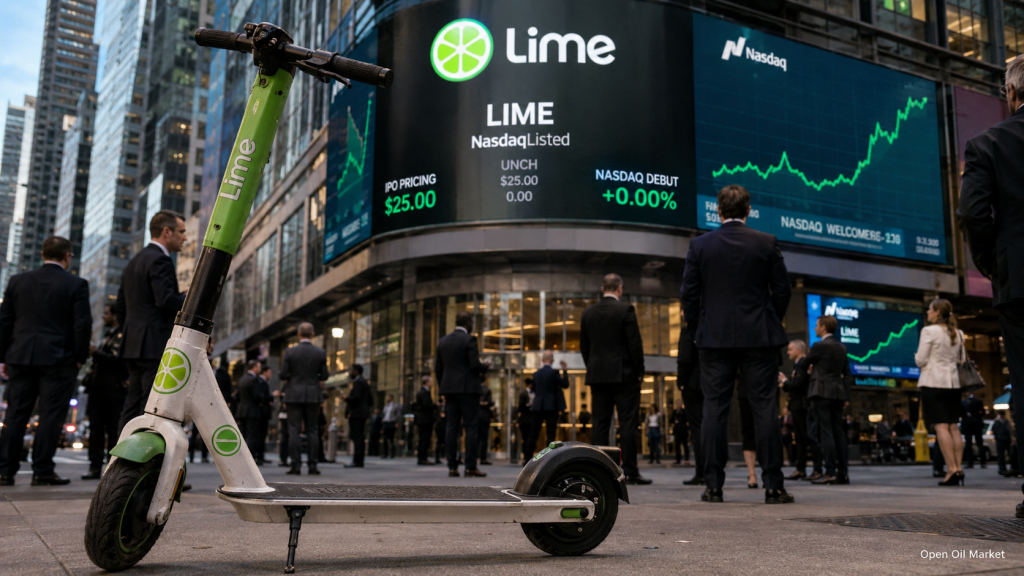
Lime, backed by Uber, raised approximately $167 million in its IPO in the U.S. The company is entering Nasdaq as one of the few surviving leaders in micromobility after a painful industry consolidation. This is a significant signal: the market is ready to finance not just AI startups but also technology platforms with real infrastructure, city contracts, and proven demand.
Bending Spoons: European Tech Conglomerate Tests U.S. Appetite
Italian Bending Spoons has become one of the most notable tech IPOs of the week. The company raised around $1.68 billion and received a valuation of about $18.4 billion. This sets a strong precedent for the European startup ecosystem: a business that grew from mobile applications and digital asset acquisitions has managed to go public in the U.S. as a new type of technology platform.
The Bending Spoons model combines elements of private equity, product development, and operational improvement for the acquired companies. Among the company’s assets are Vimeo, Brightcove, AOL, and Eventbrite. For venture investors, this story is significant as it showcases a new exit format: not just a classic IPO of a rapidly growing startup but a public debut of a technology holding that leverages AI to enhance the efficiency of acquired digital businesses.
Amidst high competition in the software sector, investors will be keenly watching whether Bending Spoons can prove sustainable margins and maintain growth rates post-listing.
AI Infrastructure Remains the Main Magnet for Venture Capital
Startups in the AI sector continue to capture a disproportionately large share of venture capital. However, the focus is shifting: investors are increasingly funding not only models and applications but also the infrastructure layer - chips, computing platforms, testing of AI agents, security, and workload optimization.
One notable event was Oxmiq's $35 million round. The startup is developing AI chip architecture aimed at integrating GPUs, CPUs, and tensor engines into a unified intelligent IP platform. The project is led by Raja Koduri, former chief architect of Intel and top executive at AMD. Investors include MediaTek, Pegatron Venture Capital, Samsung Catalyst Fund, and Fudomo.
For the venture market, Oxmiq is intriguing not for the size of the round but for its strategic logic. Investors are seeking companies that can reduce the cost of AI infrastructure and lessen the market’s dependency on a limited number of computational solution providers. This direction is becoming one of the key focuses for funds targeting deep tech, semiconductor startups, and long-term technology cycles.
New Funds: Menlo Ventures and the Return of Major AI Mandates
There is also a growing movement of capital among funds. Menlo Ventures has announced the raising of $3 billion in new capital for investments in AI companies at various stages—from infrastructure and frontier technologies to corporate, medical, and consumer applications.
This is an important indicator for the entire venture investment industry. Large LPs are once again willing to commit capital to funds that have already proven their ability to identify winners in the AI sector. At the same time, concentration is increasing: top managers are receiving larger mandates, while small funds without a clear specialization are facing a more challenging fundraising cycle.
A crucial takeaway for venture funds: the market is no longer buying the abstract story of “exposure to AI.” Investors require proven competencies, access to the best deals, technological expertise, and a clear exit strategy.
Patronus AI and the New Market for Testing AI Agents
Another important story is the growth of the market for tools designed to assess, stress-test, and monitor AI agents. Patronus AI secured $50 million in a Series B round. The company is building "digital worlds" where the behavior of autonomous AI systems can be tested before being implemented in real business processes.
This segment is becoming increasingly significant as companies transition from experimenting with generative AI to utilizing autonomous agents in sales, analytics, customer support, financial operations, and software development. For corporate clients, the security, predictability, and manageability of such systems are critically important.
For investors, the AI safety, evaluation, and agent infrastructure market appears to be one of the most promising segments for the second half of 2026. Unlike many AI applications, these products often become part of the mandatory corporate risk control framework.
Cybersecurity, Defense Technologies, and Sovereign AI
Venture capital continues to flow vigorously into cybersecurity, particularly where AI, the public sector, and critical infrastructure intersect. Israeli AI-cybersecurity startup Dream previously raised $260 million at a valuation of approximately $3 billion, reinforcing the trend towards protecting energy, water, transport, and government systems.
For funds, this direction is increasingly becoming institutional. Whereas cybersecurity was once considered a standard enterprise software segment, it is now more frequently connected with national security, technological sovereignty, and protection against attacks generated using artificial intelligence.
Key subsectors to watch include:
- AI-driven cybersecurity for governments and critical infrastructure;
- protection of industrial systems and energy facilities;
- safety of AI agents and corporate LLM platforms;
- real-time threat monitoring platforms.
M&A Market Intensifies Pressure on Strategists and Startups
The global mergers and acquisitions market sharply intensified in the first half of 2026. Large deals are becoming the norm again, while the technology sector remains one of the main areas for strategic buyers. For startups, this creates an alternative path to liquidity: it’s no longer necessary to wait for an IPO if large corporations are ready to acquire technologies, teams, and customer bases.
For venture investors, the growth of M&A is important as a mechanism for capital return. After several years of weak liquidity, funds are increasingly considering strategic sales as a realistic exit scenario, especially for companies in AI infrastructure, cybersecurity, data platforms, developer tools, and vertical SaaS.
However, buyers are becoming more disciplined. They are willing to pay a premium for assets with a technological advantage but are less responsive to companies whose growth is based solely on marketing, subsidies, or inflated multiples.
Venture Capital Geography: The U.S. Leads, Europe Seeks New Liquidity Formats
The U.S. remains the main hub for venture investments, particularly in AI, semiconductor startups, cybersecurity, and enterprise software. However, Europe is gradually strengthening its role through IPOs, private market platforms, and support for deep tech. The example of Bending Spoons demonstrates that European tech companies can pursue global valuations if they enter the market with a scalable business model.
The development of private liquidity markets also deserves separate attention. The London-based Pisces initiative and the participation of companies like Wayve indicate that the ecosystem is seeking intermediate mechanisms between closed private markets and full-fledged IPOs. For funds, this could become an important tool for partial liquidity without immediate public offerings.
For global venture investors, this suggests an expansion of strategic alternatives: the U.S. remains the capital market, Europe is increasingly the market for engineering talent and deep tech, the Middle East is a source of institutional capital, and Asia serves as a significant demand base for AI infrastructure and consumer technology products.
What Venture Investors and Funds Should Pay Attention To
As of July 2, 2026, the startup market appears stronger than a year ago, but significantly more selective. Capital is available, the IPO window is opening, M&A is reviving, and AI remains the leading investment direction. However, a simple bet on “any AI startup” no longer works: investors demand technological depth, revenue, competition protection, and a clear path to liquidity.
In the coming weeks, venture funds should monitor several indicators:
- the trading dynamics of Lime and Bending Spoons post-IPO;
- new rounds in AI chips, data infrastructure, and agent safety;
- the activity of major funds after securing new mandates;
- M&A transactions in cybersecurity and enterprise AI;
- the willingness of LPs to back new funds beyond the largest managers.
The key takeaway of the day: the venture market is regaining liquidity but is becoming less tolerant of weak business models. Winning are the startups that combine technological advantage, real demand, scalable economics, and the potential for an exit through IPO or strategic sale. For venture investors and funds, this is not a market of mass optimism, but one of selective picking of the strongest companies.