Latest News on Startups and Venture Investments as of March 21, 2026: Growth in AI Deals, Venture Capital Trends, IPO Market, and Key Investment Directions
As of March 21, 2026, the global startup and venture investment market is entering a phase where funds continue to operate actively, but are becoming increasingly unevenly distributed. For venture funds, LPs, and institutional investors, this means a simple yet crucial reality: the market is not dead, however, capital is concentrating in a limited number of segments, primarily in artificial intelligence, computing infrastructure, next-generation enterprise software, legal tech, cybersecurity, and specific categories of deep tech. The focus remains on large deals, growth in AI valuations, and caution regarding exits via IPO.
For the global audience of venture investors, the key takeaway is that 2026 increasingly resembles a "big winners" market. A classic broad-based recovery is not in sight. Instead, it is evident that strong teams with a compelling technological edge and a clear commercialization path are still gaining access to substantial funding rounds. This is forming a new architecture of the startup market: less mediocre quality, more capital in top assets, heightened requirements for unit economics, and faster paths to scalable revenue.
AI Remains the Main Magnet for Venture Capital
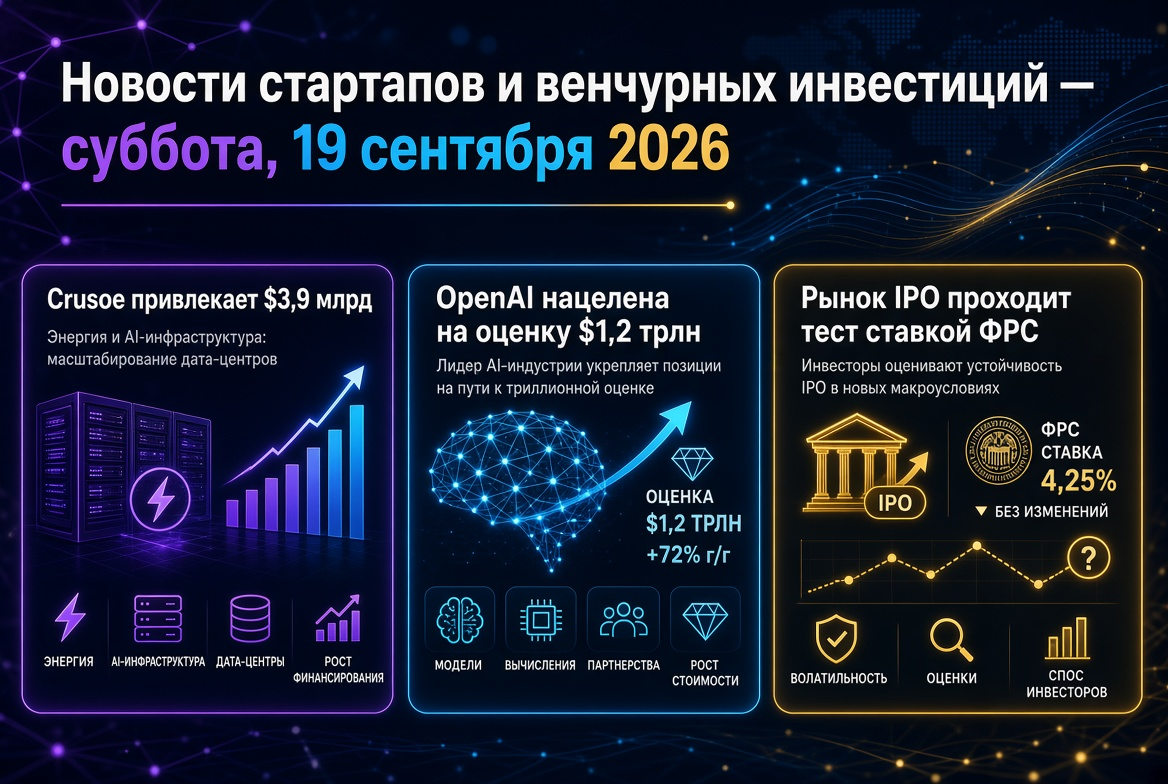
The key theme of the week is the continued concentration of venture capital investments in AI. Artificial intelligence is now no longer just one of the trendy verticals; it has become a foundational layer of the modern startup market. It is AI that drives the largest rounds, attracts strategic partners, and sets a new logic of competition among funds. For investors, this means that startups without a strong AI component are increasingly required to explain why they still deserve a premium valuation.
This is expressed in several trends:
- Capital is flowing into foundation models, compute infrastructure, and applied enterprise AI;
- Rounds are increasing in size, and the share of capital going to a limited circle of leaders continues to grow;
- Venture investments are increasingly combined with strategic partnerships focused on chips, clouds, and corporate sales;
- For funds, access to deal flow at the earliest stages is becoming more important, where an entry can still be made before a significant valuation jump.
Major Signals of the Week: Frontier AI, Legal AI, and Robotics
Recent startup news highlights a market willing to pay for teams that are aiming for infrastructure status. Among the most discussed deals are new infusions and strategic alliances surrounding large AI companies working at the intersection of models, computing infrastructure, and enterprise deployment. This accentuates the gap between startups building foundational technology and those working in narrower niches without a distinct moat.
Special attention is directed towards legal AI. This segment can no longer be considered narrow. Legal teams, corporate departments, and large firms are increasingly moving from testing to real implementation of AI tools. As a result, legal tech is becoming one of the most compelling examples of how applied artificial intelligence is converting into commercial revenue.
Robotics and embodied AI also deserve a mention. Here, the venture market again shows readiness to support long-term bets if the technology can move beyond demonstrations and become part of manufacturing, logistics, or industrial processes. For funds, this is an important signal: deep tech is once again becoming investment-worthy, but only where there is a pathway to industrial contracts and a strong platform model.
Cybersecurity Returns as One of the Most Stable Themes
In 2026, cybersecurity appears as one of the most durable categories for venture investments. The reason is simple: the proliferation of AI not only creates a new market for products but also dramatically increases the attack surface for businesses. The more automation, agent-based systems, and generative interfaces permeate corporate infrastructure, the higher the demand for monitoring, control, and threat prevention tools.
For the startup market, this means a renewed interest in the following models:
- AI-native security platforms for enterprises;
- DevSecOps solutions for development teams;
- Autonomous detection and response agents;
- Data and model protection tools in generative AI infrastructure.
Venture funds see in cybersecurity a rare combination: high urgency of demand, a short decision-making cycle among corporate clients, and a strong likelihood of M&A exits. Therefore, deals in this category remain competitive even amid a general tightening of selection.
Fintech and Payments: The Market Has Not Disappeared, but It Has Become More Disciplined
Fintech is no longer at the center of the hoopla as it was a few years ago, but the segment has clearly not fallen off the radars of global investors. On the contrary, the fintech market in 2026 appears more mature. Capital is flowing into infrastructure solutions, B2B payments, cross-border finance, embedded finance, and services that enhance the efficiency of financial operations for medium and large businesses.
An important marker is the growing interest in European fintech and London as one of the strongest hubs. For global funds, this means that Europe is no longer perceived solely as a source of talent or early companies for export to the U.S. Increasingly, scalable platforms with international expansion are being built here. At the same time, the exit market in fintech remains sensitive to geopolitics and volatility; therefore, many companies prefer to delay IPOs until a more comfortable window opens.
The IPO Market Remains Open Only for the Chosen Few
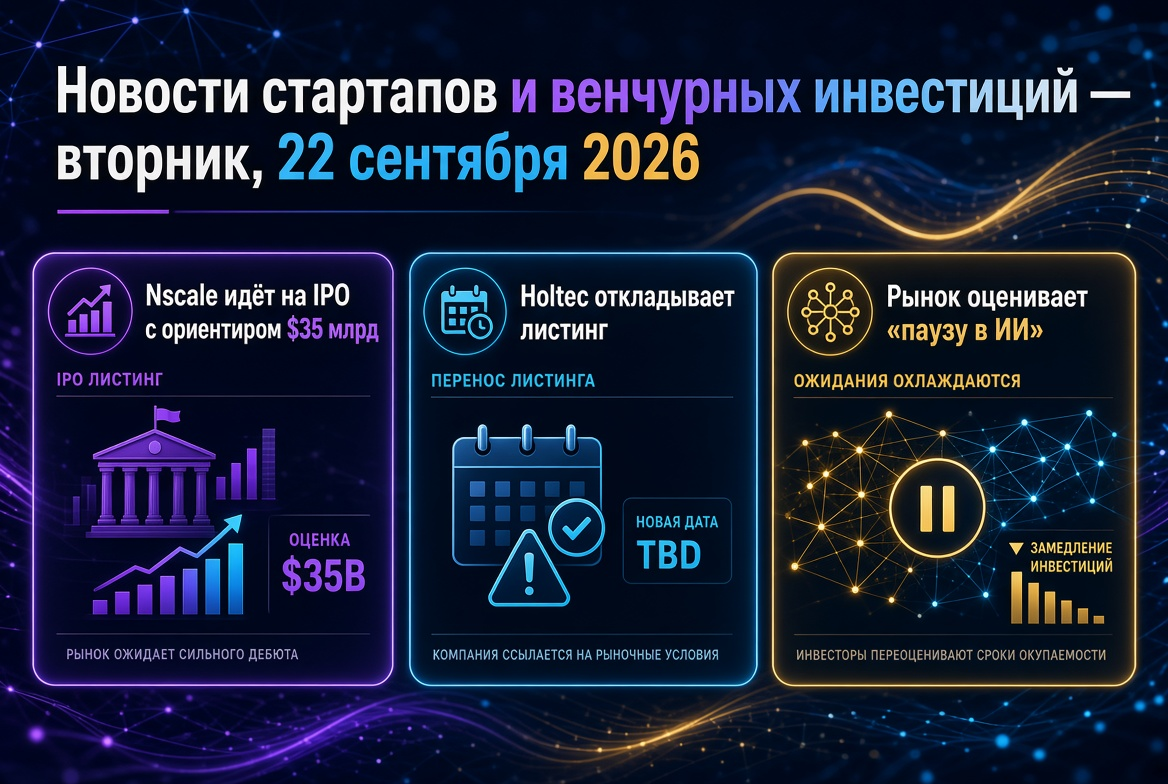
One of the most significant topics for venture investors and funds is the state of the exit environment. As of March 2026, the picture is heterogeneous. On the one hand, the pipeline for public offerings is revitalizing, a number of companies are confidentially submitting documents, and banks are once again talking about the potential for a stronger year for IPOs. On the other hand, any deterioration in market conditions quickly returns caution, especially in technology and fintech.
Currently, the exit market can be described as follows:
- An IPO window formally exists, but it is narrow;
- Public market investors are demanding greater predictability and quality of revenue;
- Pre-IPO companies are more frequently opting for private secondary deals and tender offers;
- M&A in many cases appears to be a more realistic path to liquidity than an exchange.
For startups, this means increased requirements for corporate governance, quality of reporting, and margin sustainability even before going public. For venture funds, it necessitates holding assets longer and rethinking capital return models.
M&A is Again Becoming a Full-Blown Part of Venture Strategy
Amidst a selective IPO market, strategic M&A is becoming increasingly significant. Large corporations and technology platforms continue to acquire startups for their teams, intellectual property, infrastructure, and to accelerate their own AI transitions. This is particularly notable in the segments of payments, infrastructure software, cybersecurity, and industry-specific AI solutions.
For startups and investors, this shifts the agenda. If in the past cycle many built companies almost exclusively for IPOs, now increasingly more teams are designing their businesses with potential strategic sales in mind from the outset. This is not a sign of weakness, but a reflection of a new reality: the pace of the technological cycle is such that it is often more beneficial for large players to acquire a startup rather than build a solution in-house.
Europe Strengthens Its Position in the Race for Scalable Startups
The European startup and venture investment market is sending increasingly interesting signals. Besides notable rounds in AI chips, cybersecurity, and legal tech, the political context is also important: efforts are intensifying within the EU to streamline the creation and scaling of companies through the unification of regulations. For venture investors, this is not just bureaucratic news but a potential driver for growth in deal flow at the scale-up stage.
If regulatory barriers are genuinely lowered, Europe may partially close the gap with the U.S. not only in terms of talent but also in the speed of forming large technology companies. For funds, this opens up two scenarios:
- A more active hunt for European scale-up companies before they enter American capital;
- Increased interest in funds and co-investment strategies focused on the EU and the UK.
What Venture Funds Should Watch in the Coming Weeks
The coming period will be crucial for assessing whether the current pace of large AI deals can be maintained and whether the exit market can expand beyond individual names. Funds and venture investors should pay particular attention to several directions.
Key Market Indicators
- New large rounds in frontier AI and AI infrastructure;
- Growth of applied categories with clear monetization—legal tech, cybersecurity, enterprise automation;
- Activity of strategic buyers in M&A;
- Willingness of late-stage companies to test the public market;
- Regional strengthening of Europe and India in specific technology verticals.
The main takeaway as of March 21, 2026, is that the startup market is alive but no longer tolerates mediocrity. Venture investments remain substantial, yet they are increasingly concentrated around companies with strong technology, proven demand, and a clear exit trajectory. For funds, this is a market of high selectivity. For the best startups, it is still a market of great opportunities.