Startup and Venture Investment News for Friday, June 26, 2026: Rising Interest in AI Infrastructure, Robotics, Healthtech, Deeptech, Mega-rounds, IPOs, and M&A on the Global Venture Market
The global startup and venture investment market is once again exhibiting signs of acceleration as of Friday, June 26, 2026. Following a period of caution, funds are returning to large deals, but capital is being allocated with extreme selectivity. The key areas of focus this week include AI infrastructure, robotics, healthtech, commercial space, corporate artificial intelligence, new cycle venture funds, and M&A transactions involving technology assets.
For venture investors and funds, the key takeaway is that the market is no longer buying the abstract story of "AI for the sake of AI." Money is flowing into companies that control infrastructure, reduce computational costs, create applied solutions for enterprises, or have a clear path to liquidity through IPO, SPAC, strategic sales, or late growth rounds.
Focus of the Day: Capital is Flowing into AI Infrastructure
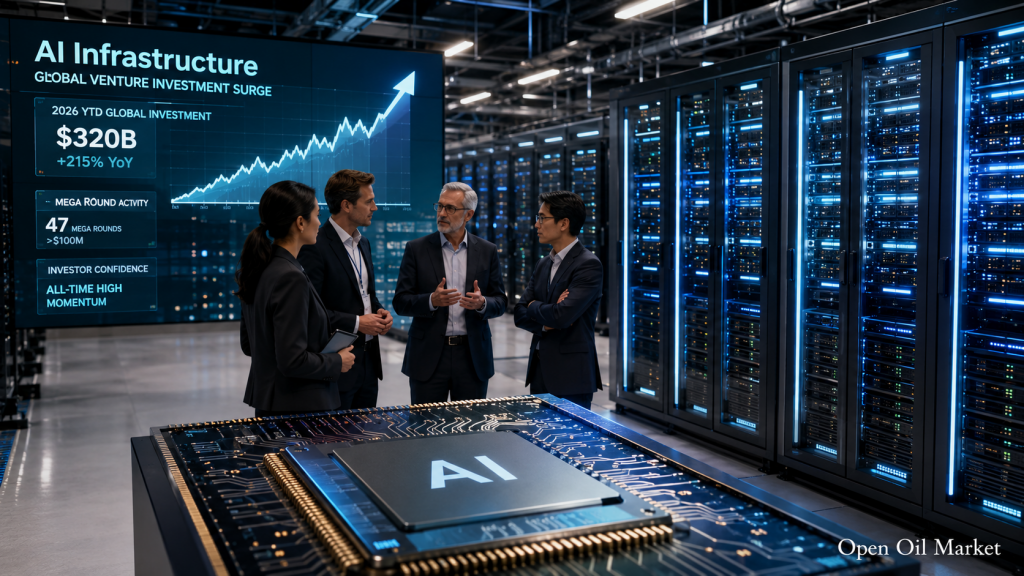
The most significant signal for the startup market remains the concentration of venture capital around AI infrastructure. Investors are increasingly assessing not only models but also the entire value chain: computational power, inference, network automation, data centers, specialized chips, and software platforms for corporate AI deployment.
A prime example is the substantial round for the AI infrastructure company Baseten, which secured $1.5 billion at a $13 billion valuation. The company operates in the customization and deployment of AI models, with its growth reflecting demand for cheaper and more flexible alternatives to large closed AI platforms. For venture funds, this confirms a new investment thesis: the infrastructure for inference is becoming as critical as model training.
- Key Sector: AI Infrastructure and Inference.
- Investment Focus: Reducing the cost of using AI in real business.
- Risk: High capital intensity and reliance on computational power.
- Opportunity: Formation of new platform companies at the infrastructure level.
Netris and the Neocloud Market: Smaller Rounds May Be Strategically More Significant than Mega Deals
Amidst billion-dollar transactions, more compact but strategically important rounds are particularly interesting. Netris raised $15 million in Series A from Andreessen Horowitz to develop network automation in the AI-neocloud sector. The company helps GPU cluster operators deploy infrastructure faster, automate network configurations, and reduce downtime of expensive equipment.
This is an important signal for the venture market: not all attractive AI startups need to build foundational models. Some of the most promising companies are operating at the "boring," yet critically important level of infrastructure. In places where every day of GPU cluster downtime translates into direct losses, software solutions for automation become high-margin assets.
Venture funds are increasingly seeking startups that address specific pain points in the new AI economy:
- Accelerating the launch of data centers and GPU clusters;
- Optimizing network architecture for AI workloads;
- Reducing inference costs;
- Increasing utilization of computational power;
- Creating enterprise-grade solutions for large clients.
Robotics Enters the Capital Market: Agility Robotics Prepares for Public Debut
One of the week's major events is Agility Robotics’ preparation for its public market debut through a SPAC transaction valued at around $2.5 billion. The company is developing the humanoid robot Digit for warehouses, logistics, and manufacturing sites. Among its investors and strategic partners are Nvidia, Amazon, SoftBank, and Foxconn.
For venture investors, this is more than just robotics news. It indicates that the market is beginning to test public demand for physical AI—where artificial intelligence intersects with industrial equipment, logistics, automation, and labor-replacing technologies.
If the deal closes successfully, it could serve as an important benchmark for evaluating other startups in humanoid robotics, warehouse automation, and industrial AI. However, investors should consider that robotics remains a capital-intensive sector: manufacturing, safety, certification, service support, and scaling require significant investment before sustainable margins can be achieved.
Europe Bets on Healthtech: Alan Raises Significant Capital
The European startup market received a strong signal from the French healthtech company Alan, which raised €480 million at a valuation of approximately €5.5 billion. This is one of the largest European tech rounds outside the pure AI sector. The company combines corporate health insurance, digital health services, and AI tools for users.
For Europe, this deal holds importance for several reasons. First, it demonstrates that significant venture investments are returning not only to generative AI but also to regulated sectors with clear revenue models. Second, healthtech remains a sector where artificial intelligence can deliver practical economic effects: automating consultations, reducing administrative costs, personalizing insurance products, and improving customer retention.
For funds, this confirms a broader trend: in Europe, the attractiveness of a startup is increasingly evaluated based on a combination of three factors—regulated market, recurring revenue, and technological advantage.
Chinese Future Industries: Venture Boom and Risk of Overheating
The Chinese venture market is experiencing a sharp uptick in segments classified by authorities as future industries: space, quantum technologies, nuclear fusion, robotics, embodied AI, biotechnology, and hydrogen energy. The growth of investments has been accompanied by rising valuations and active competition among funds for access to promising companies.
For global venture investors, this is an important macro signal. China is attempting to accelerate the development of technological independence and create a domestic financing framework for strategic startups. However, the market is also facing an increased risk of overvaluation: young companies without revenue can receive high valuations based on the political priority of the sector rather than validated business economics.
Investors should keep two distinct narratives in mind:
- Structural Opportunity: Government support for deeptech, industrial AI, and space technologies could create new technological leaders.
- Market Risk: An excess of capital may form a bubble in early stages, particularly in projects lacking commercial validation.
Corporate AI and a New Threat to IT Services
A startup worth noting is Hang Ten Systems—launched by former Infosys head Vishal Sikka. The company raised $32 million in a seed round and is betting on an AI-native model of software development, modification, and support for enterprises.
The significance of this deal lies not in its size but in its strategic implications. Startups are beginning to attack large service markets, where previously scale depended on workforce size. If AI tools allow for certain aspects of software development, integration, and maintenance to be performed more quickly and cheaply, the economics of traditional IT services may change. For venture funds, this introduces a new class of investment opportunities—AI services that scale non-linearly through software processes rather than personnel.
Venture Funds Are Increasing Capital Again: Seedcamp Closes New Fund
There is noticeable activity among investors as well. Seedcamp has raised $320 million for a new fund and expansion in the U.S. The fund structure reflects the current logic of the venture market: part of the capital is directed towards early stages, while a separate reserve is earmarked for follow-on investments in portfolio companies at later rounds.
This is an important signal for European startups. As leading companies increasingly aim for American clients, U.S. investors, and U.S. capital markets, European funds are compelled to build bridges between local early stages and global scaling. For founders, this means higher demands: a strong product alone is no longer sufficient; a strategy for entering the largest markets is required.
M&A Returns as a Path to Liquidity
The role of strategic buyers in the startup market is strengthening. Adobe has announced the acquisition of Topaz Labs, a company developing AI tools for enhancing images and videos. This deal demonstrates that major technology corporations continue to acquire teams, models, and products that can enhance their existing platforms.
For venture investors, M&A is once again becoming an important exit scenario. After several years of a limited IPO window, strategic deals are gaining particular value. The most attractive targets are startups that:
- Possess unique AI models or infrastructural technologies;
- Have a professional audience and paying customers;
- Can be quickly integrated into a major platform ecosystem;
- Enhance corporate protection against competitors;
- Create savings in terms of time, computation, or operational expenses.
What to Watch for Venture Investors and Funds
As of Friday, June 26, 2026, the startup market appears more active but equally risky. Venture investments are returning to larger rounds; however, the quality of selection is becoming a decisive factor. Investors are increasingly demanding not only growth but also evidence of capital efficiency, technical advantage, and potential liquidity.
In the coming weeks, venture funds should pay attention to several key areas:
- AI Infrastructure: Inference, neocloud, data centers, network solutions, and specialized chips.
- Robotics: Humanoid robotics, warehouse automation, and industrial AI.
- Healthtech: Digital medicine, insurance platforms, and AI assistants for healthcare.
- Deeptech in China: Space, quantum technologies, embodied AI, and risk of overheating valuations.
- European Funds: New early-stage and follow-on strategies for global scaling.
- M&A: Acquisitions of AI teams and infrastructural startups by major tech corporations.
The main investment takeaway of the day: the venture market is ready to pay high valuations again, but only for companies that control a critical layer of the new technology economy. In 2026, it is not merely startups with trendy AI narratives that are winning, but businesses that can become the infrastructure for the next growth cycle—in artificial intelligence, robotics, healthtech, deeptech, and corporate automation.