Current Startup and Venture Investment News as of July 4, 2026: Growth of AI Infrastructure, Mega-Rounds, Robotics, Defence Tech, Deeptech and the Return of IPOs as a Key Exit Channel for Venture Funds
By early July 2026, the global startup and venture investment market is entering a new growth phase. While in 2022-2024, funds cautiously reviewed portfolios, lowered valuations, and awaited a return of liquidity, capital is now once again coalescing around technology leaders. The main topics of the day are artificial intelligence, AI infrastructure, robotics, defense technologies, autonomous systems, semiconductors, and the recovery of the IPO market.
For venture investors and funds, Saturday, July 4, 2026, is marked by several significant signals: a record first half in global venture financing volume, new mega-rounds in AI startups, a revitalization of China in robotics, growth in European deeptech, and a return of public offerings as a genuine exit route for investments.
The market's keywords today include: startups, venture investments, AI startups, venture funds, mega-rounds, startup IPOs, robotics, defence tech, deeptech, AI infrastructure, technology companies, global venture market.
Today's Main Picture: The Venture Market is Growing Again, but Capital is Concentrating
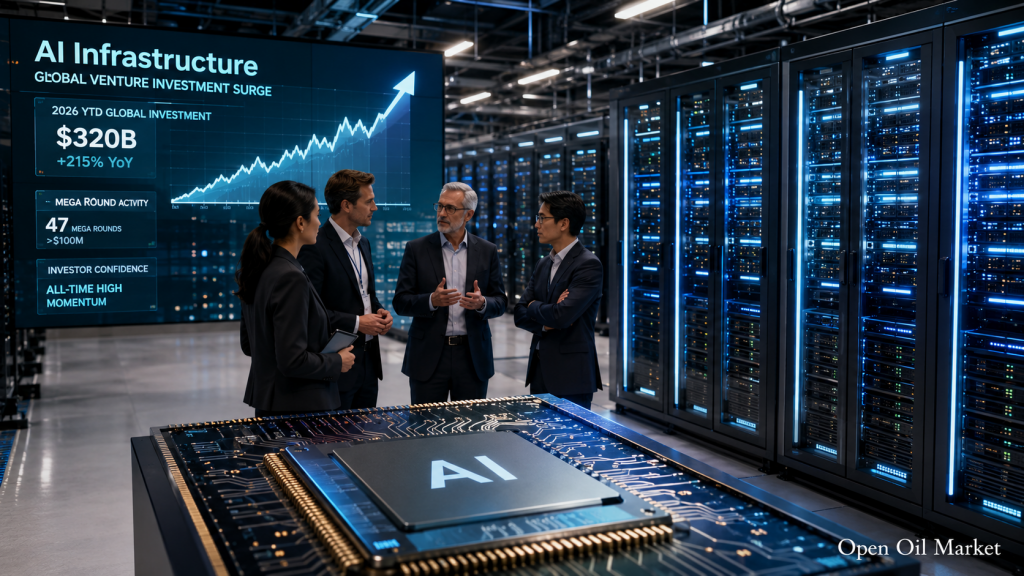
Global venture investments in the first half of 2026 hit record levels. The main driver is artificial intelligence and the surrounding infrastructure: computing power, chips, data centers, AI-cloud, models for corporate clients, and automation tools. For venture funds, this means the market is once again open for large deals, but access to capital is unevenly distributed.
The most notable trends include:
- The largest rounds are heading into AI infrastructure and foundation models;
- Late stages are once again receiving capital, especially if the startup has revenue, contracts, or strategic partners;
- Investors are increasing their interest in robotics and physical AI;
- Defence tech and dual-use technologies are becoming a distinct institutional focus;
- The IPO market is gradually returning the opportunity for funds to realize exits.
However, growth does not mean a universal boom. The venture market is becoming more polarized: strong startups attract billions, while companies without a clear economic model, differentiation, and access to clients continue to face stringent selection.
AI Infrastructure: Together AI, Crusoe, Etched, and Oxmiq Set the Agenda
The most important area for venture investments as of July 4, 2026, is AI infrastructure. Investors are increasingly looking not just at artificial intelligence applications, but also at the "power layer": clouds, inference, chips, computational optimization, and energy efficiency.
Together AI secured $800 million at a valuation of $8.3 billion. The company operates in the field of open AI models and provides corporate clients with the infrastructure to train and deploy models. This is an important signal for venture funds: open-source AI is becoming not only an ideological alternative to closed platforms but a full-fledged commercial infrastructure.
Crusoe, a notable player in the AI data centers and neocloud segment, is negotiating to raise about $3 billion. The potential valuation could approach $30 billion. For the market, this confirms that computing power is becoming a strategic asset, comparable to energy or telecommunications infrastructure.
Etched is intensifying competition in the AI chip market. The startup reported raising a total of $800 million, with a valuation around $5 billion and orders exceeding $1 billion. Its focus is on inference chips, which are hardware designed to run already trained models. For investors, this is one of the critical subsectors: as AI is widely integrated into products and business processes, the cost of inference becomes a critical factor for margin.
Oxmiq, founded by former Intel architect and ex-AMD executive Raja Koduri, raised $35 million to develop a new architecture for AI chips. The company aims to integrate the GPU, CPU, and tensor engine into a single IP block. While this is a smaller deal compared to market leaders, it is strategically important: venture investments are increasingly flowing into "deep" technology infrastructure, where the barriers to entry are high, and the potential value is vast.
Robotics and Physical AI: Unitree Serves as a Market Test
Robotics is another capital magnet. Chinese company Unitree Robotics has received approval for an IPO on the Shanghai STAR Market and plans to raise around $619 million. The company produces humanoid and quadrupedal robots, and the funds raised will be directed toward AI models, new robotic products, and smart manufacturing development.
For global venture investors, this is more than just a standalone placement. Unitree is becoming a test of demand for public companies in the physical AI sector—the technologies where artificial intelligence moves from the digital realm into industry, logistics, security, service robots, and manufacturing.
Interest in robotics is increasing for three reasons:
- Generative AI is accelerating the development of the "brain" for robots;
- Labor shortages in industry and logistics are heightening demand for automation;
- Governments are considering robotics as a strategic sector.
For funds, this signals a growing competition for deals at the intersection of hardware, AI software, and industrial automation. Unlike classic SaaS, there are greater capital expenditures, longer product market cycles, but higher strategic barriers for competitors.
Defence Tech and Dual-Use: Capital Flows into Autonomous Systems
Defence technologies are continuing their transformation from a niche direction into one of the main segments of the venture market. German company Quantum Systems raised $1.2 billion at a valuation of around $8 billion. The round was supported by major institutional investors and industrial players, including Airbus, Blackstone, Advent, and others. The company develops drone systems and AI software for autonomous operations.
Canadian startup Dominion Dynamics raised $100 million in Series A funding. The startup is developing the AuraNet command-control platform and a robotic system called Scout. For Canada, this is a particularly significant deal: the country is bolstering its technological sovereignty and aims to develop its defence industry.
Venture funds are increasingly viewing defence tech not as a politically complex peripheral, but as a market with long-term governmental demand, large contracts, and high technological complexity. Key areas include autonomous drones, surveillance systems, robotic platforms, cybersecurity, space infrastructure, and AI for decision-making.
Generative AI and Media: Kling Boosts Competition in AI Video
Chinese company Kling, an AI video division of Kuaishou, raised $2.8 billion in preparation for a spin-off and potential listing. Kling’s valuation has reached around $18 billion. The company operates in the video generation market, advertising, and social content, where competition is rapidly intensifying from global players.
For venture investors, this deal shows that AI content remains one of the most capital-intensive market segments. However, the model here is more complicated than that of infrastructure companies: high competition, computing costs, copyright issues, and monetization require particularly careful analysis.
A critical takeaway for funds: in generative AI, value is gradually shifting from “demonstration” products to platforms with frequent use, corporate clients, low generation costs, and the ability to integrate into the workflows of marketing, film, gaming, education, and e-commerce.
IPO and Exits: The Liquidity Window Reopens
The return of IPOs is a key factor for the entire venture ecosystem. Without exits, funds cannot fully return capital to LP investors and initiate a new cycle of investments. This week, the market received several important signals.
Bending Spoons, an Italian technology company, successfully debuted on the public market. Shares rose nearly 40% on the first trading day, with a market capitalization reaching $25.7 billion. The company is known for its model of acquiring and restructuring mature digital assets, including Vimeo, Evernote, Meetup, and other brands.
Lime also went public, raising $167 million. This is an important moment for the micromobility market: after a difficult period of revaluations, investors are again willing to consider companies that have demonstrated resilience, operational discipline, and the ability to generate cash flow.
Wayve, a UK autonomous driving startup with a valuation of around $8.6 billion, is preparing to sell shares on the private platform London Stock Exchange Pisces. This is an intermediate model between the closed private market and a full IPO, which could become a new liquidity tool for late-stage startups and their early investors.
Europe: Deeptech, DefenceTech, and Specialized Funds
The European venture ecosystem in 2026 is significantly shifting towards deeptech, DefenceTech, AI, quantum, bio-tech, FinTech, and climate technologies. The largest European funds are increasingly being built around specialization rather than a broad strategy of "investing in everything technological."
Among notable directions:
- Growth funds for European deeptech;
- Dual-use and defence tech funds;
- Investments in AI infrastructure and software infrastructure;
- Next-generation fintech platforms;
- Biosciences and climate technology.
For global investors, Europe is becoming not only a market for early scientific developments but also a venue for scaling companies in defence technologies, industrial AI, robotics, and energy efficiency. In the context of geopolitical fragmentation, technological sovereignty is becoming an investment theme rather than just a government rhetoric.
Risks: Overheating Valuations and Dependency on Computing Economy
Despite strong momentum, the venture market remains vulnerable. The main risk is the concentration of capital in a limited number of AI companies. If expectations regarding revenue, profitability, or falling computing costs do not materialize, the market could face a new wave of overvaluation.
Key risks for venture funds include:
- Too high valuations of late-stage AI startups;
- Dependence of business models on the costs of GPUs, energy, and data centers;
- Regulatory pressure on AI, data, chip exports, and defence technologies;
- Liquidity shortages for companies not prepared for IPO;
- Increased competition between startups and Big Tech for clients, talent, and infrastructure.
It is important for funds to distinguish a fundamental technological shift from investment euphoria. In 2026, capital is available, but it requires greater proof: contracts, revenue, unit economics, strategic partners, and a clear exit path.
What Venture Investors and Funds Should Monitor
In the coming weeks, venture investors should monitor several indicators that will determine the market tone for the second half of 2026:
- IPO Dynamics. The successful placements of Bending Spoons, Lime, and the potential entry of Unitree could expand the liquidity window.
- AI Infrastructure. The rounds of Together AI, Crusoe, Etched, and Oxmiq indicate that the market is looking for ways to reduce computing costs.
- Robotics. Physical AI is becoming a new focus following generative AI.
- Defence Tech. Capital is flowing into autonomous systems, drones, cybersecurity, and dual-use platforms.
- European Funds. Deeptech and DefenceTech in Europe are becoming an institutional asset class.
- Revenue Quality. Investors will increasingly differentiate between actual commercial contracts and pilot projects without scalable economics.
Conclusion: The Startup Market Enters a Phase of Selecting the Strongest
The news on startups and venture investments for Saturday, July 4, 2026, indicates that the global venture market has recovered but has become more demanding. Money is once again flowing into technology, but primarily into companies that solve fundamental problems—computing, infrastructure, robotics, defense, autonomy, AI chips, and liquidity.
For venture funds, this represents a market of great opportunities but also significant gaps. The best startups are securing mega-rounds and preparing for IPOs, while mid-level companies are forced to prove their resilience and weaker projects are left without capital. The main investment takeaway of the day is that in 2026, not just AI startups are winning, but technology companies that control the critical infrastructure of the new digital cycle.