Global Startup and Venture Investment News for November 30, 2025: The Return of Mega Funds, Record Investments in AI, and a Wave of New Unicorns, Revitalization of the IPO Market, Surge in M&A Deals, Formation of New Tech Hubs, and the Renaissance of Crypto Startups. A Review for Venture Investors and Funds.
By the end of November 2025, the global venture capital market is confidently rebounding after a prolonged decline in recent years. According to industry analysts, the total volume of venture investments in Q3 2025 reached about $97 billion—nearly 40% higher than the previous year, marking the best quarterly result since 2021. The prolonged "venture winter" of 2022-2023 is behind us, and the influx of private capital into tech startups is noticeably accelerating. Large funding rounds and the launch of new mega funds signal a return of investors' risk appetite, although they still prefer to invest selectively and cautiously.
Venture activity is growing across nearly all regions of the world. The U.S. remains in the lead (especially amidst the booming AI sector). Investment volumes in the Middle East have surged dramatically over the past year, and Germany has overtaken the UK for the first time in a decade in terms of total venture capital in Europe. Asia shows uneven dynamics: India, Southeast Asia, and Gulf states are attracting record capital flows, while relative activity in China is waning. New tech hubs are emerging in Africa and Latin America. The startup ecosystems in Russia and the CIS countries are striving to keep pace despite external limitations. Overall, the global picture indicates the emergence of a new venture boom, although investors continue to bet on the most promising and resilient projects.
- Return of Mega Funds and Large Capital. Leading venture players are creating record funds and actively injecting significant capital into the market, replenishing the ecosystem with liquidity and reigniting risk appetite.
- Record AI Rounds and a New Wave of Unicorns. Unprecedented investments are inflating startup valuations to unseen heights, particularly in the AI segment, resulting in numerous new companies valued at over $1 billion.
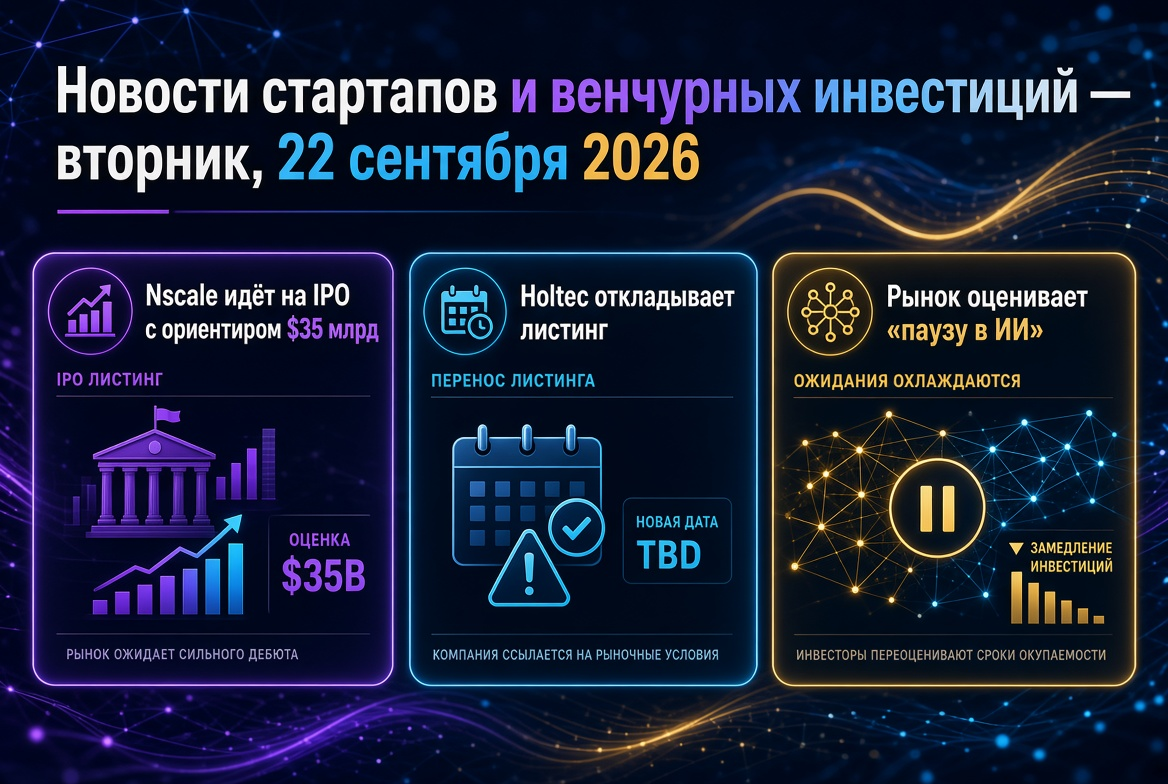
- Revitalization of the IPO Market. Successful public offerings of tech unicorns and new listing applications indicate that the much-anticipated "window" for public exits has reopened.
- Diversification of Sector Focus. Venture capital is flowing into not just AI, but also fintech, biotech, climate, space, defense, and other projects, broadening the market horizons.
- Wave of Consolidation and M&A Deals. Major mergers, acquisitions, and partnerships are reshaping the industry landscape, creating new opportunities for exits and business scaling.
- Global Expansion of Venture Capital. The investment boom is spreading to new regions—from the Middle East and South Asia to Africa and Latin America—forming new tech hubs.
- Renewed Interest in Crypto Startups. After a prolonged "crypto winter," blockchain projects are once again attracting substantial funding and attention from venture funds and corporations.
- Local Focus: Russia and the CIS Countries. Despite restrictions, new funds and initiatives are emerging to develop local startup ecosystems, drawing attention from investors to the region.
The Return of Mega Funds: Big Money Back in the Market
The largest investment funds and players are triumphantly returning to the venture scene—a clear sign of a new surge in risk appetite. Following a downturn in 2022-2024, leading firms are actively attracting capital again and launching record-sized funds. Japan's SoftBank, having faced several challenging years, announced the launch of Vision Fund III, totaling around $40 billion, focused on advanced technologies (AI, robotics, etc.). In the U.S., Andreessen Horowitz is forming a fund of approximately $20 billion to finance late-stage AI startups. Concurrently, sovereign funds from the Gulf are expanding their presence in the tech sector: investors from the Middle East are pouring billions into promising startups worldwide and developing ambitious mega-projects at home.
New venture funds are emerging in all regions, attracting significant institutional capital into high-tech projects. The infusion of this "big money" is providing liquidity to the market and intensifying competition for the most promising deals, while instilling confidence in a continued influx of capital into the startup ecosystem.
Record Investments in AI: The Wave of New Unicorns
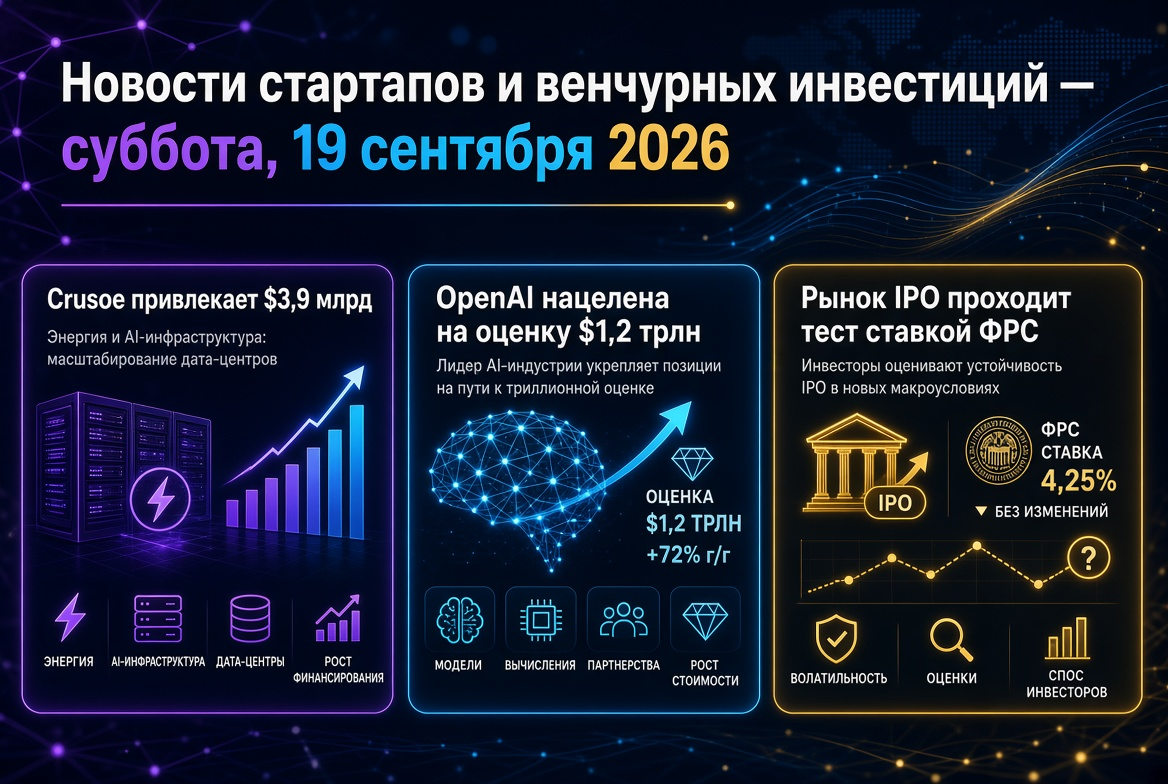
The artificial intelligence sector remains the main driver of the current venture boom, showcasing record funding levels. Since the beginning of 2025, AI startups in the U.S. alone have attracted over $160 billion (about two-thirds of all venture investments in the country), and by the end of the year, global investments in AI are expected to exceed $200 billion—a level previously unseen in the industry. The combined valuation of the ten largest AI companies (including OpenAI, Anthropic, xAI, etc.) has approached an astronomical $1 trillion. This massive capital influx into AI is accompanied by a proliferation of new unicorns: in October 2025 alone, about 20 startups worldwide surpassed a valuation of $1 billion for the first time—setting a record for monthly additions to the unicorn club. Investors are eagerly funding projects in generative AI, AI infrastructure, autonomous systems, and other cutting-edge directions.
Almost every week, new mega-rounds are being announced. For example, in November, American cloud AI infrastructure provider Lambda raised approximately $1.5 billion, predictive market platform Kalshi secured $1 billion, and multimodal systems developer Luma AI raised $900 million. While such rapid growth inspires optimism about technological potential, experts warn of signs of overheating in certain niches. This prompts investors to be more discerning about valuations and to select truly quality projects.
The IPO Market is Reviving: A New Wave of Public Offerings
The global IPO market is gradually emerging from a prolonged lull and gaining momentum. After nearly two years of inactivity, public offerings are once again becoming a sought-after exit strategy for venture funds. In Asia, Hong Kong has launched a new IPO wave: in recent months, several large tech companies have gone public, collectively raising billions of dollars. For instance, Chinese company CATL raised about $5 billion during its listing, confirming investor interest in IPOs in the region.
The situation is also improving in the U.S. and Europe: American fintech unicorn Chime recently debuted on the stock exchange, with shares rising by approximately 30% on the first day. Soon after, design platform Figma conducted its IPO, raising about $1.2 billion at a valuation of approximately $20 billion. The crypto sector is also trying to take advantage of this revival: fintech company Circle successfully went public in the summer (market capitalization around $7 billion), and cryptocurrency exchange Bullish filed for a listing in the U.S. with a target valuation of approximately $4 billion. The revival of IPOs is crucial for the venture ecosystem: successful exits allow funds to recoup invested capital and validate the viability of financed business models, restoring liquidity to the market and bolstering investor confidence.
Diversification of Investments: Expanding Horizons
In 2025, venture investments are covering a much broader range of industries and are no longer limited to just artificial intelligence. Following a downturn in 2024, there has been renewed interest in fintech: fintech startups are once again attracting large rounds, particularly in payment systems and decentralized finance (DeFi). For example, American fintech decacorn Ramp raised $300 million at a valuation of approximately $32 billion (this is already the fourth round for the company in 2025), indicating a revival of investor interest in financial technologies. There is also robust growth in climate ("green") technologies—synonymous with global demands for sustainable development—investors are eagerly funding projects in renewable energy and carbon footprint reduction.
Investors are also returning to biotechnology and medtech: major players (especially in Europe) are setting up specialized funds to support pharmaceutical and medical startups. Space and defense technologies are also gaining prominence—geopolitical conditions and the successes of private space companies are driving investments in satellite constellations, rocket building, unmanned systems, and military AI. The sectoral focus of venture capital has significantly broadened, enhancing market resilience: even if the excitement surrounding AI diminishes over time, other sectors are ready to carry the torch of innovation.
Wave of Consolidation and M&A: The Industry is Changing Shape
High valuations of startups and fierce competition in the market are prompting a new wave of consolidation. Major mergers and acquisitions are once again taking center stage, reshaping the balance of power in the industry. Tech giants are eager to acquire innovative developments and talent, leading to the active purchase of promising companies. A notable example is Google’s agreement to acquire Israeli cybersecurity startup Wiz for about $32 billion, a record for the Israeli tech sector. Such mega-deals demonstrate corporations' willingness to invest in innovation to bolster their positions.
Overall, the surge in M&A activity signals market maturation. Mature startups are merging with one another or becoming acquisition targets, while venture funds have a chance for long-awaited profitable exits. Consolidation accelerates the growth of the most promising companies while simultaneously "cleansing" the ecosystem of weaker players, revitalizing the market.
Global Expansion of Venture Capital: New Tech Hubs
The investment boom is spreading to new regions, establishing tech hubs around the world. The Middle East stands out notably: sovereign funds from the Gulf States are channeling unprecedented amounts of capital into tech companies while simultaneously developing ambitious mega-projects (e.g., Saudi Arabia's NEOM city of the future). In South Asia, India and Southeast Asian countries are attracting record capital inflows, while shifts in Europe's power dynamics—Germany overtaking the UK in venture investments—mark a first in a decade.
New startup ecosystems are forming in Africa and Latin America as global investors are turning their attention to these promising markets. Local entrepreneurs—from Nigeria to Brazil—are gaining access to capital for growth, creating regional centers of innovation. This global expansion of venture capital reduces dependence on traditional tech hubs and stimulates innovation everywhere, laying the groundwork for the emergence of the next generation of startups in various corners of the planet.
Renewed Interest in Crypto Startups: The Market Awakens After the “Crypto Winter”
Following a prolonged "crypto winter," the blockchain startup market has noticeably revived. In the fall, funding volume for crypto projects reached its highest levels in recent years. Significant rounds are occurring in Web3 infrastructure and decentralized finance, and venture capital is once again flowing into promising blockchain platforms. The rise of the cryptocurrency market also played a role: Bitcoin surpassed the historic mark of $100,000 in early November, fueling investor enthusiasm (though the price later corrected below this level). Venture funds, which had long stayed on the sidelines, are gradually returning to the crypto sector; new specialized funds and incubators for Web3 projects are emerging.
Of course, volatility and regulatory risks persist, but cautious optimism is evident: market participants are eager not to miss this new wave of growth. Cumulative investments in crypto startups in 2025 already exceeded $20 billion—more than double that of 2024—and could reach $25 billion by the end of the year. This signals a sort of renaissance for the industry: after the "cleansing" of the market from excessive speculation, the focus has shifted to real use cases for blockchain, which is once again attracting "smart" money.
Local Focus: Russia and CIS Countries
Despite external constraints, active efforts are underway in Russia and neighboring countries to develop local startup ecosystems. Government and private institutions are launching new funds and programs aimed at supporting early-stage tech projects. For instance, the authorities in Saint Petersburg discussed in November the creation of a municipal venture fund to finance promising high-tech companies—analogous to the Republic of Tatarstan, where a fund of 15 billion rubles is already operational. Additionally, major corporations and banks in the region are increasingly stepping up as investors and mentors for startups, establishing corporate accelerators and their own venture divisions.
Aside from governmental efforts, the entrepreneurial community is also noticeably invigorated. International technology forums and summits (e.g., the recent Moscow AI Journey 2025) are attracting attention to local innovations and building bridges between Russian developers and global investors. All these changes demonstrate that even under sanctions, the local venture scene continues to adapt and develop. For investors, the region offers new growth opportunities—a potentially promising market for venture investments when approached thoughtfully regarding risks.
Moderate Optimism and Sustainable Growth
By the end of 2025, moderately optimistic sentiments have strengthened in the venture capital industry. Successful IPOs and multi-billion funding rounds indicate that the downturn is behind us, and the startup ecosystem is experiencing a new upswing. However, investors remain cautious: capital is increasingly flowing to startups with a robust business model, proven economics, and real profit prospects.
Substantial capital influx into AI and other sectors instills confidence in the market's further growth, but participants are keen not to repeat the mistakes of past "bubbles" by carefully selecting projects and realistically assessing their potential. The return of major investors, the emergence of new unicorns, and successful exits have laid the groundwork for a new wave of innovation; however, discipline and discernment among investors will shape the nature of this growth. Despite the increased risk appetite, the focus remains on quality growth of startups and the long-term sustainability of the market.