Current export prices for Russian oil at shipping ports have stabilized around $70 per barrel, closely aligning with the average price expected for 2024. While production volumes have seen slight decreases, the primary downward factor affecting revenue is the stronger ruble compared to two years ago.
Given this context, oil companies could remit over 730 billion rubles to the budget in March (paid in April) from the mineral extraction tax (MET). Additional payments from the additional income tax (AIT) for the first quarter of this year will also contribute in April. In January and February, the prices for Russian oil were lower—averaging $40.95 and $44.59 per barrel, respectively—suggesting that revenue from these months may barely exceed 300 billion rubles. Revenue from the gas sector is likely to remain stable at around 170 billion rubles.
Consequently, total revenues from the oil and gas sector in April may surpass 1.2 trillion rubles. However, the budget also extends subsidies to oil producers—such as a reverse excise tax, investment tax incentives, and other measures—that are expected to increase. Based on the 2024 projections, these subsidies could approach 130 billion rubles, influenced by the ruble exchange rate.
Moreover, there exists a damping mechanism—government compensation to oil producers for supplying fuel to the domestic market at prices below export levels. The size of these payments is directly proportional to the difference between the export alternative (the price in Europe) and the conditional indicative price set annually by the government for the domestic market.
This damping payment could even turn negative. If the export price of fuel falls below indicative prices, oil producers would need to pay the budget the resulting difference. This scenario occurred in January, resulting in oil companies remitting 18.8 billion rubles in February. In light of this, Deputy Prime Minister Alexander Novak instructed the Ministry of Finance and the Ministry of Energy to analyze proposals for adjusting the mechanism to adapt it to new market conditions and support refining margins. Amid recent Middle Eastern events, global oil prices have risen, returning the damping mechanism to a positive position for oil producers.
The culmination of March may see oil and gas budget revenues rise to a very successful level for the industry as projected for 2024.
If we again consider the 2024 projections concerning the exchange rate, the damping payments for March might amount to around 150 billion rubles. Reuters estimates possible payouts at 130 billion rubles. Thus, budget revenues from the oil and gas sector in April (for March payments) could be approximately 900 billion rubles. In January of this year, they were 393.3 billion rubles, and in February, they reached 432.3 billion rubles.
This raises two questions. The first concerns the risk that the government, facing an expected budget deficit, may alter the damping payment rules in a direction unfavorable to oil producers, thereby reducing these payments. It is evident that the crisis in the Middle East is unlikely to persist for too long, given the substantial interest from various countries and entities in its rapid resolution. Following this, oil prices could fall again, potentially reverting to early-year levels (around $60 per barrel). Even if the discount on Russian oil decreases, as reported only by Western news agencies thus far, it may still be valued around $40–50 per barrel or potentially lower. This would correspondingly reduce budget revenues from oil, presenting an opportunity to add billions of rubles to the treasury currently.
However, as Dmitry Gusev, Deputy Chair of the supervisory board of the 'Reliable Partner' association and a member of the expert council for the 'Petrol Stations of Russia' competition, remarked in a conversation with "RG," the damping mechanism is essentially the sole measure for stimulating oil refining in Russia. Refineries need to be supported; after all, we do not wish to face a fuel shortage. Additionally, many recall how the previous attempt to halve the damping mechanism resulted in a fuel crisis during the autumn of 2023.
A similar viewpoint was expressed by Sergey Tereshkin, General Director of Open Oil Market. He noted that an increase in damping payments would not present a significant challenge for the budget, as both subsidies for refineries (NPPs) and MET revenues on oil would likely rise under current conditions. It is expected that the subsidy calculation rules will remain unchanged in the coming months.
Sergey Frolov, Managing Partner at NEFT Research, commented that making urgent amendments to the Tax Code at this time would be impractical, given the uncertainty surrounding the duration of the Middle Eastern crisis.
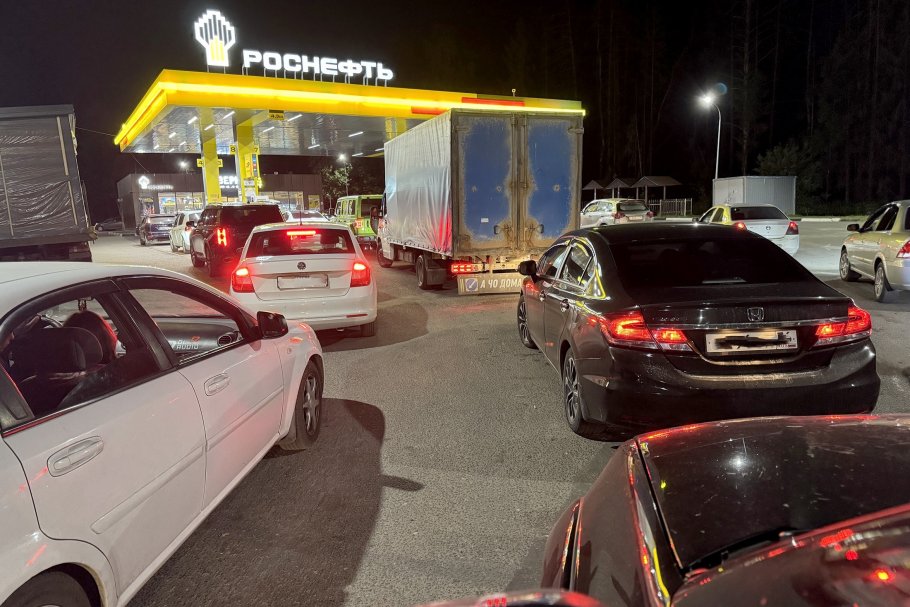
The second question pertains to fuel prices in the domestic market. Since the beginning of March, exchange prices for gasoline and diesel fuel (DT) have been rising, hitting record levels for this year and gradually approaching last autumn's peak values. The Russian domestic fuel market is under close regulatory scrutiny, aiming to prevent prices at gas stations from rising beyond inflation. Yet, regardless of stringent oversight, gas stations primarily purchase fuel through exchanges or from oil depots that base their pricing on exchange trading, influenced by export alternatives (prices for fuel supplied abroad).
If prices at gas stations begin to rise sharply, the government may swiftly reinstitute a complete ban on fuel exports.Currently, Rosstat is recording a moderate increase in prices at gas stations, lagging slightly behind average consumer inflation. However, this situation could change rapidly. The Moscow Fuel Association has already noted a significant price increase for gasoline at capital gas stations—averaging a rise of 21 kopecks for AI-92 and AI-95 grades.
Nevertheless, experts remain calm regarding this issue. Frolov explains that there are two primary reasons for the rising exchange quotations of fuel. The first is a seasonal factor, as fuel consumption is increasing both in the private sector and among freight transport, coupled with significant consumption growth in agriculture corresponding with the initiation of fieldwork. The second reason is situational, where sharp price increases for oil and petroleum products related to the U.S. and Israel's attacks on Iran have inevitably impacted Russia, which is one of the world's largest producers and exporters of petroleum products. Fortunately, the damping mechanism will help somewhat mitigate the consequences. Furthermore, the government retains the option to impose a complete fuel export ban, which would curtail price increases. Ultimately, it is crucial for regulators to act swiftly in enacting necessary decisions, which has been a point of delay in previous years.
However, Tereshkin believes new export restrictions are unlikely. The increase in subsidies and rising revenues from petroleum product exports will likely enhance refining margins. This should reduce pricing pressures on the domestic market. Thus, for producers to secure additional revenue, they won't need to significantly raise wholesale prices, which should maintain relative stability in retail. Paradoxically, the rise in global oil and petroleum products prices could lead to a temporary stabilization of the fuel market in Russia, the expert concludes.
Source: RG.RU