Size Matters: Should Russia Build New Mini-Refineries?
13.07.2026
100
Amid the challenges in the fuel market and long queues at gas stations, the old idea of increasing the number of small oil refining plants (mini refineries) has gained new momentum. This was echoed during the government meeting on fuel issues held on July 8.
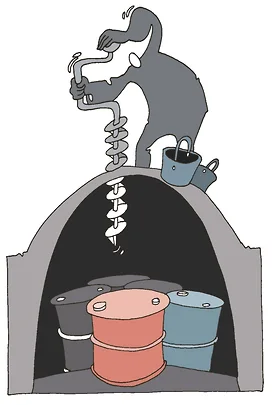
In Russia, small refineries are defined as plants with a primary oil processing capacity of up to 1 million tons per year. Their main advantages are compactness, relatively swift construction, and lower costs. According to Yuri Stankevich, Deputy Chairman of the State Duma's Energy Committee, if there is a ready project, a land plot with all necessary communications, and timely funding, the cycle of creating a modern small-tonnage refinery takes between one and two years. However, in practice, these timelines often extend to three or four years. Utilizing modular factory solutions can shorten installation time on-site to just a few months, but the preliminary design and approval stage still takes about a year.
For our country, mini-refineries are attractive in terms of logistics, reliability of supply, and safety.
Gasoline does not need to be transported by rail or truck for hundreds or thousands of kilometers. Nearby communities and businesses do not depend on deliveries from other, sometimes even non-adjacent, regions. Finally, if such a mini-refinery fails or is taken offline, it does not create significant nationwide problems. Moreover, there is another argument in favor of mini-refineries in Russia. The country’s vast territory makes supplies to remote areas, which are far from traditional refineries and have low population density, quite expensive for both producers and end consumers. This drives up fuel prices and contributes to inflation, impacting the economy of the region first, and subsequently, the entire country.
This is one of the reasons why mini-refineries are most developed in large countries. For example, China leads in this area, with about 25% of the country’s oil being processed at such small plants, often referred to as "samovars." In the U.S., mini-refineries account for 10% of processed oil. In Russia, the number of operating mini-refineries (around 80) surpasses that of the U.S. (65), but we process only about 5% of the country's extracted oil through them. There is certainly a statistical nuance here: in the U.S., small refineries are defined as plants processing up to 3.7 million tons of oil per year, while in China, it's up to 5 million tons. However, considering that oil consumption in Russia is 5.5 times lower than in the U.S. and 4.4 times lower than in China, the difference in the classification of mini-refineries can be overlooked.
However, this does not mean that Russian entrepreneurs should rush to build mini-refineries. They are not a panacea for all problems. According to Stankevich, while mini-refineries can help secure the market, their role will be limited. They are capable of effectively mitigating local fuel shortages, but they cannot protect the country from global price shocks or systemic supply crises.
Additionally, there are concerns regarding mini-refineries from economic, environmental, logistical, and product quality perspectives. The devil is, as they say, in the details.
Dmitry Gusev, Deputy Chairman of the Supervisory Board of the "Reliable Partner" Association and member of the Expert Council for the "Gas Stations of Russia" competition, believes that the idea of distributed oil refining is sound from both energy security and fuel supply perspectives. However, there are numerous other factors that must be considered. Primarily economic ones: production costs cannot be reduced based solely on volume, and sources of raw materials, pricing mechanisms for the domestic market, and conditions for connecting to pipelines are all unclear.
Stankevich points out that within the existing tax system, the profitability of such projects is barely at the break-even point without additional support measures. The cost of processing a ton of oil at a small plant is always higher than at a large one due to the absence of economies of scale. The yield of light petroleum products (gasoline, diesel, aviation kerosene) is also lower (about 45-55% compared to 80-90% at modern giants).
Small plants produce straight-run gasoline (naphtha), low-quality diesel, and fuel oil, Stankevich explains. To produce high-octane gasoline that meets the "Euro-5" standard, they require complex secondary processes (catalytic reforming, isomerization), which are economically inefficient at low volumes. Therefore, only large vertically integrated oil companies (VINKs) can meet domestic market demands for high-quality automotive fuel.
Sergiy Frolov, Managing Partner at NEFT Research, notes that hundreds of mini-refineries are currently functioning in Russia, some legally and some illegally. However, nearly all of them are so-called "samovars" – they only carry out primary oil refining production, yielding straight-run gasoline and diesel fractions, as well as fuel oil. The number of mini-refineries producing commercial fuel can be counted on one hand. Building new high-tech mini-refineries or upgrading existing ones to a level that allows for the production of commercial fuel under current tax and economic conditions is only feasible through budget financing – there is no interest from businesses, the expert insists.
Modern mini-refineries can indeed be quite technological, Stankevich agrees. Ecological risks can be minimized through innovative solutions. However, constructing full-fledged deep processing complexes requires significantly larger investments, which brings us back to economic considerations. The greatest barriers lie not only in technical aspects but also in administrative and financial spheres. Without adjusting the tax system, mass emergence of small refineries should not be expected. A special fiscal model is needed for them.
As for the current problems in the fuel market, they cannot be resolved, even considering the relatively fast construction timeline, through mini-refineries alone. Their cumulative capacity is simply too small. According to Sergey Tereshkin, General Director of Open Oil Market, mini-refineries have never played a significant role in fuel production in Russia. However, things might change if the use of straight-run gasoline for producing high-octane fuel is permitted: this measure would open the fuel market to technologically simple refineries, the expert posits. But this would carry risks regarding fuel quality characteristics. Overall, increasing imports – including through subsidies – could play a more crucial role in saturating the domestic market than creating additional opportunities for mini-refineries. This is too small a segment to significantly influence the situation in the fuel market.
Source:
RG.RU