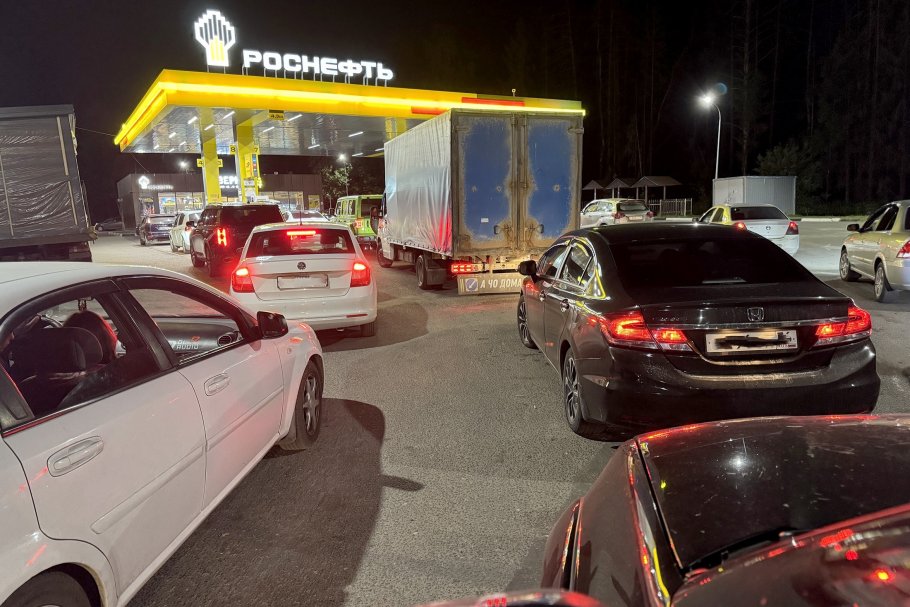
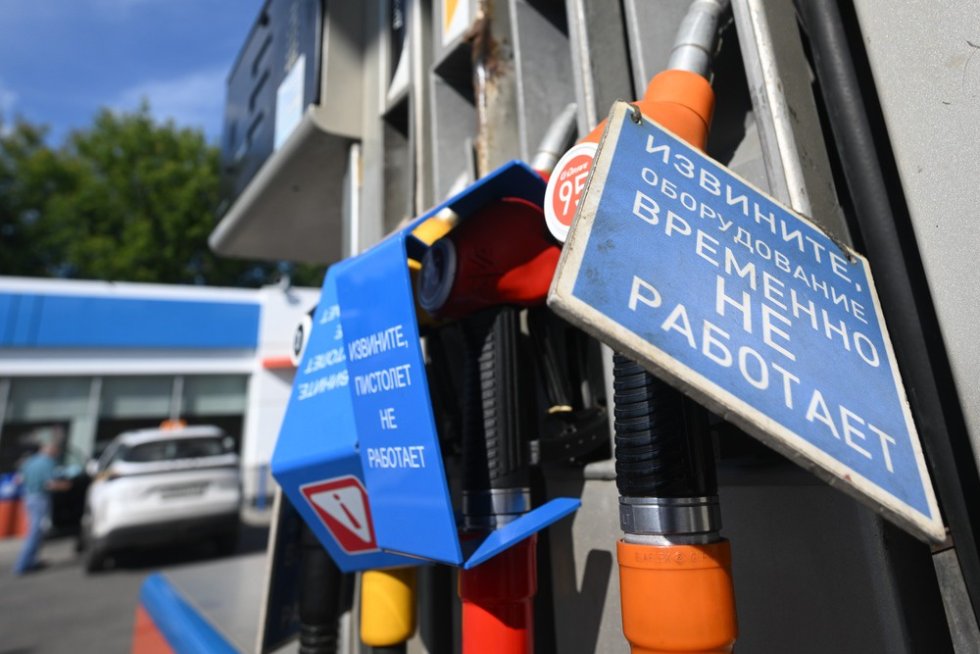
This news would have previously demanded at least considerable media attention, but now it has gone almost unnoticed. Exchange prices currently have little impact on retail fuel prices, and trading volumes have dropped by three times. Only slightly more than 10% of the daily gasoline consumption in Russia passes through the exchange. Most supplies now bypass trading, focusing on the wholesale and small wholesale segments. The final prices differ significantly from the quotations. Furthermore, the exchange trading does not increase the volumes of gasoline and diesel fuel (DF) produced, while the main challenges currently lie in ensuring all gas stations (GS) have the necessary fuel supply.
The situation concerning fuel availability, particularly gasoline, is expected to normalize in the very near future. Refineries are gradually emerging from scheduled repairs, increasing production volumes. The export of gasoline and DF from Russia is prohibited, with all produced fuel directed to the internal market. Imported gasoline has started to flow into the country, with the largest volumes coming from Belarus, along with supplies from India, Morocco, and Turkey.
As of September 1st, gas stations are allowed to sell fuel of environmental class lower than "Euro-5." All these measures should increase the supply of fuel in the market.
However, perhaps the most significant factor will be that September marks the beginning of the seasonal decline in gasoline demand, as the vacation and dacha season comes to an end. This year, the autumn decline in demand may be sharper than before.
Dmitry Gusev, Deputy Chair of the Supervisory Board of the "Reliable Partner" Association and a member of the Expert Council of the "Gas Stations of Russia" competition, noted in an interview with "RG" that many motorists are currently choosing to park their cars or minimize trips in personal vehicles if public transport is an option. This is due to both rising prices and long queues at gas stations, where time must be spent waiting. Estimates of the demand decrease stemming from these factors range from 10% to 30%.
According to Sergey Frolov, Managing Partner of NEFT Research, sustainable stabilization of the situation can only be expected once demand and consumption return to balance across all regions of Russia.
Given the measures being taken, there is hope that by September, the queues at gas stations will have completely dissipated. The question remains, however, at what prices this fuel will be sold. According to Rosstat, since the beginning of the year until the end of the summer period, gasoline prices in Russia have increased on average by 19.4%, while DF prices have risen by 18.4%. In some regions, price hikes of twenty percent or more pace ahead of the national average.
Here, the issue of pricing is particularly important. Gusev believes that exchange trading has never been particularly linked to retail, and now it is even less so. However, it serves as an indicator for the market. Based on these, prices rise or fall in the wholesale and small wholesale segments, which are then transmitted to gas stations.
In the small wholesale segment, gasoline prices sometimes exceed exchange prices by one and a half times.In the large wholesale market, at refineries and major oil depots, prices are almost identical to exchange prices, with a difference of 1-5%. Here, network gas stations, which are generally owned by oil companies, make their purchases. In the small wholesale sector, oil depots primarily supply independent gas stations, industrial enterprises, and agricultural producers, with fuel costs currently exceeding exchange quotations by 8-10%. Often, even larger discrepancies are observed. This is precisely why prices at independent gas stations (more than half of the gas stations in Russia) are higher than at network stations.
As Sergey Tereshkin, General Director of Open Oil Market, notes, the gap between prices on the exchange and the over-the-counter segment has always been a common occurrence. However, this difference has become particularly sensitive: the price at which independent GS operators purchase gasoline exceeds the exchange level by one and a half to even two times.
According to the new rules, all over-the-counter transactions for purchasing fuel of 1 ton or more are now registered on the exchange. However, this is currently done voluntarily (until March 1, 2027). The Federal Antimonopoly Service (FAS) will monitor to ensure that prices do not surge. Moreover, if the purchase is made directly by the gas station, the transaction needs to be registered only when acquiring more than 60 tons of fuel. This exception has been made because prices at gas stations are already monitored by FAS.
In other words, such price hikes as seen this summer should no longer occur. Considering the drop in demand and the increase in fuel volumes entering the market, some downward adjustments may even be possible. The challenge is that the measures taken do not yet address the systemic issues of domestic oil refining.
Frolov believes that even after the planned and unplanned repairs of all existing refineries, there will still be questions regarding the further systemic development of oil refining. This year’s events have demonstrated long-standing issues within the industry.
Tereshkin is confident that this year, unscheduled repairs at refineries have become a defining factor for our fuel market. Despite the stabilization of the situation in the fuel market, the issue of partial capacity exits remains relevant.
In simpler terms, we need new refineries, and producing and selling fuel domestically should be more profitable than exporting crude oil.
Gusev believes that the issues affecting our oil refining this year stemmed from the tax maneuver (nullification of export duties on oil and light oil products from 2024 and an increase in the mineral extraction tax). As a result, the investment attractiveness of building new refineries and, in general, oil refining has diminished.
Source: RG.RU