Oil Market: Military Premium Versus Signals of Buyer Fatigue
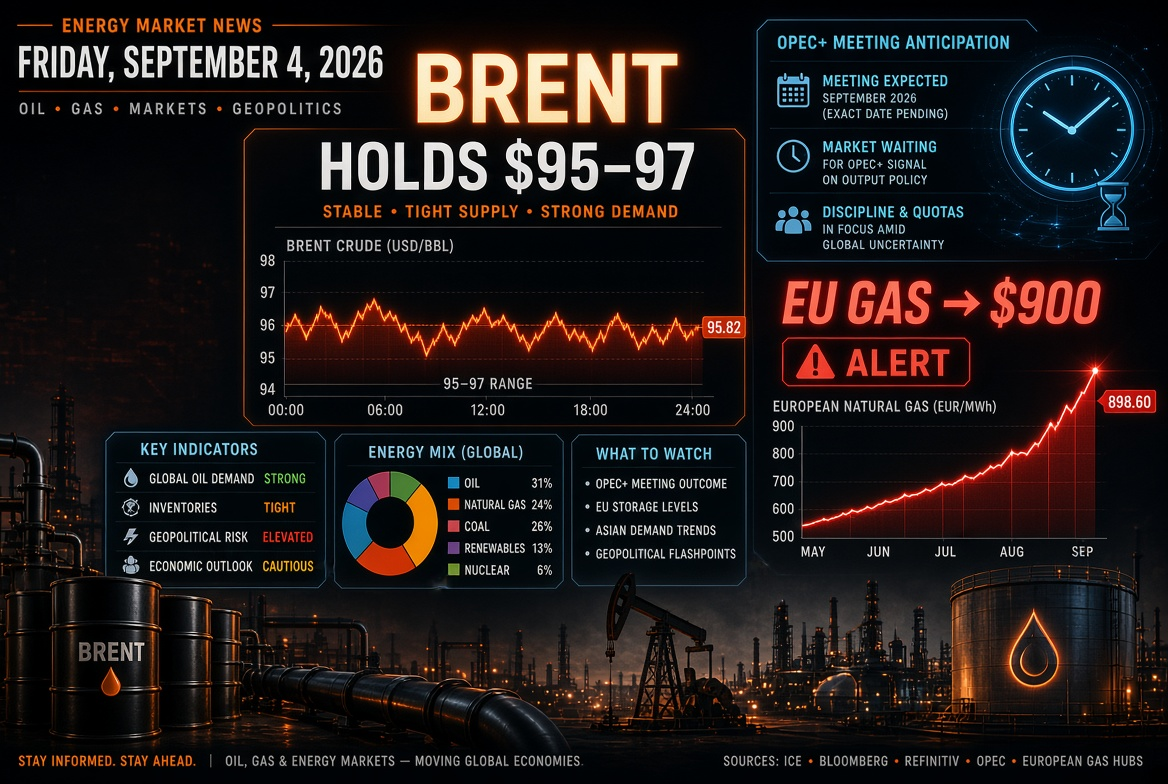
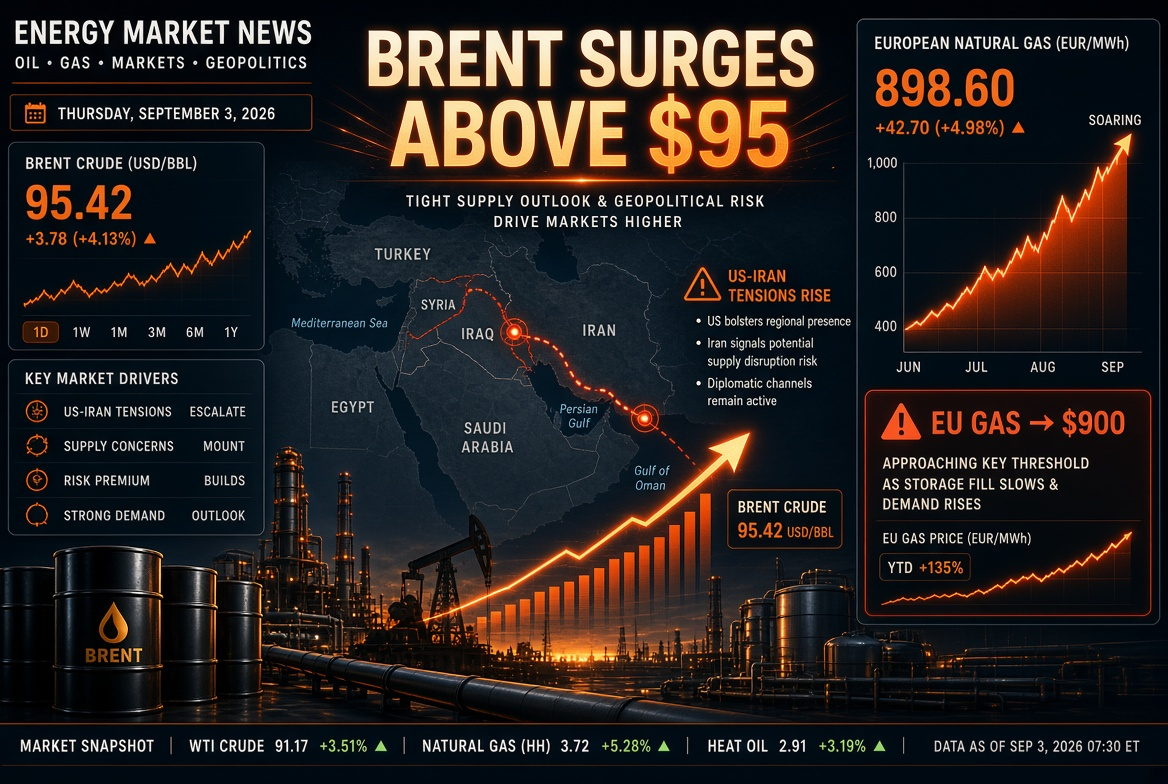
Oil prices were mixed on Thursday: after three sessions of steady growth that raised Brent to five-week highs above $96, the market corrected to $95 in the morning. However, by midday, buyers regained control, pushing November Brent futures up to $97 and WTI to $92.5 per barrel. On Friday, the market opens with heightened sensitivity to news headlines. Key drivers of prices include:
- Escalation of the Conflict: The US launched strikes on approximately 100 Iranian targets, including radar systems, marine facilities, and communications centers; Tehran retaliated by targeting American sites in the region and attacking commercial vessels.
- Restricted Transit through Hormuz: The movement of tankers through the strait, which previously accounted for nearly 20% of global maritime oil trade, has sharply decreased, and freight and insurance costs in the Persian Gulf remain extremely high.
- Bets on Alternative Routes: Market participants expect that alternative pipeline and maritime channels will partially compensate for the lost volumes — this is preventing prices from surging to $100.
- Risk of a Sharp Correction: The higher the military premium rises, the more painful the retreat could be if signals of de-escalation or negotiations surface.
Analysts see the baseline range for the upcoming sessions as $92–98 per barrel for Brent: support at $90 appears solid for now, while resistance is at the psychological mark of $100.
Geopolitics: The Strait of Hormuz Remains the Epicenter of Energy Risk
The US-Iran conflict has been ongoing for seven months, and the current phase is one of the most dangerous for the global energy market. Washington claims control over the waterway, while Tehran threatens to close the strait to commercial shipping. It is fundamentally important for the global FEC that the Strait of Hormuz is not only a transit route for oil from Saudi Arabia, Iraq, and Kuwait, but also for Qatari LNG: limiting nearly a fifth of the global supply of liquefied gas has already triggered a price shock in Europe and Asia.
Market Scenarios
- A strike on Iran’s export infrastructure, including Kharg Island, could add several more dollars to the risk premium on oil.
- A freeze in the conflict with limited transit would maintain prices at the upper range amid high volatility.
- A diplomatic breakthrough and the restoration of shipping would lead to a quick drop in the premium and a correction of Brent to $85–90.
OPEC+: The September 6 Meeting as the Week’s Main Focus
Since September, seven key OPEC+ countries — Saudi Arabia, Russia, Iraq, Kuwait, Kazakhstan, Algeria, and Oman — have increased their quotas by 188,000 barrels per day, fully concluding their voluntary cuts of 1.65 million b/d. The aggregate allowed production level has reached 36.2 million barrels per day, and any further increases are on hold until the end of 2026, while the base restrictions of around 2 million b/d, in place since 2022, are maintained. On Sunday, September 6, ministers will meet again: the market will seek to understand whether the alliance is ready to activate spare capacity to compensate for the lost volumes from the Middle East. Another point of intrigue is the redistribution of quotas following the UAE's exit from OPEC and OPEC+ in May 2026.
Gas Market: Europe Enters Winter with Record Low Stocks
The European gas market is experiencing the most strained start to autumn since the 2022–2023 crisis. October futures at the TTF hub are trading at around $880–895 per thousand cubic meters, up about 20% since July, surpassing the $800 mark at the end of August for the first time in five months. Traders are seriously discussing testing the $1000 level. The fundamentals for this rally include:
- EU underground storage fill levels are only about 58% — a historically low level ahead of the heating season;
- Significant reductions in Qatari LNG volumes due to shipping restrictions through the Strait of Hormuz;
- Increased summer gas consumption by power plants amid heat and rising energy demand;
- Warnings from suppliers about risks to regional energy supply stability this winter.
LNG: US Exports as a Balancer
The market is partially supported by new liquefaction capacities in the US operating near record loading levels, along with declining demand in Asia: China reduced LNG imports in August by around 18%, while price-sensitive buyers like Pakistan are rejecting expensive spot cargoes. However, there are not enough available volumes to fully offset the losses from the Middle East, keeping gas price volatility in Europe and Asia high.
Electricity and Renewables: Data Centers Reshape Demand Dynamics
The global electricity sector is adapting to high gas prices through renewable sources: in regions where the share of renewables is higher, dependency on imported fuel is less pronounced. A structural trend of the year is the explosive growth of energy consumption by data centers and artificial intelligence infrastructure: global data center consumption is now comparable to the energy balance of a major European country, and access to grid power is turning into a scarce asset. China is launching mega-projects for direct supply of solar and wind generation to data center clusters, while in the US, tech giants are contracting "green" electricity through long-term PPAs, and investments in networks and storage systems are becoming major focal points for capital investments in the sector.
Coal: A Safety Net Amid the Gas Shock
The coal market is once again benefiting from the gas crisis. The shift of power plants from expensive gas to coal is being noted in both Asia and some European countries, supporting prices for energy coal and the loading of key exporters — Indonesia, Australia, Russia, and South Africa. China and India maintain high volumes of coal generation to meet peak loads: in the short term, coal remains an indispensable safety net for the global energy sector, despite long-term decarbonization goals.
Russian Oil Products Market: Record AI-92 and Strict Regulation
The internal fuel market in Russia remains under pressure. Exchange prices for AI-92 gasoline have reached a historical high, exceeding 75,000 rubles per ton; in several regions, localized supply disruptions persist, although the situation is gradually stabilizing in the metropolitan area. The government is responding with a package of measures:
- A complete ban on gasoline exports is in effect until January 31, 2027, covering both producers and traders;
- The ban on diesel and marine fuel exports has been extended until September 30 for producers and until the end of January 2027 for other exporters;
- As of September 1, the sale of gasoline of ecological classes K2–K4 has been permitted to increase fuel availability in regions;
- The deficit is being met through imports from Belarus, Kazakhstan, India, and Turkey, as well as accelerated restarts of refineries and reduced maintenance schedules;
- The Federal Antimonopoly Service has intensified control over pricing at independent gas stations, while the damping mechanism continues to compensate oil producers for some of their lost revenues.
Key Guidelines for Investors on Friday, September 4
- Dynamics of the US-Iran Conflict — any signals regarding strikes on export infrastructure or, conversely, negotiations could shift Brent by several dollars in either direction.
- Preparation for the OPEC+ Meeting on September 6 — leaks regarding Saudi and Russian positions will set the direction for oil prices even before the meeting.
- Filling Rates of European UGS — whether gas at TTF stabilizes above $900 per thousand cubic meters depends on this.
- Transit through the Strait of Hormuz — the restoration of shipping will be the main deflationary factor for oil and LNG.
- Russian Fuel Market — exchange prices for gasoline and the effects of targeted relaxations for diesel exports.
The baseline scenario for the end of the week is sustained high prices for oil and gas amid high volatility: the energy market continues to respond to geopolitics rather than the balance of supply and demand, and ahead of the OPEC+ meeting on September 6, investors should prepare for sharp intraday price movements.