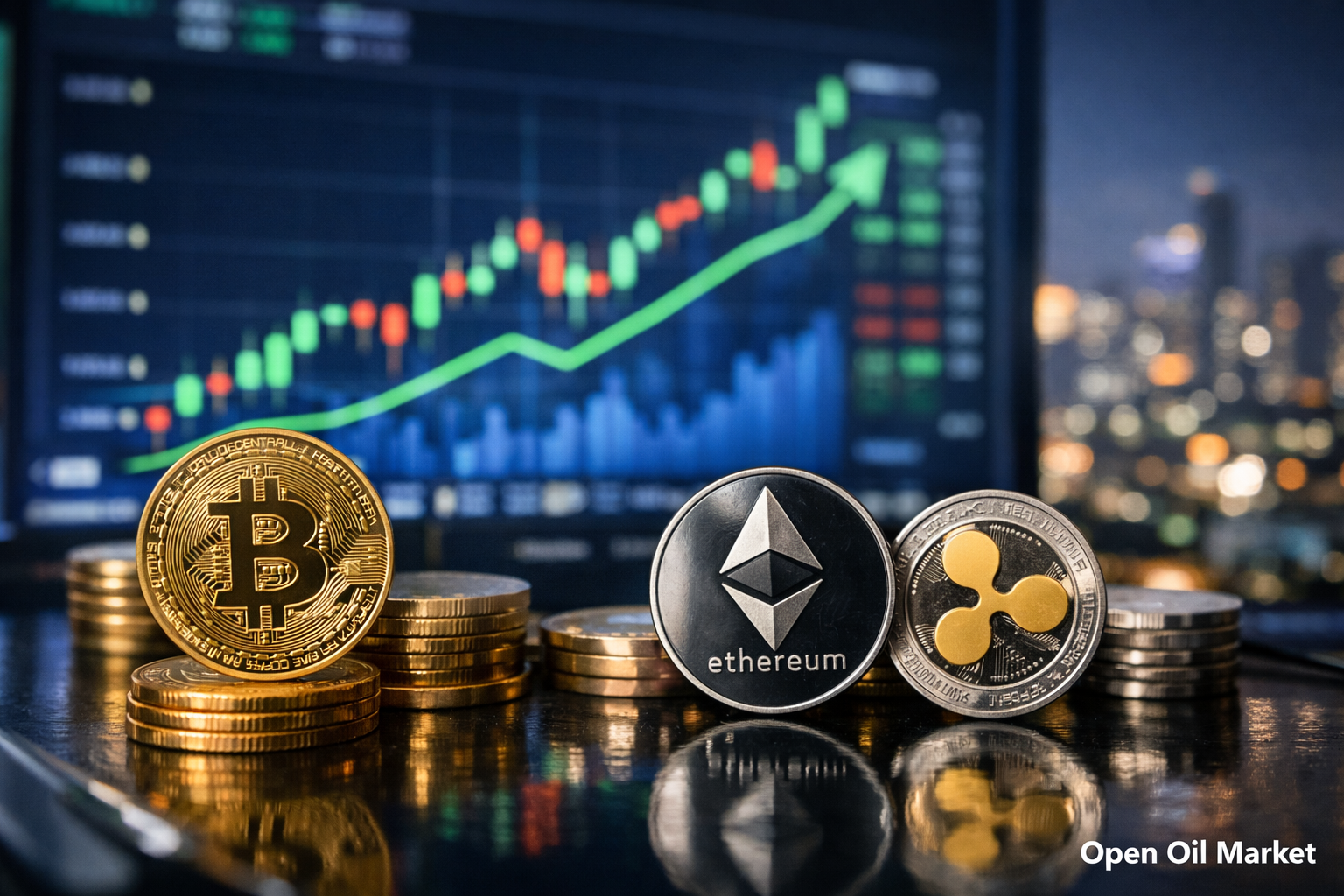
Current Cryptocurrency News February 15, 2026: Bitcoin, Ethereum, and the Top 10 Cryptocurrencies, Institutional Demand, Blockchain Trends, and the Global Digital Asset Market for Investors
Crypto news on February 15, 2026, is shaped by the intersection of two themes: increasing attention to the operational risks of crypto exchanges and the continued reassessment of risk in the global cryptocurrency market. Over the weekend, investors are reevaluating assumptions about the "maturity" of the infrastructure: a single failure at a major platform can trigger a chain reaction of sell-offs, intensify regulatory pressure, and impact liquidity in adjacent segments.
- Topic of the Day: The incident at Bithumb serves as a concentrated reminder that failures in internal control can escalate into market shocks and expedite regulatory decisions.
- Stress Signals: The global cryptocurrency market remains sensitive to macroeconomic indicators and "thin" liquidity; the role of derivatives and margin mechanics has significantly increased.
- Politics and Law: The US is discussing federal frameworks (Clarity Act, stablecoins), the EU is rolling out MiCA and accompanying clarifications, and Asia is tightening controls following high-profile incidents.
Topic of the Day: One Operational Glitch — and the Market Recalculates Trust
A highlight of the week is the incident at the South Korean exchange Bithumb, where an error in promotional mechanics led to incorrect payouts and subsequent restrictions on operations and corrective actions. For global investors, the importance of this episode lies not in the details of "who received how much," but in how quickly the platform localizes the damage, what controls come into play, and how transparent the recovery plan is.
It's also noteworthy that regulators in South Korea publicly linked the incident to vulnerabilities in virtual assets and began discussing stricter rules and internal control checks for exchanges. This amplifies the overarching trend: infrastructure risk in cryptocurrencies is increasingly seen as a matter of financial stability, rather than solely cybersecurity.
- For Investors: Counterparty assessment (exchange, custodian, lender) is becoming as important as asset selection.
- For the Market: Quality of controls and procedures for halting operations is turning into a competitive advantage.
The Cryptocurrency Market: Volatility, Liquidity, and Macro Factors
Recent weeks in the global cryptocurrency market have been marked by heightened sensitivity to macro signals and liquidity in risk assets. As a result, the role of derivatives is increasing: liquidations and revisions to margin requirements are becoming part of the pricing mechanism, and on weekends, "thin" liquidity often amplifies price movements.
Notably, stress is also manifesting among infrastructure providers. BlockFills — an institutional liquidity and credit provider — temporarily suspended deposits and withdrawals while maintaining the capacity to close positions, stating that it is working to restore liquidity on the platform.
What to Monitor if Your Investments in Cryptocurrencies are Global
- Infrastructure: Withdrawal pauses, settlement failures, changes in limits, and collateral requirements.
- Stablecoins: News about issuers, reserves, and access to the banking system.
- Institutional Flows: Dynamics of interest in regulated instruments and custodial solutions.
- Leverage: Increase in liquidations and tightening of margin lending conditions.
Regulation: US Accelerates Discussion on Rules, Europe Implements MiCA, Asia Strengthens Controls
In the US, the focus is on the Clarity Act and the debate on stablecoin rewards: banks are concerned about deposit outflows, while crypto companies believe incentives are key for competition. After a meeting at the White House, no compromise was reached, but the US Treasury is publicly urging faster adoption of frameworks, while the SEC and CFTC are demonstrating movement towards greater coordination and supervision harmonization.
At the same time, elements of a regime for "payment" stablecoins are solidifying: the CFTC has reissued staff letter 25-40, expanding the definition of payment stablecoin, while the NCUA has launched a rule-making process for licensing "approved issuers of payment stablecoins" under the GENIUS Act.
In the EU, MiCA sets unified rules for crypto assets (disclosure, authorization, oversight). The EBA has separately detailed its approach to completing the transition period regarding electronic money tokens and payment services (cut-off date — March 2, 2026), while the ESMA has issued guidelines on knowledge and competencies for crypto service providers. In Asia, the Bithumb incident accelerates regulators' focus on internal systems and controls.
Bitcoin: Institutional Stress Test of Market Maturity
Bitcoin remains the central asset of the ecosystem and an indicator of trust in the industry. At this point, the quality of demand becomes critical: can it withstand stress events without cascading sell-offs and issues among infrastructure providers?
Public reporting from major players highlights a cycle: weak trading volumes impact fees; however, revenues from stablecoins and service segments can smooth business volatility. For instance, Coinbase reported a quarterly loss amid decreased activity while noting growth in its services sector and the contribution of stablecoins.
Altcoins and Infrastructure: Where Capital Seeks Liquidity and Predictable Rules
Amid Bitcoin's volatility, investors are increasingly segmenting "altcoins" by functionality: payment tokens, infrastructural smart contract networks, exchange tokens, and stablecoins are traded based on different logics. During stress periods, the market tends to favor liquidity and a clearer regulatory trajectory, reinforcing the gap between leaders and other assets.
Simultaneously, traditional financial infrastructure is making strides toward tokenization and settlement based on distributed ledgers. One notable signal is LSEG's plans to create an on-chain settlement component (Digital Securities Depository) for institutional participants: interoperability, support for multiple networks, and an aim for the first result in 2026, pending regulatory approval, have been announced.
Top 10 Most Popular Cryptocurrencies
Criterion for Popularity: not specified. For practicality, the list is compiled based on "weight" in the market (capitalization and liquidity) at the time of the last available public snapshot; the order may change.
- Bitcoin (BTC)
- Ethereum (ETH)
- Tether (USDT)
- BNB (BNB)
- XRP (XRP)
- USDC (USDC)
- Solana (SOL)
- TRON (TRX)
- Dogecoin (DOGE)
- Bitcoin Cash (BCH)
| Rank | Crypto Asset | Class | Brief Description | Risks and Key Drivers |
|---|---|---|---|---|
| 1 | Bitcoin (BTC) | Base Asset | Risk anchor for cryptocurrencies. | Macro liquidity, derivatives, regulatory signals. |
| 2 | Ethereum (ETH) | Smart Contracts | Infrastructure for DeFi and tokenization. | L1/L2 competition, regulatory interpretations, network load. |
| 3 | Tether (USDT) | Stablecoin | Main "crypto cash" for trading. | Trust in reserves, banking channels, regulatory requirements. |
| 4 | BNB (BNB) | Ecosystem | Linked to a major exchange ecosystem. | Regulatory risks of infrastructure, trading volume cycles. |
| 5 | XRP (XRP) | Payments | Narrative of cross-border payments. | Legal and regulatory decisions, competition from fintech payments. |
| 6 | USDC (USDC) | Stablecoin | Dollar settlement layer in the industry. | Regulatory design, discussion on "rewards," competition among issuers. |
| 7 | Solana (SOL) | Smart Contracts | High performance and active ecosystem. | Operational resilience, competition, cyclicality of demand. |
| 8 | TRON (TRX) | Settlements | Stablecoin transfers and transaction network. | Compliance risks of transfers, regulatory pressure. |
| 9 | Dogecoin (DOGE) | Meme Asset | High reliance on sentiment. | Retail risk appetite, sharp trend reversals, corrections. |
| 10 | Bitcoin Cash (BCH) | Payment Fork | Payment narrative in the "family" of Bitcoin. | Liquidity, market attention, competition from payment networks. |
Conclusion: Cryptocurrency news in mid-February 2026 indicates that the cryptocurrency market is increasingly evaluating not only the technology and price of assets but also the quality of operational processes, legal clarity, and the speed of regulatory responses. For global investors, this signifies a shift from a simple "up/down" narrative to an analysis of the resilience of the ecosystem — from exchanges and stablecoins to institutions in the traditional market.