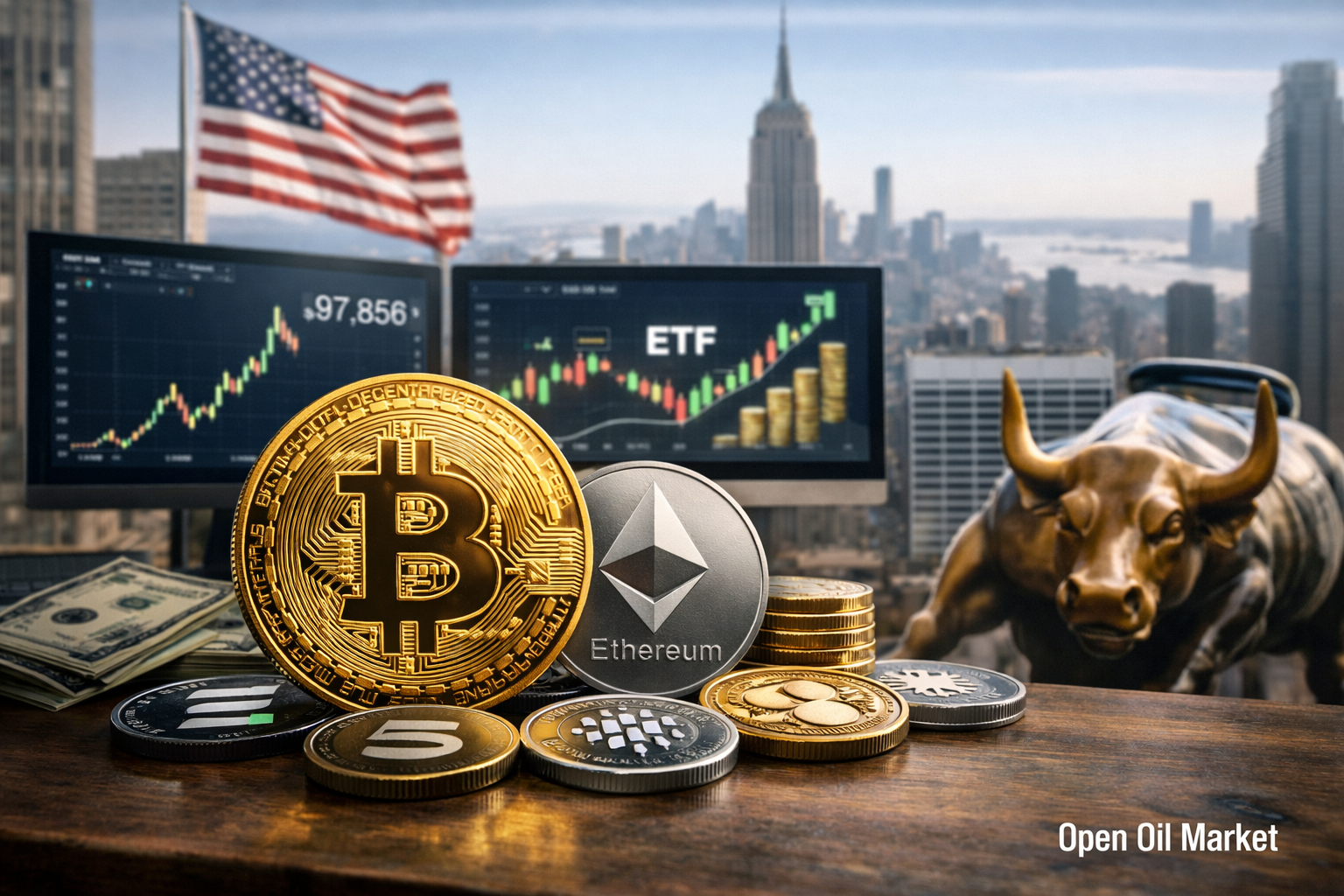
Cryptocurrency News for Friday, January 16, 2026: Bitcoin and Altcoin Dynamics, Global Cryptocurrency Market, Institutional Investments, Regulation, and Investor Forecasts.
As of the morning of January 16, 2026, the cryptocurrency market is demonstrating steady growth. The price of Bitcoin is approaching the psychologically significant mark of $100,000, with its share of total cryptocurrency capitalization hovering around 60%. The overall market capitalization exceeds $3.2 trillion, and major indicators reflect positive sentiments among participants. This situation is supported by favorable macroeconomic factors and expectations of regulatory easing. Ethereum has successfully implemented a new network upgrade, strengthening its position above $3,300; key altcoins are also showing significant growth. Investors and analysts are evaluating the results of the week—primarily the massive institutional capital inflows and anticipated changes in regulatory policies—which could determine the further trend in the global cryptocurrency market.
Bitcoin Continues to Rise
Bitcoin maintains its leadership role and serves as the locomotive for the rally in the crypto market: in mid-January, its price confidently approached the level of $97,000, accompanied by a growth of approximately 5% over the past few days. Institutional inflows are fueling this rise: according to analysts, during one trading session, Bitcoin-ETF products attracted around $843 million, with a total inflow of approximately $1.5 billion since the beginning of the year. Investor confidence is also bolstered by corporate purchases: MicroStrategy increased its balance by more than 13,600 BTC (around $1.25 billion) in the first month of the year. The excitement is further supported by expectations of breaking through the psychological level of $100,000, which could trigger a new rally. The short-term benchmark for Bitcoin is sustainable closures above the $95,000–$97,000 zone; without this, consolidation at current levels may be possible.
Ethereum and Leading Altcoins
Ethereum (ETH) is the second-largest cryptocurrency by market capitalization. In early January, an important technical upgrade (the "BPO" hard fork) took place in the Ethereum network, aimed at optimizing network parameters and increasing transaction efficiency. Following the implementation of this update, Ethereum has strengthened its position and is currently trading around $3,300. The development of Layer-2 solutions and the growth of DeFi applications have intensified investment demand for ETH, bringing the network's capitalization close to $400 billion.
Leading altcoins are also joining the market rally. Binance Coin (BNB) and XRP grew by 3-4%, while Solana and Tron increased by 2-5%, and Cardano (ADA) and Dogecoin (DOGE) saw growth of about 6% over the past week. Additional interest has been sparked by product announcements, including the launch of the world's first spot ETF on Chainlink (CLNK) on January 15, which increased demand for LINK (with the price rising by nearly 5%). Collectively, these factors support a positive trend for the leading altcoins in the market.
Top 10 Most Popular Cryptocurrencies
- Bitcoin (BTC) – the first and largest cryptocurrency, market leader. Price around $97,000, capitalization over $2.4 trillion.
- Ethereum (ETH) – leading blockchain platform for smart contracts. Price around $3,300, capitalization approximately $400 billion.
- Tether (USDT) – the largest stablecoin pegged to the US dollar. Widely used for trading and settlements on exchanges.
- Binance Coin (BNB) – the native token of the Binance exchange, providing discounts on fees and participating in the Binance ecosystem. Price around $950, capitalization ~$150 billion.
- USD Coin (USDC) – the second-largest stablecoin backed by the dollar. Widely applied in DeFi applications and payment services.
- XRP (Ripple) – cryptocurrency of the Ripple payment network. Price around $2.15, capitalization approximately $140 billion.
- Solana (SOL) – high-performance blockchain for decentralized applications. Price around $145, capitalization about $70 billion.
- Cardano (ADA) – next-generation blockchain with a Proof-of-Stake algorithm. Price around $0.42, capitalization approximately $35 billion.
- Dogecoin (DOGE) – meme cryptocurrency that gained widespread recognition due to its community and support from investors. Price around $0.15, capitalization approximately $20 billion.
- TRON (TRX) – blockchain platform for content and entertainment. Price around $0.30, capitalization approximately $24 billion.
Institutional Investments and ETFs
Institutional interest in cryptocurrencies continues to grow. According to analysts, in mid-January, Bitcoin-ETFs recorded a daily inflow of around $843 million—the total investment in these instruments since the beginning of the year amounts to approximately $1.5 billion. This scale of investment boosts confidence in the market: large companies and funds are actively increasing their positions in digital assets. For instance, MicroStrategy added over 13,600 BTC (around $1.25 billion) to its balance in January. Additionally, the world has seen new tools for institutional capital participation: on January 15, trading begins on the NYSE Arca for the first-ever spot ETF on the cryptocurrency token Chainlink (CLNK), providing direct exposure to LINK. Analysts believe that increasing ETF volumes and corporate investments create a fundamental basis for further increases in cryptocurrency prices.
Regulation and Legislation
Key events are happening in the realm of regulation that could determine the industry's development in 2026. In the US, a group of senators proposed a bill that clearly delineates the regulatory powers of the CFTC and SEC, and defines which tokens should be classified as securities or commodities. It is anticipated that discussions on this document in Senate committees will help establish clear rules for crypto companies. Similarly, in other countries, legislative bodies are striving to create comprehensible frameworks: for example, in Russia, a bill on the "daily" use of cryptocurrencies is being prepared—its adoption will allow trading digital assets by a wide range of investors (within established limits) starting in mid-2026. Similar steps are being planned in Europe, where rules for integrating digital currencies into the economy are being formed with intensified market oversight.
Technological Updates and Innovations
The technological infrastructure of the cryptocurrency market continues to evolve. In early January, Ethereum conducted the BPO (Base Parameter Optimization) upgrade, which optimized blockchain operations and increased network efficiency. This update, combined with the rapid development of Layer-2 solutions, has strengthened Ethereum's position as a DeFi hub and provided an additional impetus for the ETH price. In the Bitcoin ecosystem, a test network "Bitcoin Quantum" has been launched—an experimental project that utilizes post-quantum technologies to protect the network from future quantum attacks. The "Bitcoin Quantum" technology is designed to implement new cryptographic standards that will be resilient against the development of powerful quantum computers.
In the stablecoin segment, there is a strengthening of oversight and accountability: issuers are announcing actions against abuses. Tether has blocked $182 million USDT on suspicious addresses, and Western Union and Klarna have confirmed plans to issue their own regulated digital currencies. These steps reflect a global trend: significant attention is being paid to security and compliance, which enhances trust among institutional players in crypto assets.
Global Markets and Macroeconomics
The global economic situation influences the demand for cryptocurrencies. In Asia, on January 14, major stock indices rose: the Shanghai and Shenzhen indices increased by up to 1%, while the Hong Kong Hang Seng rose by approximately 0.4%. These movements were accompanied by a rise in gold prices to new highs and an increase in oil quotes amid geopolitical tensions. At the same time, the US Federal Reserve continues to soften expectations regarding interest rates due to decreased inflation, traditionally supporting a capital influx into risk assets. The combination of these factors causes some investors to view cryptocurrencies as a means of hedging and diversifying their portfolios, further fueling overall market optimism.
Prospects and Forecasts
Most experts remain optimistic about the further development of the cryptocurrency market. Given the rapidly growing institutional demand and progress in regulation, the fundamental conditions for growth are strengthening. The key target for Bitcoin remains the $100,000 mark: surpassing this level, according to analysts, could trigger a new rally phase and attract additional capital inflows. At the same time, high volatility is noted: short-term corrections remain possible, especially with changes in global conditions. Key drivers will remain the improvement of the regulatory climate and the further integration of cryptocurrencies into traditional finance (through ETFs, CBDCs, and other institutional products). With a favorable combination of these factors, the trend remains upward, but experts advise investors to maintain portfolio diversification and utilize protective mechanisms (stop-losses) in volatile conditions.