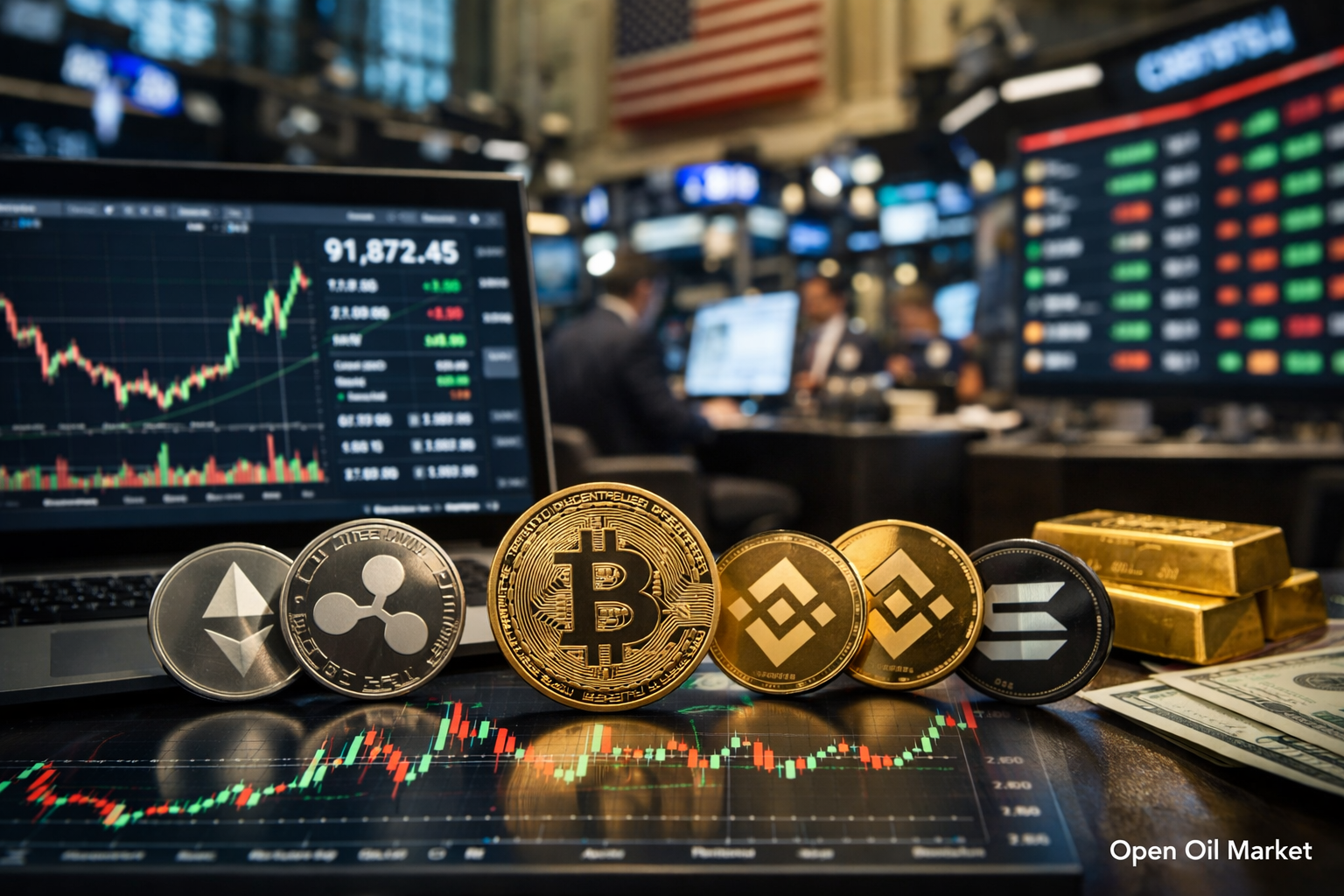
Current Cryptocurrency News as of January 14, 2026: Bitcoin and Altcoin Dynamics, Top 10 Cryptocurrencies, Market Trends, and Key Signals for Investors Worldwide.
The global cryptocurrency market continues to demonstrate high activity, attracting the attention of investors worldwide. The capitalization of digital assets remains around $3.1 trillion, reflecting steady growth at the beginning of the year. Key cryptocurrencies show mixed dynamics: Bitcoin approaches historical highs, while some altcoins experience both rallies and corrections. Against the backdrop of market revival, regulatory scrutiny intensifies, with new initiatives for industry regulation emerging worldwide. Let us take a closer look at the main trends and news in the crypto market on Wednesday, January 14, 2026.
Global Cryptocurrency Market Overview
In recent weeks, the total market value of cryptocurrencies has surpassed the psychological threshold of $3 trillion, strengthening by more than 5% since the start of 2026. Bitcoin maintains a dominant market share of around 58-60% of the total capitalization, indicating continued confidence in the leading cryptocurrency as "digital gold." At the same time, the fear and greed index in the crypto market stands at about 27 points (fear zone), signaling investor caution. However, this figure has improved compared to the beginning of the month, when it was at extremely low levels, suggesting a partial recovery of risk appetite.
External factors are also influencing digital assets. The global macroeconomic situation remains uncertain: investors are closely monitoring central bank decisions on interest rates and political events. This week, the market's attention is drawn to discussions on trade tariffs in the U.S. and other economic news that could lead to fluctuations in cryptocurrency prices. Despite these risks, the sector overall demonstrates relative stability: daily trading volumes remain high, and liquidity on major exchanges is sufficient.
Bitcoin Consolidating Near Peak Values
Bitcoin (BTC) is trading near record levels, showing confidence after an impressive rise last year. As of January 14, its price hovers around $92,000, just shy of the historical maximum reached earlier this month. On January 5, the price of Bitcoin hit a new peak near $94,400 – the highest level in the entire history of the cryptocurrency. After a short-term correction to around ~$89,000, Bitcoin has returned to growth and is now consolidating in the range of $90,000 to $92,000, with a gain of approximately 5% since the beginning of the year.
Factors supporting Bitcoin include the limited coin supply and increasing interest from institutional investors. The launch of spot Bitcoin ETFs in the U.S. at the end of 2025 has opened convenient access to cryptocurrency for institutional investors. Despite recent profit taking by some funds, the overall sentiment remains positive. Many analysts note that Bitcoin is increasingly perceived as a store of value and a hedge against inflation, especially amid volatility in traditional markets. The nearest psychological target for bulls remains the $100,000 mark. A breakthrough of this level might attract a new influx of investors; however, overcoming such a significant threshold is likely to require favorable news flow and improved sentiment in global markets.
Ethereum and Other Leading Altcoins
The altcoin market exhibits mixed results. Ethereum (ETH), the second-largest cryptocurrency by market capitalization, is trading around $3,150 per coin. Ethereum has gained about 6-7% since the start of the year but has yet to surpass its historical peak (around $4,800, reached in 2021). Nonetheless, the current annual peak for ETH – approximately $3,300, noted in the first week of January – showcases a gradual recovery of interest in this asset. Ethereum continues to be the backbone of the decentralized applications ecosystem, and its price changes often reflect demand for DeFi and NFT services on the platform.
Among other major cryptocurrencies, XRP (XRP) from Ripple stands near the $2.0 mark. Last year, this token gained momentum following a partial legal victory for Ripple against regulators, instilling confidence among investors. Another leading altcoin, Binance Coin (BNB), is trading around $900, close to its record levels. BNB is supported by widespread usage in the Binance Smart Chain ecosystem and associated services. The price of Solana (SOL), the platform token for a competing high-performance network, has risen to approximately $140; Solana is showing recovery after the volatility of the previous year, reaffirming its status as one of the major blockchain platforms.
It's also worth noting the role of stablecoins. Tether (USDT) and USD Coin (USDC) maintain their positions among the top ten cryptocurrencies, serving as key instruments for ensuring liquidity in the market. The issuance volumes of these stablecoins remain high – together they cover a significant portion of daily trading, allowing investors to quickly enter and exit positions during volatile periods without being tied to banking operations.
Altcoins: Growth Leaders and Correction Zones
In addition to benchmark cryptocurrencies, active movements continue in the altcoin market. Some projects are displaying explosive price growth. Recently, there has been significant attention toward a sharp surge in Monero (XMR) – a privacy-oriented cryptocurrency. The price of Monero has risen to around $650, which is tens of percent higher than the levels from a week ago. Analysts link the growing interest in anonymous coins to the increasing pressure from regulators; some investors are diversifying their portfolios with assets that provide greater transaction privacy.
At the same time, a number of previously actively rising altcoins have faced profit-taking. For example, the Polygon token (POL, formerly MATIC) experienced a double-digit percentage correction over the past week, retreating from recent local highs. Similar dynamics are observed in several other platform coins that overheated by the end of 2025. The price of Cardano (ADA) has also slightly declined, staying around $0.40, which is significantly lower than its historical peak. Nevertheless, most major altcoins retain a significant portion of last year’s gains, and early market participants are taking profit while reshaping their portfolios.
Regulatory Initiatives and Market Impact
In 2026, cryptocurrency regulation issues are coming to the forefront worldwide. In the U.S., lawmakers have unveiled a long-awaited bill to structure the cryptocurrency market, aimed at clearly defining which digital tokens are securities and which are commodity assets. This move is intended to clarify the jurisdiction of regulators (SEC and CFTC) concerning the crypto industry and thus reduce legal uncertainty for businesses. While the House of Representatives approved its version last summer, discussions in the Senate have been challenging – disagreements have emerged over anti-money laundering and decentralized finance (DeFi) regulation. The fresh initiative revitalizes hopes for comprehensive rules, but experts note that ahead of the Congressional elections, the chances for quick bill passage are unclear.
Other countries are also intensifying oversight over the crypto sphere. In the European Union, new provisions of the MiCA regulation come into force, establishing rules for cryptocurrency companies and stablecoin issuance across all EU countries. In China, authorities continue to maintain a strict stance against operations with private cryptocurrencies, while simultaneously promoting its national digital currency (digital yuan). In many jurisdictions across Asia, the Middle East, and Latin America, regulatory bodies are issuing guidelines and licenses for crypto exchanges, aiming to attract innovative businesses while ensuring investor protection.
Regulatory news directly affects market participant sentiments. Any signs of tightening control can temporarily cool rallies, while clear rules can encourage institutional investors to engage more actively with cryptocurrencies. Overall, the industry approaches the formation of global “rules of the game” with cautious optimism, which will reduce risks for significant investments and pave the way for a new phase of widespread adoption of digital assets.
Top 10 Most Popular Cryptocurrencies
- Bitcoin (BTC) – The first and largest cryptocurrency, around $92,000 per coin. Dominates the market due to its status as digital gold and limited supply.
- Ethereum (ETH) – The largest altcoin (~$3,150), a platform for smart contracts and DeFi applications, the foundation of most blockchain ecosystems.
- Tether (USDT) – The leading stable token pegged to the U.S. dollar (price ~$1). Widely used for trading and value preservation in the cryptocurrency space.
- XRP (XRP) – The token of the payment network Ripple (~$2.1). Focused on cross-border payments, solidified its position after legal victories for Ripple.
- Binance Coin (BNB) – The cryptocurrency of the largest exchange, Binance (~$900). Used for fee payments and operations in Binance Smart Chain, growing alongside the exchange's ecosystem.
- Solana (SOL) – A high-performance blockchain token (~$140). Popular due to high transaction speeds and an actively developing ecosystem of applications.
- USD Coin (USDC) – Another key stablecoin (~$1). Issued by the Centre consortium (Circle and Coinbase), widely used for trading and payment operations.
- TRON (TRX) – A platform token (~$0.30). The Tron network is known for low fees and is used for stablecoin issuance and decentralized applications, particularly popular in Asia.
- Dogecoin (DOGE) – A meme cryptocurrency (~$0.14). Originated as a joke but gained a large community and support from celebrities; remains in the top 10 by market capitalization.
- Cardano (ADA) – A blockchain platform (~$0.39). Offers a scientific approach to network and smart contract development; despite relatively slow growth, remains among the top ten by market valuation.
Market Prospects and Investor Sentiments
The beginning of 2026 shows that the cryptocurrency market is searching for a new balance after the rapid growth of the previous period. Investors are evaluating the prospects for further price movements considering numerous factors. On one hand, institutional interest remains strong: major financial firms are launching new crypto products (e.g., ETFs) and investing in blockchain projects. The continued influx of large players and the integration of digital assets into the traditional financial system create a foundation for long-term growth.
On the other hand, caution in the markets remains high. Many participants are awaiting important signals from the U.S. Federal Reserve regarding monetary policy: an economic slowdown or the first signs of rate easing could breathe additional optimism into risk assets, including cryptocurrencies. In the meantime, the tightening rhetoric from regulators and the lack of clarity in the rules are holding back the most conservative investors from actively entering the sector.
In the short term, analysts do not rule out increased volatility. The macroeconomic calendar is busy, and news about the global economy, geopolitics, or new regulatory measures can prompt sharp price fluctuations. Nonetheless, fundamental factors – the limited supply of Bitcoin, the development of blockchain technologies, and the growing acceptance of cryptocurrencies worldwide – support the market. If negative shocks can be avoided, experts predict that by the end of the year Bitcoin may attempt to reach new heights again, while the most promising altcoins may strengthen their positions.
Thus, cryptocurrency news as of January 14, 2026, reflects both the progress achieved and the challenges that remain. The market remains dynamic and global in nature: investors from various countries are closely monitoring Bitcoin and altcoin quotes, assessing regulatory signals, and searching for new opportunities to invest in digital assets. The coming months will show whether the crypto industry can maintain its growth momentum and transition to a new stage of development amid increasing attention from the traditional financial world and government bodies.