Cryptocurrency Market on July 5, 2026: Bitcoin at the Center of the Trading System, with Ethereum, Solana, XRP, BNB, USDT, and USDC Amid ETF Developments and Regulation
The cryptocurrency market enters Sunday, July 5, 2026, in a state of cautious recovery. After several weeks of outflows from cryptocurrency ETFs, a strong dollar, reevaluation of risky assets, and declining interest in speculative altcoins, investors are reassessing Bitcoin, Ethereum, stablecoins, and major digital assets as part of their global portfolio. The main topic of the day is Bitcoin stabilizing near a crucial psychological threshold, the return of some liquidity to high-cap cryptocurrencies, and intensified regulatory competition among the USA, UK, Europe, and Asia.
For global investors, cryptocurrencies remain not only a speculative asset but also an indicator of risk appetite. The dynamics of Bitcoin, Ethereum, Solana, XRP, BNB, USDT, and USDC are increasingly linked to the flows of institutional capital, ETF rules, the development of stablecoins, the tokenization of real assets, and central bank policies.
Market Overview: Capitalization Holds Firm, but Momentum Remains Fragile
The global cryptocurrency market capitalization remains above the $2 trillion mark; however, the demand structure has changed. Investors have become noticeably pickier: capital is concentrating in Bitcoin, Ethereum, stablecoins, and the most liquid altcoins, while smaller tokens continue to face pressure from low liquidity and weak interest from institutional participants.
Key market signals for July 5:
- Bitcoin retains its status as the primary defensive asset within the crypto market;
- Ethereum is attempting to rekindle investor interest through its infrastructural role in DeFi, stablecoins, and tokenization;
- Stablecoins USDT and USDC remain foundational to market liquidity;
- Solana, XRP, BNB, and TRON maintain their positions among the largest cryptocurrencies by capitalization and turnover;
- ETF and stablecoin regulation emerge as the principal factors for evaluating the sector.
The cryptocurrency market does not currently resemble a phase of aggressive growth. Rather, it appears to be a period of reevaluation: investors are seeking sustainable business models, understandable cash flows, transparent regulation, and infrastructure assets capable of weathering another cycle of volatility.
Bitcoin: The Key Barometer of Risk and Institutional Demand
Bitcoin remains the central asset of the cryptocurrency market. Its dynamics dictate investor sentiment not only within digital assets but also in related segments, including mining, crypto exchanges, custodial services, fintech, and public companies holding cryptocurrency reserves. As of early July, Bitcoin is trading around $63,000, reflecting a partial recovery after a weaker period, but questions remain regarding the strength of the upcoming trend.
Three factors are crucial for investors:
- ETF Flows. Outflows from spot Bitcoin ETFs previously intensified pressure on the market. A return of stable inflows could signal a restoration of confidence.
- Macroeconomics. High interest rates, a strong dollar, and the Federal Reserve's cautious approach limit demand for risky assets.
- Positioning of Major Holders. Sales by companies with Bitcoin on their balance sheets or large long-term investors could amplify volatility.
Bitcoin maintains its advantage due to liquidity, recognition, and institutional infrastructure. However, in 2026, investors are no longer inclined to purchase cryptocurrencies solely based on supply shortage expectations. The market requires a new catalyst: regulatory progress, the return of ETF inflows, or a loosening of monetary policy.
Ethereum: Price Pressures and Focus on Infrastructural Value
Ethereum remains the second most significant crypto asset, but its market narrative in 2026 is more complex than that of Bitcoin. On one hand, Ethereum underpins DeFi, NFT infrastructure, tokenization, Layer 2 networks, and a substantial portion of the stablecoin market. On the other hand, investors demand proof of growth in network activity, revenue generation, and tangible business utilization of the blockchain.
The current trading zone for Ethereum remains significantly below historical peaks, and some institutional investors prefer Bitcoin as the simpler and clearer asset. Nonetheless, Ethereum retains its long-term investment logic: if the market for tokenization of real assets, corporate blockchain solutions, and stablecoin payments continues to grow, Ethereum and its related ecosystems may attract structural demand.
For investors, Ethereum now represents not so much a bet on rapid price growth but rather a bet on the infrastructure of digital finance.
ETF and Regulation: The Market Awaits a New Institutional Catalyst
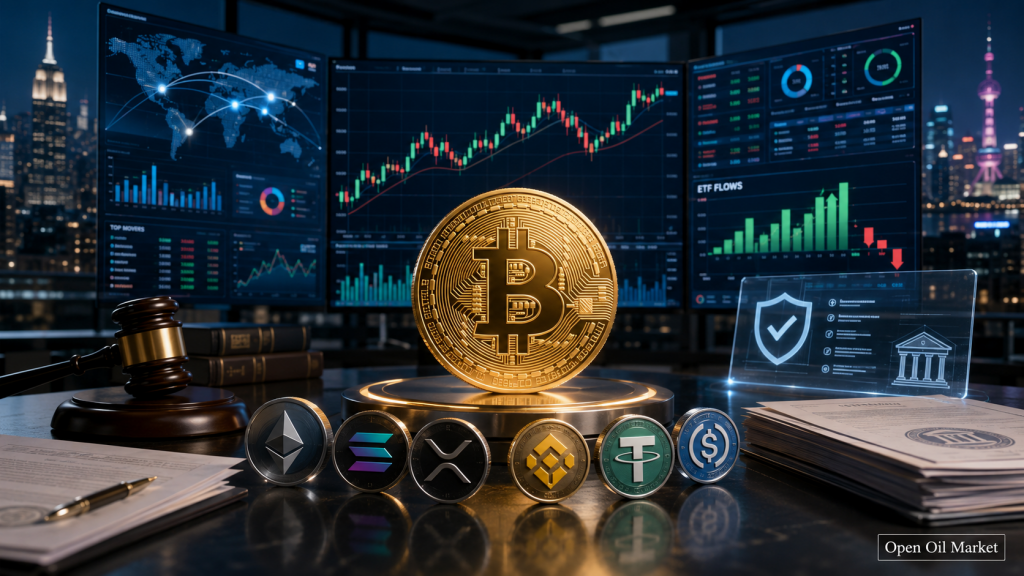
The key intrigue for July is the ongoing development of cryptocurrency ETF regulations. The American regulator has initiated discussions on approaches to "new" ETFs, including funds that could invest in innovative asset classes and employ non-standard strategies. This is important for the crypto market: the clearer the rules for ETFs concerning digital assets, the greater the likelihood of new regulated instruments for institutional investors emerging.
However, the market should not interpret the regulator's consultations as an instant approval of all crypto funds. Rather, this is a stage in the establishment of the rules of the game. For Bitcoin and Ethereum, flows into existing instruments are essential, while for Solana, XRP, Dogecoin, and other major tokens, the likelihood of an expanded range of regulated products is crucial.
Investors should monitor:
- flows and outflows in Bitcoin ETFs;
- the activity of fund issuers in Ethereum and altcoins;
- the SEC's position on the disclosure of risks and liquidity of crypto assets;
- the reaction of traditional asset management firms to cryptocurrency market volatility.
Stablecoins: USDT, USDC, and New Regulatory Competition
Stablecoins are becoming one of the central elements of the cryptocurrency agenda. USDT and USDC remain key sources of liquidity for exchanges, DeFi protocols, international payments, and over-the-counter transactions. In 2026, investor attention is shifting from the question of "which stablecoin is the largest" to "which stablecoin fits best within the regulated financial system."
The UK has relaxed some requirements for stablecoin issuers, lowering capital reserve thresholds to enhance competitiveness. In Europe, MiCA regulations continue to impact listings and the circulation of dollar stablecoins. In the US, political and banking discussions continue on how to reconcile innovations in digital payments with the need to protect traditional banks' deposit bases.
For investors, this means that the stablecoin market will be divided into two groups:
- regulated and institutionally acceptable assets that can be employed by banks, funds, and payment platforms;
- high-risk or regionally restricted stablecoins that may face delistings, restrictions, and declining trust.
Top 10 Most Popular Cryptocurrencies: What Investors Should Note
By July 5, 2026, the global market remains focused on the largest and most liquid cryptocurrencies. For investors, not only capitalization and price matter but also the role of each asset within the digital finance ecosystem.
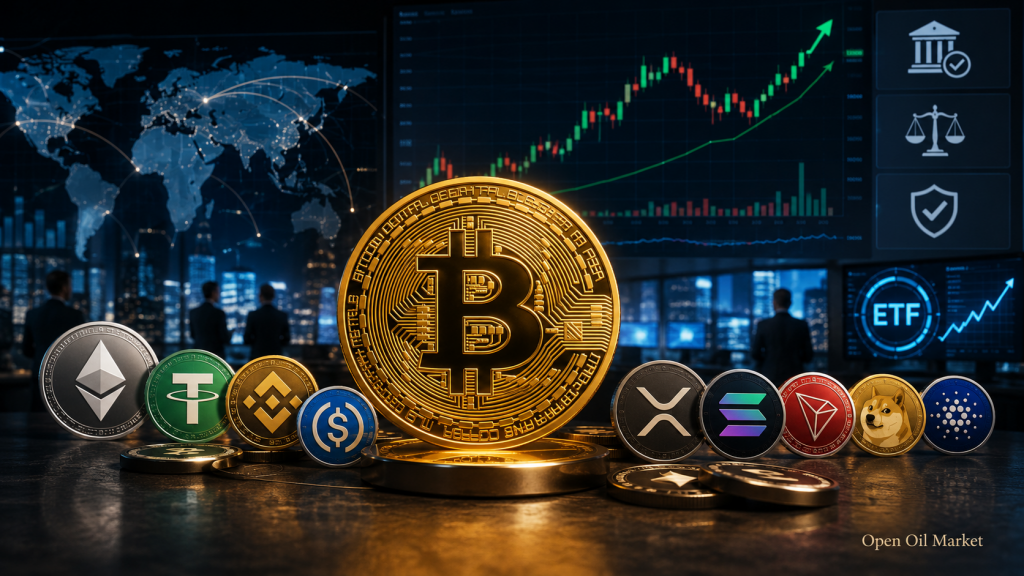
- Bitcoin (BTC) — the primary reserve asset of the crypto market and the core indicator of institutional demand.
- Ethereum (ETH) — the infrastructural platform for DeFi, tokenization, smart contracts, and Layer 2 solutions.
- Tether (USDT) — the largest stablecoin and the main tool for dollar liquidity on crypto exchanges.
- BNB (BNB) — the Binance ecosystem token, sensitive to the regulation of the exchange business.
- USD Coin (USDC) — a regulated dollar stablecoin with growing institutional significance.
- XRP (XRP) — an asset linked to cross-border payments and interest in financial infrastructure.
- Solana (SOL) — a high-performance blockchain important for DeFi, meme coins, payments, and consumer applications.
- TRON (TRX) — a network with high activity in the stablecoin transfer segment.
- Hyperliquid (HYPE) — a rapidly growing asset reflecting interest in decentralized derivatives and on-chain trading.
- Dogecoin (DOGE) — a meme cryptocurrency with high recognition but increased dependency on market sentiment.
Investors should also keep an eye on Cardano, Chainlink, Avalanche, Litecoin, Toncoin, Stellar, and other significant projects that may come back into focus as risk appetite improves.
Altcoins: Recovery Possible, but the Market has Toughened
Altcoins remain the most volatile segment of the cryptocurrency market. Following a period of overheating, investors are becoming more discerning in assessing liquidity, real fees, user activity, tokenomics sustainability, and the ability of projects to generate demand without constant marketing noise.
The strongest positions are held by projects associated with clear directions:
- blockchain infrastructure and scaling;
- decentralized exchanges and derivatives;
- stablecoin payments and settlements;
- tokenization of real assets;
- integration of cryptocurrencies with fintech and traditional capital markets.
Meanwhile, weak tokens without liquidity and practical use remain under pressure. For investors, this suggests that in July 2026, the strategy of “buying everything” seems significantly riskier than selectively creating a portfolio around liquid assets.
Market Geography: The USA, Europe, the UK, and Asia Shape Different Rules of the Game
The global cryptocurrency market is increasingly dependent on the geography of regulation. The USA remains a key hub for ETFs, venture capital, public crypto companies, and institutional products. Europe is strengthening the role of MiCA and setting standards for issuer transparency. The UK is trying to balance regulation and competitiveness. Asia remains vital in retail trading, blockchain development, mining, exchange liquidity, and new consumer crypto applications.
For investors, this creates a new map of opportunities. The same asset can be perceived differently in the USA, Europe, and Asia. For instance, stablecoins are evaluated not merely based on capitalization but also on their alignment with local regulations. Exchange tokens are influenced by the regulatory status of the platforms. DeFi projects benefit from global accessibility but face demands for customer identification and anti-money laundering compliance.
Key Considerations for Investors on July 5, 2026
The cryptocurrency market remains investment-worthy, yet it demands a more professional approach to risk. In the coming days, investors should monitor not only Bitcoin's price but also the market structure: ETF flows, stablecoin liquidity, Ethereum's behavior, Solana and XRP dynamics, and altcoins' reactions to changes in macroeconomic conditions.
Key benchmarks for investors:
- Bitcoin — maintaining the zone around $63,000 and reaction to ETF flows.
- Ethereum — restoration of network activity and demand for infrastructural solutions.
- Stablecoins — competition between USDT and USDC amidst regulations in the USA, Europe, and the UK.
- Altcoins — selective recovery only for projects with liquidity and real usage.
- Regulation — any signals regarding ETFs, MiCA, stablecoin rules, and exchange requirements.
The main takeaway for Sunday, July 5, 2026: cryptocurrencies remain in a phase of cautious stabilization. Bitcoin holds its leadership, Ethereum struggles to restore its investment narrative, stablecoins become the center of regulatory discussions, and altcoins undergo stress tests for resilience. For the global investor, this is a market not for impulsive decisions but for disciplined analysis of liquidity, risks, regulation, and the long-term role of digital assets in the global financial system.