Current News in Oil and Gas and Energy as of December 11, 2025: EU's Rejection of Russian Energy Resources, Oil Market Balance, Global LNG, Russia's Export to Asia, Renewable Energy Sources, and Energy Sector Forecasts. An Analytical Overview for Investors and Industry Companies.
At the forefront are the decisive steps taken by the European Union to abandon Russian energy carriers, changes in the monetary policy of the United States and their impact on global oil and gas prices, as well as recent geopolitical events reflected in the fuel and energy complex. This overview is intended for investors and participants in the oil and gas market, fuel and energy companies, as well as anyone monitoring the dynamics of oil, gas, electricity, and raw materials markets.
Global Oil Market: Prices and OPEC+
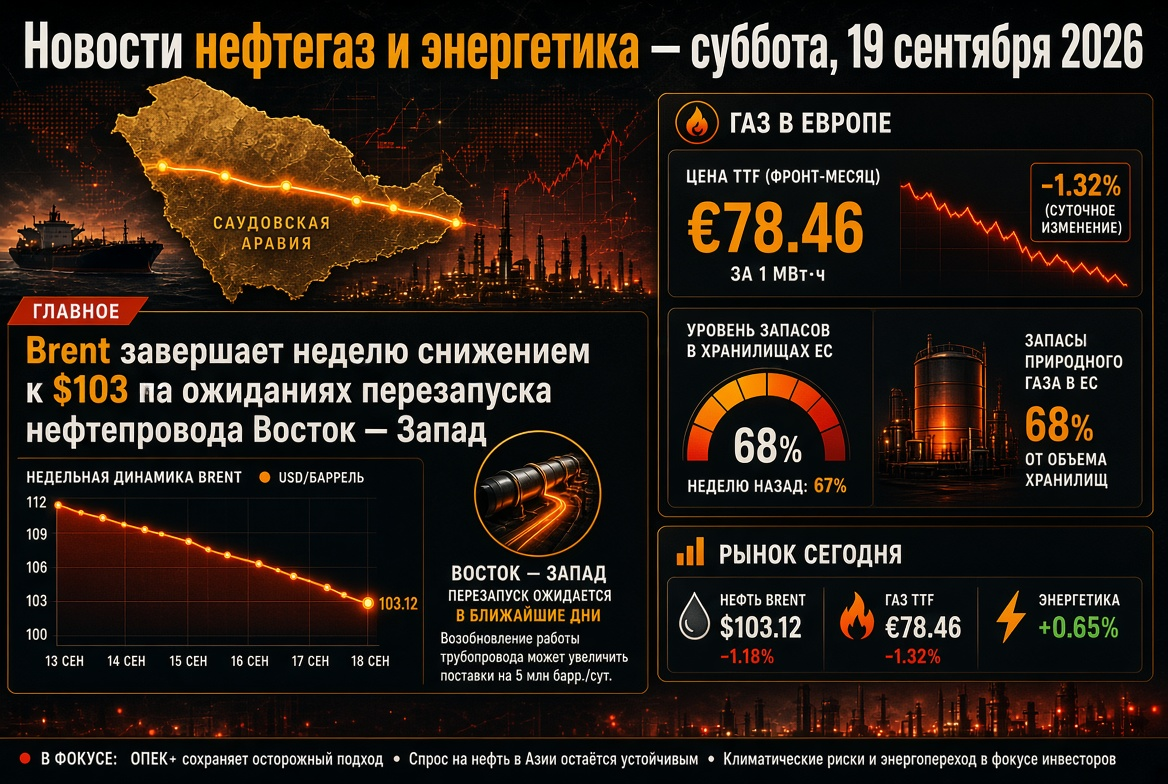
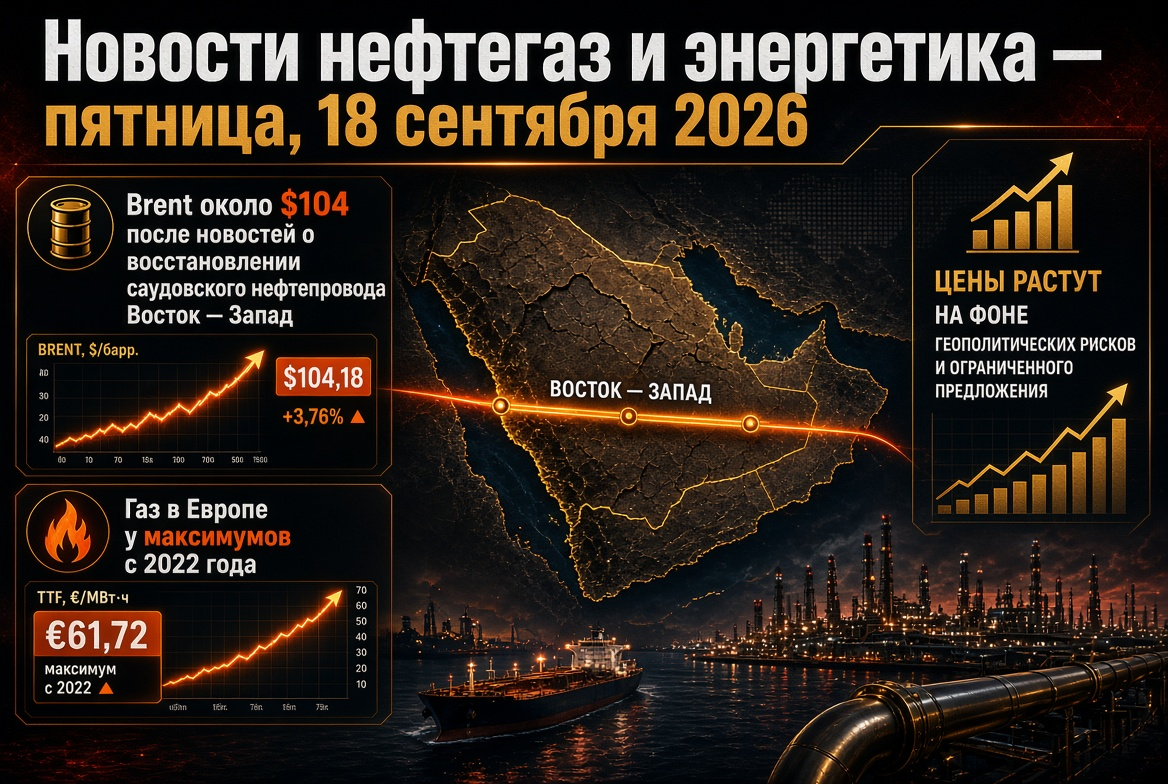
Global oil prices have stabilized after a recent increase: the price of Brent is trading around $62, and WTI is near $58. The strengthening of quotes last week was supported by expectations of interest rate cuts in the US and concerns about supply restrictions (sanction risks for Russian and Venezuelan exports). However, overall in 2025, oil prices have decreased by about 15% as the market faces the threat of oversupply against moderate demand growth.
The Organization of the Petroleum Exporting Countries and its allies (OPEC+) maintain a cautious stance. At the latest OPEC+ meeting, it was decided to keep current production quotas unchanged at least for the first quarter of 2026. The alliance continues to keep a portion of its capacity idle – a total of about 3.2 million barrels per day (around 3% of global demand) remain “in reserve” under existing agreements on production limits. With Brent prices around $60, OPEC+ representatives focus on market stabilization rather than immediate increases in shares, considering the deteriorating demand-supply balance forecast.
Key factors influencing the oil market currently:
- Monetary policy of major economies (the easing from the US Federal Reserve supports demand prospects).
- Geopolitical tensions (the Ukraine war, sanctions against the Russian Federation and Iran, the risk of conflicts – for example, around Venezuela).
- Actions by OPEC+ (maintaining production limits and readiness to respond to possible excess oil on the market).
- Rates of global economic growth and demand for raw materials (including the recovery of demand in China and accelerated transition to renewable energy sources).
Monetary Policy and Demand for Energy Resources
The US Federal Reserve is easing monetary policy this week: it is expected that a 0.25% cut in the base rate will be announced following the meeting on December 10. This is already the third rate cut in 2025 aimed at supporting a cooling economy and labor market. Lower rates and a potential weakening of the dollar typically stimulate economic growth and demand for energy resources – from gasoline to electricity – which has a positive impact on the oil and gas market. Industry investors are closely monitoring signals from regulators: the current cycle of monetary easing may end if inflation stabilizes; however, expectations of cheaper borrowing have already contributed to the recent rise in oil prices.
Europe's Rejection of Russian Energy Carriers
The European Union is taking decisive steps toward full energy independence from Russia. On December 10, ambassadors from EU countries approved a phased plan to eliminate all types of Russian gas by the end of 2027. European Commission President Ursula von der Leyen called the agreement on future embargo a “beginning of a new era” for Europe – an era where European energy will forever rid itself of dependence on Russian energy carriers. Energy Commissioner Dan Jørgensen added that in early 2026 a law will be proposed to prohibit the import of any Russian oil to “turn off the tap” for supplies from the Russian Federation no later than 2027.
These measures continue the course adopted by the EU after the events of 2022: during this time, Europe significantly reduced purchases of Russian pipeline gas (almost to zero) and imposed an embargo on oil delivered by sea. New initiatives are aimed at solidifying the legal break with the Russian Federation and stimulating the development of alternatives – from increasing LNG purchases from the United States, Qatar, and other countries to the accelerated transition to renewable sources of energy. The Kremlin has responded to the EU’s strategy with skepticism: Russian presidential spokesman Dmitry Peskov warned that abandoning relatively cheap Russian gas in favor of more expensive imports will doom the European economy to rising costs and declining competitiveness in the long term.
Key elements of the EU's energy strategy:
- Complete abandonment of Russian gas: stopping purchases of pipeline gas and LNG from the Russian Federation no later than 2027.
- Embargo on oil and petroleum products: legislation is planned to prohibit the import of Russian oil and petroleum products by the same date.
- Diversification of supplies: expanding LNG imports from alternative suppliers, increasing domestic renewable generation and energy-saving measures to replace Russian hydrocarbons.
Redirecting Russian Supplies to Asia
Confronted with shrinking Western markets, Russia is actively redirecting its energy resource exports to Asia. China has become a key buyer: at the end of August, the first shipment of liquefied gas was sent to China from the Arctic LNG-2 project by Novatek, despite the terminal being under US sanctions. According to trader data, Russian LNG supplies to China increased in double digits in the fall – Beijing is gladly increasing purchases of energy resources at a 30-40% discount, ignoring unilateral sanctions from the West. The energy cooperation between Moscow and Beijing is strengthening, benefiting both economies: Russia gains an alternative market while China secures cheap fuel for its needs.
India also remains one of the largest buyers of Russian oil. After the EU embargo was imposed, Indian oil refineries have increased purchases of Russian Urals oil and other grades at a significant discount to global prices. In recent negotiations, Russian leadership confirmed its readiness to ensure stable supplies of oil and petroleum products to India. Although New Delhi remains cautious, balancing geopolitical risks, cheap Russian energy resources help meet growing demand and keep domestic fuel prices in check.
At the same time, Moscow is looking for opportunities to expand export infrastructure to the East. Plans to increase the capacity of pipelines to China (the Power of Siberia-2 project) are being discussed, as well as strengthening its tanker fleet to deliver oil to Asian markets bypassing restrictions. These steps are aimed at solidifying the long-term redirection of Russian energy flows from West to East.
Key steps taken by Russia in eastern markets:
- Launch of Russian LNG supplies to China from the new Arctic LNG-2 project, despite sanctions.
- Increase in oil exports to India on favorable terms (discounts to global prices), confirming readiness to supply the Indian market with fuel.
- Infrastructure development: plans for new pipelines (Power of Siberia-2) and expansion of the tanker fleet for uninterrupted exports to Asia.
Kazakhstan and Transit Risks
Instability related to the military conflict in Ukraine creates new risks for the transit of energy resources in Eurasia. In early December, an attack by Ukrainian drones on the Caspian Pipeline Consortium (CPC) marine terminal near Novorossiysk forced Kazakhstan to reassess its oil export routes. The Ministry of Energy of Kazakhstan announced that part of the oil from the Kashagan field would be redirected to an alternative route to China. Previously, Kazakhstan exported a significant portion of its oil through the CPC pipeline, which delivers raw materials to the Black Sea terminal in Russia. The CPC ensures the transportation of oil from key Kazakh fields (Tengiz, Kashagan, Karachaganak) and remains the country’s main export channel.
Although damage from the drone strike did not lead to a complete cessation of shipments, the incident demonstrated the vulnerability of this international infrastructure. The Kremlin described the attack on the CPC terminal as an outrageous incident, emphasizing the strategic importance of the consortium. Kazakhstan, for its part, has begun to diversify its routes: alongside the Chinese direction, it is considering increasing shipments through Caspian ports and other detours. In the long term, Astana plans to strengthen energy security through development in processing: plans have been announced to build a new large-capacity refinery with foreign investment, which will enhance domestic capacities and reduce dependence on fuel imports. Experts note that transit risks through Russian territory are increasing – such incidents can affect the global oil market, reminding participants of the geopolitical risk premium in prices.
Global Gas and LNG Market
The natural gas market is showing relatively stable conditions compared to the frenzy of two years ago. In Europe, despite the approaching winter, the pricing situation is calmer than in previous years: gas reserves in underground storage are at a comfortable level, and spot prices are far from the records of 2022. The reduction of supplies from Russia is compensated by LNG imports – European terminals are actively receiving gas from the US, Qatar, Norway, and other sources. According to analysts' estimates, from January to November 2025, Russian LNG supplies to the European Union decreased by almost 7% year-on-year (to ~18 billion cubic meters), reflecting the EU’s course toward a gradual rejection even of liquefied gas from the Russian Federation.
LNG supply on the global market continues to grow. The US is introducing new export capacities: the large Golden Pass terminal in the Gulf of Mexico (a joint project of QatarEnergy and ExxonMobil) is preparing to begin shipments, expanding America's gas export capabilities. Qatar, as part of its North Field expansion project, will increase LNG production to 126 million tons per year by 2027, entering into long-term contracts with European and Asian buyers. Meanwhile, Asian countries are flexibly responding to market conditions: for instance, Pakistan has agreed with Qatar to redirect shipments of LNG intended for it to other markets due to a temporary oversupply of gas and weak domestic demand. Against the backdrop of new capacities and moderate demand, spot prices for gas remain at relatively low levels, although factors like weather and potential supply disruptions can still cause short-term price spikes.
Renewable Energy Sources and Climate
The development of renewable energy is gaining momentum, though the climate agenda is facing resistance from the oil and gas sector. At the UN climate conference COP30 in Brazil in November, there were heated debates surrounding the abandonment of fossil fuels. The final draft agreement did not satisfy the European Union – a straightforward roadmap for the phased abandonment of oil, gas, and coal was excluded from the text under pressure from a group of hydrocarbon-exporting countries. As a result, the agreements reached are of a compromise nature: instead of clear commitments to phase out fossil fuel production, countries focused on increasing funding for climate adaptation and overall emission reduction goals.
Meanwhile, the energy transition continues to be implemented in practice. The year 2025 has become a record year for the introduction of new solar and wind generation capacities in many countries. Major economies – from China and India to the US and EU – are investing in renewable energy, energy storage systems, and hydrogen technologies, aiming to reduce dependence on hydrocarbons. However, in the short term, traditional resources retain their significant role: high gas prices forced an increase in coal burning for electricity generation in certain regions in 2025, temporarily halting the trend of decarbonization. Experts believe that as the share of renewable sources increases (with the support of government initiatives), demand for coal and other fossil resources will once again decline, strengthening the global course towards sustainable energy.
Forecasts: A Look Ahead to Early 2026
Participants in the oil and gas market are finishing 2025 with moderate optimism but without excessive illusions. Analysts expect that in the first quarter of 2026, oil prices may come under pressure due to rising inventories: several forecasts indicate a decline in Brent prices to $55-60 per barrel, unless new shocks occur. At the same time, geopolitical factors – from the evolution of the situation in Ukraine to sanctions decisions and local conflicts (including potential escalation in Venezuela or the Middle East) – can sharply affect market conditions. In the gas market, the coming months will largely depend on the weather: with a mild winter and sufficient reserves, gas prices will remain low, but unexpected cold spells or supply chain disruptions could lead to price spikes.
For investors and companies in the sector, adapting to new conditions will be of particular importance. Diversification of supply sources, energy efficiency improvements, and innovation adoption (including in renewable energy) will become key elements of business resilience. The outgoing 2025 demonstrated the close interconnections between economics, politics, and ecology in shaping prices for oil, gas, and electricity. In 2026, this interrelationship is likely to only intensify: the global market will need to balance between oversupply and risks of shortage, while the global community must find a balance between energy security and climate goals.