Current Startup and Venture Capital News as of December 14, 2025: Record Venture Capital Volume, New Unicorns, Global Market Expansion, and Revival of IPOs. Analytical Overview for Investors and Funds.
By the end of 2025, the global venture capital market demonstrates robust growth, overcoming the effects of downturns in previous years. According to the latest data, the total volume of investments in technology startups for the year approached record levels: in the third quarter of 2025, around $100 billion was invested (approximately 40% more than the previous year) — the best result since the boom of 2021. In November alone, startups worldwide attracted about $40 billion in funding, which is 28% higher than a year ago. The prolonged "venture winter" of 2022–2023 is behind, and private capital is rapidly returning to the technology sector. Major funds are renewing large-scale investments, governments are ramping up support for innovation, and investors are once again willing to take risks. Despite a maintained selectivity in approach, the industry confidently enters a new phase of rising venture investment.
Venture activity is increasing across all regions. The USA remains the leader (especially in the artificial intelligence sector), while the Middle East has seen a dramatic increase in deal volume thanks to generous funding from sovereign wealth funds. In Europe, Germany has surpassed the UK for the first time in a decade in terms of total capital raised. Growth in Asia is shifting from China to India and Southeast Asia, compensating for the relative cooling of the Chinese market. Regions such as Africa and Latin America are actively developing their startup ecosystems, witnessing the emergence of the first "unicorns," signaling a truly global nature of the current venture boom. The startup scenes of Russia and the CIS are also striving to keep up: new funds and accelerators are being launched with government and corporate support, aimed at integrating local projects into global trends.
Below are key events and trends shaping the venture market as of December 14, 2025:
- Return of megafunds and large investors. Leading venture players are forming massive funds and increasing investments, infusing the market with capital and rekindling the appetite for risk.
- Record rounds in AI and new unicorns. Unprecedented investments in artificial intelligence are driving valuations of startups to unseen heights, fostering the emergence of numerous new unicorn companies.
- Revival of the IPO market. Successful public offerings of tech companies and an increase in new applications indicate that the long-awaited "window" for exits has reopened.
- Diversification of sector focus. Venture capital is being directed not only to AI but also to fintech, climate projects, biotechnology, defense developments, and other areas, broadening market horizons.
- Wave of consolidation and M&A deals. Major mergers, acquisitions, and strategic partnerships are reshaping the industry landscape, creating new opportunities for exits and accelerated growth.
- Global expansion of venture capital. The investment boom is spreading to new regions—from the Gulf states and Southern Asia to Africa and Latin America—forming local tech hubs worldwide.
- Local focus: Russia and the CIS. Despite constraints, new funds and initiatives are emerging in the region to develop local startup ecosystems, raising investor interest in local projects.
Return of Megafunds: Big Money Back in the Market
The largest investment players are triumphantly returning to the venture arena, signaling a new surge in the appetite for risk. The Japanese conglomerate SoftBank is experiencing a sort of "renaissance," making bold bets again on technology projects in AI. Its Vision Fund III (amounting to approximately $40 billion) is actively investing in promising areas, while the company reorganizes its portfolio: for instance, SoftBank completely sold its stake in Nvidia for about $6 billion to free up capital for new AI initiatives. Simultaneously, the largest funds in Silicon Valley have accumulated record reserves of uninvested capital ("dry powder")—hundreds of billions of dollars, ready to be deployed as the market strengthens.
Sovereign funds from the Middle East have also made a significant impact. State investment funds from Gulf countries are funneling billions into innovation programs, creating powerful regional tech hubs. Moreover, several well-known investment firms that had previously slowed their activity are re-emerging with megaraids. For example, after a cautious period, Tiger Global announced a new fund of $2.2 billion (considerably smaller than its previous megafunds), promising a more selective and "humble" investment approach. Nevertheless, the return of big money is already palpable: the market is becoming saturated with liquidity, competition for the best deals intensifies, and the industry gains the much-needed boost of confidence for further capital inflows.
Record Investments in AI and a New Wave of Unicorns
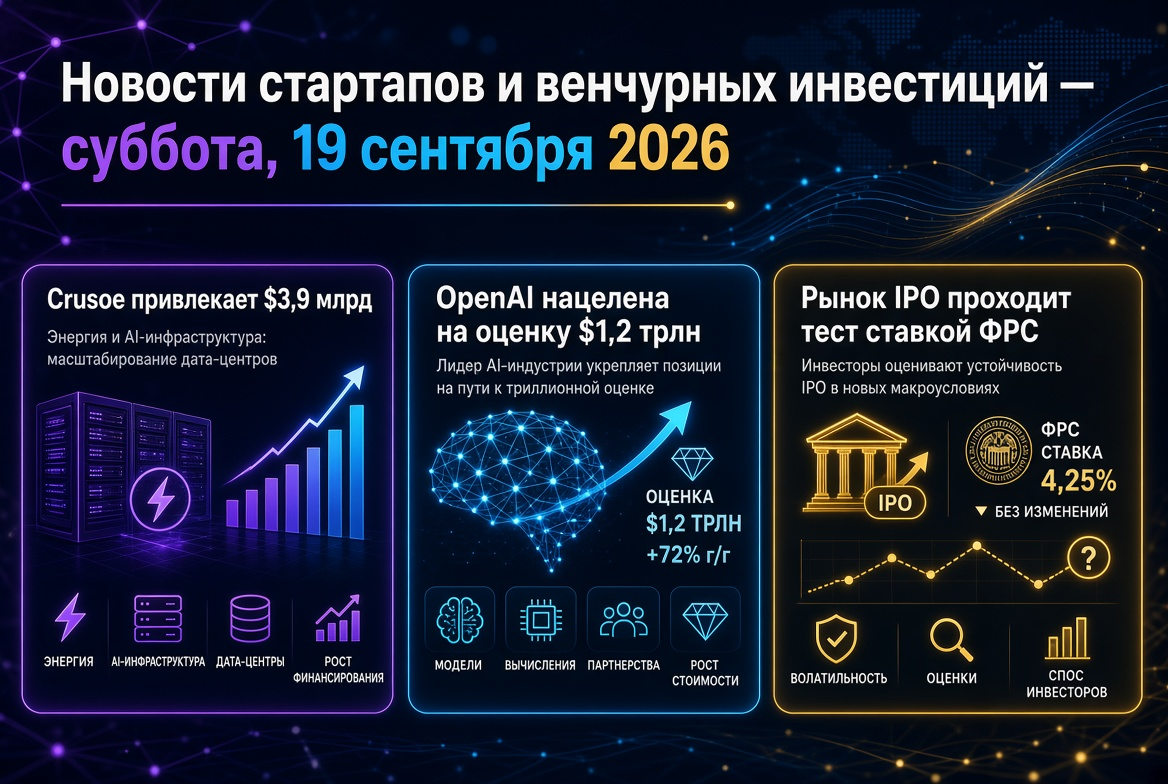
The artificial intelligence sector continues to be the main driver of the current venture boom, showcasing record levels of funding. Investors worldwide are eager to position themselves among the leaders of the AI market, directing colossal sums into the most promising projects. In recent months, several AI startups have secured unprecedented rounds. For instance, AI infrastructure developer Anthropic raised about $13 billion, Elon Musk’s xAI project attracted around $10 billion, and the lesser-known startup Cursor received approximately $2.3 billion, raising its valuation to $30 billion. Such megaraids, often with multiple oversubscriptions, confirm the excitement surrounding artificial intelligence technologies.
Funding is flowing not just into applied AI services, but also into critical infrastructure for them. Venture capital is being directed even into the "shovels and picks" of the new digital era—from chip manufacturing and cloud platforms to energy optimization tools for data centers. The total volume of investments in AI in 2025 is estimated to exceed $120 billion, with more than half of all venture capital this year allocated to AI-related projects. The current boom has spawned dozens of new unicorns—companies valued over $1 billion. While experts warn of the risk of market overheating, investor appetite for AI startups remains strong.
IPO Market Revives: New Wave of Public Offerings
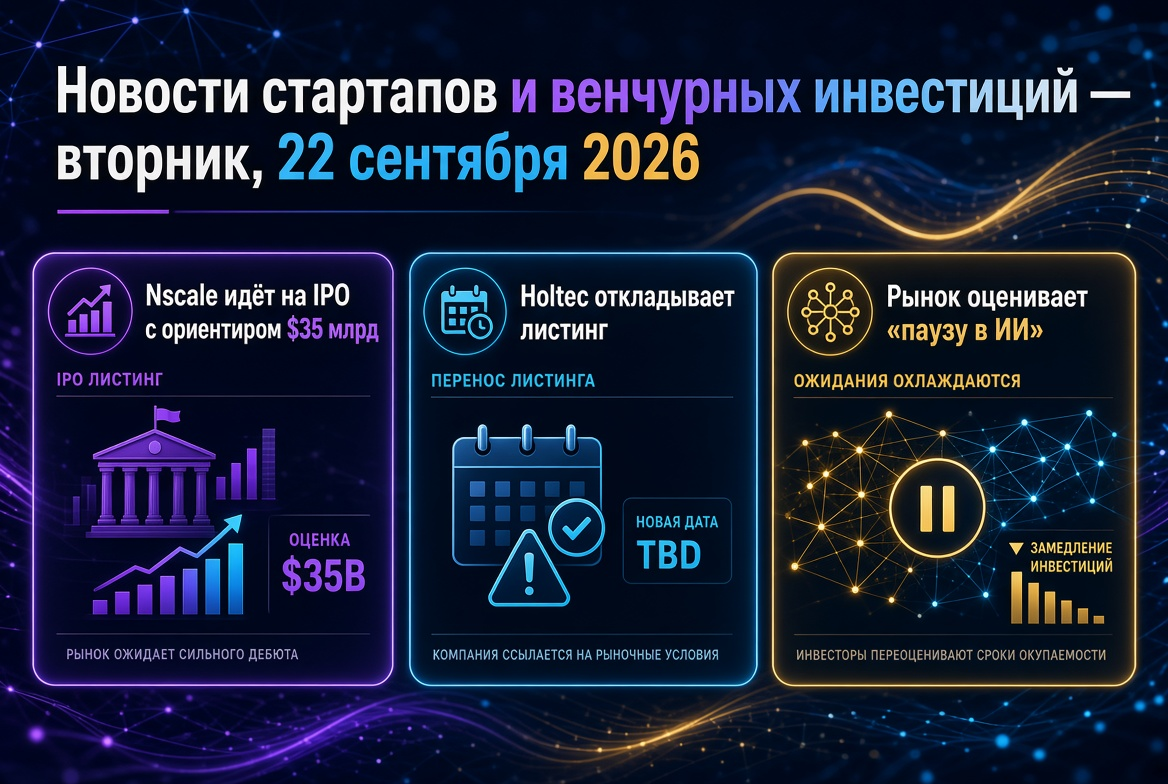
The global IPO market is emerging from a prolonged lull and is gaining momentum. In Asia, a series of successful listings in Hong Kong has provided the impetus: several large tech companies have gone public in recent weeks, collectively raising billions of dollars. In North America and Europe, the situation is also improving: the number of IPOs in the US for 2025 has risen by more than 60% compared to the previous year. Several highly valued startups debuted successfully on the stock market— fintech unicorn Chime saw stock growth of about 30% on its first trading day, while design platform Figma raised around $1.2 billion during its offering, after which its capitalization increased confidently.
New high-profile public offerings are also on the horizon. Expected candidates include payment giant Stripe and several other tech unicorns looking to capitalize on the favorable window. Even the crypto industry is trying to participate in the revival of IPO activity: fintech company Circle successfully conducted an IPO in the summer (its shares subsequently surged), while cryptocurrency exchange Bullish has filed for listing in the US with a target valuation of around $4 billion. The return of life to the IPO market is critical for the venture ecosystem: successful IPOs allow funds to realize profitable exits and redirect freed capital into new projects, closing the cycle of venture financing.
Diversification of Investments: Beyond Just AI
In 2025, venture investments are covering an increasingly diverse range of industries and are no longer limited to artificial intelligence alone. Following the downturn of previous years, fintech is awakening again, with large funding rounds taking place both in the US and Europe, as well as in emerging markets, stimulating the growth of new digital financial services. Simultaneously, interest in climate and "green" technologies is rising. Projects in renewable energy, eco-friendly materials, and agtech are attracting record investments amid the global trend towards sustainable development.
Appetite for biotechnology has also returned. The emergence of breakthrough medical developments is attracting capital once again: for instance, a startup developing an innovative obesity treatment managed to raise approximately $600 million in one round, arousing investor interest in biomedical innovations. Even crypto startups are beginning to emerge from the shadows: the stabilization of the digital assets market is gradually reviving venture interest in blockchain projects after a prolonged pause. This expansion of sector focus demonstrates that investors are seeking new growth points beyond the overheated AI segment, making the entire startup ecosystem more resilient.
Consolidation and M&A Deals: Consolidation of Players
High valuations of startups and fierce competition in many markets are pushing the industry toward consolidation. Major mergers, acquisitions, and strategic alliances between companies are back on the agenda. Tech giants are actively scouting for new assets: for instance, Google recently agreed to acquire Israeli cybersecurity startup Wiz for a record $32 billion—this deal became the largest in the history of the Israeli tech industry. Recently, there have been reports that other IT giants are also ready for big purchases: for example, Intel is in talks to acquire AI chip developer SambaNova for about $1.6 billion (compared to a valuation of $5 billion in 2021).
The renewed wave of acquisitions demonstrates the willingness of major players to secure key technologies and talent and provides venture investors with long-awaited exit opportunities. In 2025, there is a revival of M&A activity across various segments: mature startups are merging with each other or becoming targets for corporations, reshaping the balance of power. Such moves help companies accelerate development by combining efforts and markets, while investors can enhance returns on their investments through profitable exits.
Global Expansion of Venture Capital: Boom Spreads to New Regions
The geography of venture investments is rapidly expanding. Beyond traditional tech hubs (the USA, Europe, China), the investment boom is capturing new markets around the world. Gulf countries (e.g., Saudi Arabia, UAE) are investing billions into creating local tech parks and startup ecosystems in the Middle East. India and Southeast Asia are witnessing a real blossom of the startup scene, attracting record volumes of venture capital and producing new unicorns. Rapidly growing tech companies are also emerging in Africa and Latin America—some of which are achieving valuations above $1 billion for the first time, solidifying their status as global players.
Thus, venture capital has become more global than ever. Promising projects can now secure funding regardless of geography, provided they demonstrate potential for scalability. For investors, this opens new horizons: high-return opportunities can be sought worldwide, diversifying risks across different countries and regions. The spread of the venture boom to new territories also fosters the exchange of experiences and talents, making the global startup ecosystem more interconnected.
Russia and CIS: Local Initiatives Amid Global Trends
Despite external constraints, there is a revival of startup activity in Russia and neighboring countries. Gradually, after the downturn at the beginning of the decade, the regional venture market is starting to show initial signs of growth. In 2025, new funds with a total volume of several dozen billion rubles have been launched, aimed at supporting early-stage technology projects. Major corporations are creating their own accelerators and venture divisions, while government programs are helping startups secure grants and investments. For instance, the results of the urban program "Academy of Innovators" in Moscow report attracting over 1 billion rubles in investments in local technology projects.
Although the scale of venture deals in Russia and the CIS still significantly lags behind global levels, interest in local projects is gradually returning. The easing of certain restrictions has opened up opportunities for investments from friendly countries, which partially compensates for the outflow of Western capital. Some companies are considering going public as the situation improves; for example, discussions are underway in the industry regarding potential IPOs of major holding companies' technology divisions in the coming years. New initiatives aim to provide additional impetus to the local startup ecosystem and integrate its development within global trends.
Cautious Optimism and Sustainable Growth
As 2025 draws to a close, moderate optimistic sentiments are firmly established in the venture market. Record funding rounds and successful IPOs have convincingly shown that the downturn period is behind us. However, industry participants remain cautious. Investors are now paying increased attention to project quality and the sustainability of business models, striving to avoid unwarranted hype. The focus of the new venture boom is not on a race for the highest valuations, but on seeking genuinely promising ideas capable of delivering profits and transforming industries.
Even the largest funds are advocating for a measured approach. Some investors note that the valuations of certain startups remain very high and are not always supported by fundamental business indicators. Acknowledging the risk of overheating (especially in the AI sector), the venture community intends to act prudently, combining the boldness of investments with "homework" in market analysis. Thus, the new growth phase is built on a more solid foundation: capital is directed toward quality projects, and the industry looks to the future with cautious optimism, aiming for long-term sustainable growth.