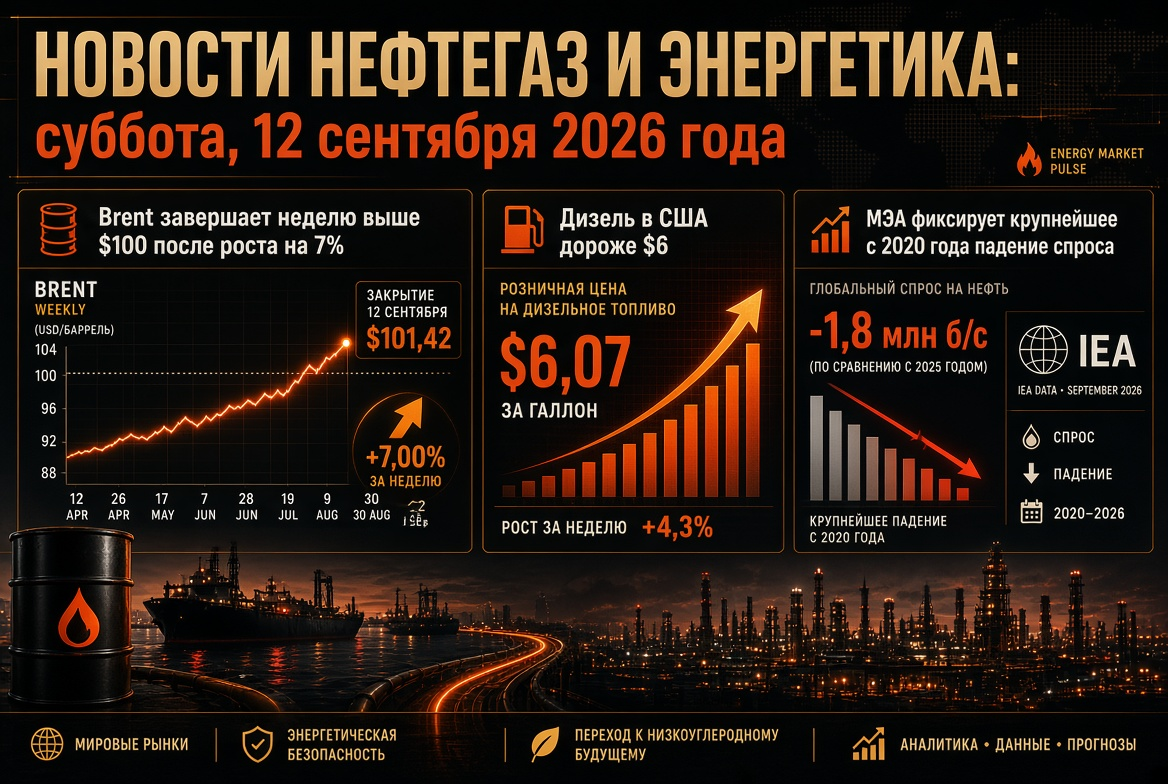
Oil Market: Brent and WTI Decrease but Stay Above $100
By Thursday evening, Brent was trading around $104 per barrel, while WTI hovered between $101 and $102. Earlier in the week, Brent had peaked at $109; over the past month, the benchmark has risen by approximately 14%, and compared to last year, it has increased by more than 50%. Key drivers include:
- Saudi Arabia: The kingdom expects to restore nearly half of the capacity of the East-West pipeline, which was damaged by drone attacks last week, in just a few days, aiming for full operation in about six weeks. The pipeline route has a capacity of up to 7 million barrels per day and serves as the main bypass for the Strait of Hormuz.
- Hormuz: According to the U.S. Department of Energy, around 18 million barrels of oil and oil products passed through the strait early in the week; Riyadh is ramping up shipments with the support of U.S. military forces.
- U.S. Inventories: Commercial oil inventories decreased by 0.64 million barrels to 423.4 million, falling short of market expectations, although an industry estimate had indicated a rise of 7.1 million barrels prior.
- Supply Risks: The Houthis are advancing towards the Bab-el-Mandeb Strait, leading to the shutdown of several oil fields in Libya amid the threat of force majeure, and Tehran is refusing negotiations with Washington until its conditions are met.
Supply and Demand: OPEC and IEA Estimates
- Saudi Arabia informed OPEC about a drop in production to 6.24 million barrels per day in August—the lowest level since 1990; secondary sources estimate the level closer to 7.3 million barrels per day.
- The IEA, in its September report, lowered the forecast for global supply in 2026 to 100.7 million barrels per day (down 5.7 million barrels per day year-on-year).
- Global oil demand is expected to decline by 2.5 million barrels per day in 2026, with a recovery of 2.6 million barrels per day projected for 2027.
- Observed global inventories decreased by another 95 million barrels in August; since February, the cumulative reduction has reached 507 million barrels.
Refined Products and Refineries: Diesel is the Market's Main Shortage
The crisis is increasingly shifting from crude oil to refined products. Wholesale diesel prices in the U.S. exceeded $200 per barrel in early September—nearly double pre-war levels, with retail prices reaching a record $5.90 per gallon. In the EU, diesel costs around €2.04 per liter, nearing the record set in April.
- Net diesel exports from Gulf countries in August stood at about 390,000 barrels per day—about a quarter of pre-war volumes; combined shipments from the Gulf and Russia are 1.6 million barrels per day lower than in February.
- Global refining reached a summer peak of 81.4 million barrels per day, but a decrease of 2.6 million barrels per day is expected by the end of the year.
- Refinery margins in the Atlantic basin are at record levels; profitability in Singapore is being constrained by high freight costs.
For refineries outside conflict zones, this is a period of super profits, whereas for fuel companies and consumers, it represents a cost shock.
Gas and LNG: Europe Enters Winter with Low Inventories
TTF futures dropped to €76–77 per MWh on Thursday after attempts to stabilize above €80; earlier in the week, prices approached €82—the highest since late 2022. Year-on-year, gas prices in Europe have increased by over 130%. EU storage is only about 68% full—one of the lowest levels for this date in two decades. Pressures arise from limited Qatari LNG supplies, planned maintenance in Norway, and competition with Asia for cargoes. Henry Hub in the U.S. remains around $2.90 per million BTUs—a record spread supporting U.S. LNG exporters.
Geopolitics: Energy Truce Between Russia and Ukraine in Question
On September 14, the U.S. President announced that Moscow and Kyiv had agreed to cease strikes on energy facilities, linking rising diesel prices primarily to this conflict. Kyiv stated that the agreement has not been finalized and could only proceed with partners' guarantees; Turkey is mediating. Previous attempts at such truces have been short-lived. If the regime takes effect, the restoration of Russian refining could reduce premiums on distillates. The sanctions regime remains unchanged.
Russia: Fuel Export Restrictions Remain in Place
- The ban on gasoline exports remains in effect for all market participants until January 31, 2027.
- The ban on the export of diesel, marine fuel, and gas oils for producers has been extended until September 30; the market awaits a decision regarding October.
- According to IEA estimates, Russian refineries have been subjected to effective strikes about every three days over the past eight months; since July, the country has started importing petroleum products.
- The Urals discount to Brent has virtually disappeared due to reduced shipments and high demand in Asia.
Asia: China Outbids India for Russian Oil
Russian oil imports to India fell by about 26% in August to around 2.1 million barrels per day, down from a record 2.8 million barrels per day in July; total crude imports dropped to 4.6 million barrels per day. Chinese refiners are aggressively purchasing parcels, replacing Middle Eastern volumes, while India partially compensates for losses with Venezuelan oil. The raw material shortage at Indian refineries threatens a reduction in diesel and gasoline exports, adding another layer of tension to the Asian refined products market.
Electricity, Renewables, and Coal: Insurance and Structural Shift
- Coal: Energy coal in Newcastle stands at about $145 per ton (+12% over the month, +40% year-on-year). The LNG shortage adds about 70 million tons of demand in Asia in 2026; coal generation in Japan has increased by 11%. Major producers are not sanctioning new mines, viewing the surge as cyclical.
- Renewables: By the end of 2025, renewables surpassed coal for the first time in global power generation (33.8% versus 33.0%), and in April 2026, wind and solar produced more electricity than gas for the first time (22% versus 20%). Solar capacity additions in 2025 reached a record 647 GW.
Expensive imported gas enhances the economics of renewables and storage, but in the short term, coal and nuclear are ensuring the balance of energy systems.
Macroeconomics: Fed Responds to Oil Inflation
On September 16, the Fed unanimously raised the rate by 25 basis points to 3.75–4.00%, the first increase since 2023, signaling the possibility of another move before the year's end. The regulator acknowledged that it cannot influence oil prices but aims to prevent inflation from escalating. The yield on 10-year U.S. bonds is around 5%. For the energy sector, this signals an increase in capital costs: pressure on capital-intensive renewable, grid, and LNG projects, while oil companies with strong cash flows appear more resilient.
What to Watch for Investors and Energy Market Participants on Friday
- The pace of restoration of the East-West pipeline and shipments from Yanbu.
- Tankers' traffic through the Hormuz and Bab-el-Mandeb Straits.
- Confirmation of the energy truce by Moscow and Kyiv.
- Russia’s decision on diesel exports post-September 30.
- The dynamics of TTF, the rate of injection into European underground gas storage, and the schedule of Norwegian maintenance.
- Weekly data on drilling activity in the U.S. and diesel crack spreads.
The baseline scenario for the coming days is oil in the $100–110 per barrel range, with heightened sensitivity to news from the Middle East. Refined products and gas remain the tightest segments of the global energy market.