Global News in the Oil, Gas, and Energy Sector as of December 22, 2025: Oil, Gas, LNG, Renewables, Coal, Oil Products, and Key Trends in the Global Energy Sector. Analysis for Investors and Market Participants.
The global fuel and energy complex is undergoing significant changes that are closely monitored by investors and market participants. Oil prices have fallen to the lowest levels seen in the past four years, amid a surplus of supply and geopolitical uncertainty. Europe enters winter with comfortable natural gas reserves (storage is over 90% full) thanks to record LNG imports, stabilizing the market and gas prices. Simultaneously, the energy sector is rapidly transitioning to renewable sources: 2025 has recorded a record growth in renewable energy generation, placing the coal industry on a path of gradually decreasing demand. Below are the key news stories and trends in the fuel and energy complex as of December 22, 2025.
Oil Prices and OPEC+ Strategy
The oil market is witnessing a price decline: benchmark Brent crude is holding around $60 per barrel, which is the lowest level since 2021. The main reasons include concerns over excess supply and seasonal demand weakening at the beginning of the year. In response to the situation, the OPEC+ alliance has agreed to a slight increase in production for December (+137 thousand barrels per day) and has decided to suspend any further production growth in the first quarter of 2026 to prevent overproduction. Additional uncertainty has been introduced by new Western sanctions against major Russian oil companies, complicating export increases from Russia.
- Supply Growth: Since April 2025, OPEC+ has gradually increased production (a total increase of ~2.9 million barrels per day), which, coupled with stable demand, has led to excess oil volumes in the market.
- Seasonal Factor: The beginning of the year is traditionally characterized by lower consumption of oil and oil products, increasing pressure on prices during this period.
- Geopolitics and Sanctions: Sanction restrictions against several oil-producing countries remain in place, keeping part of the supply off the market and creating uncertainty.
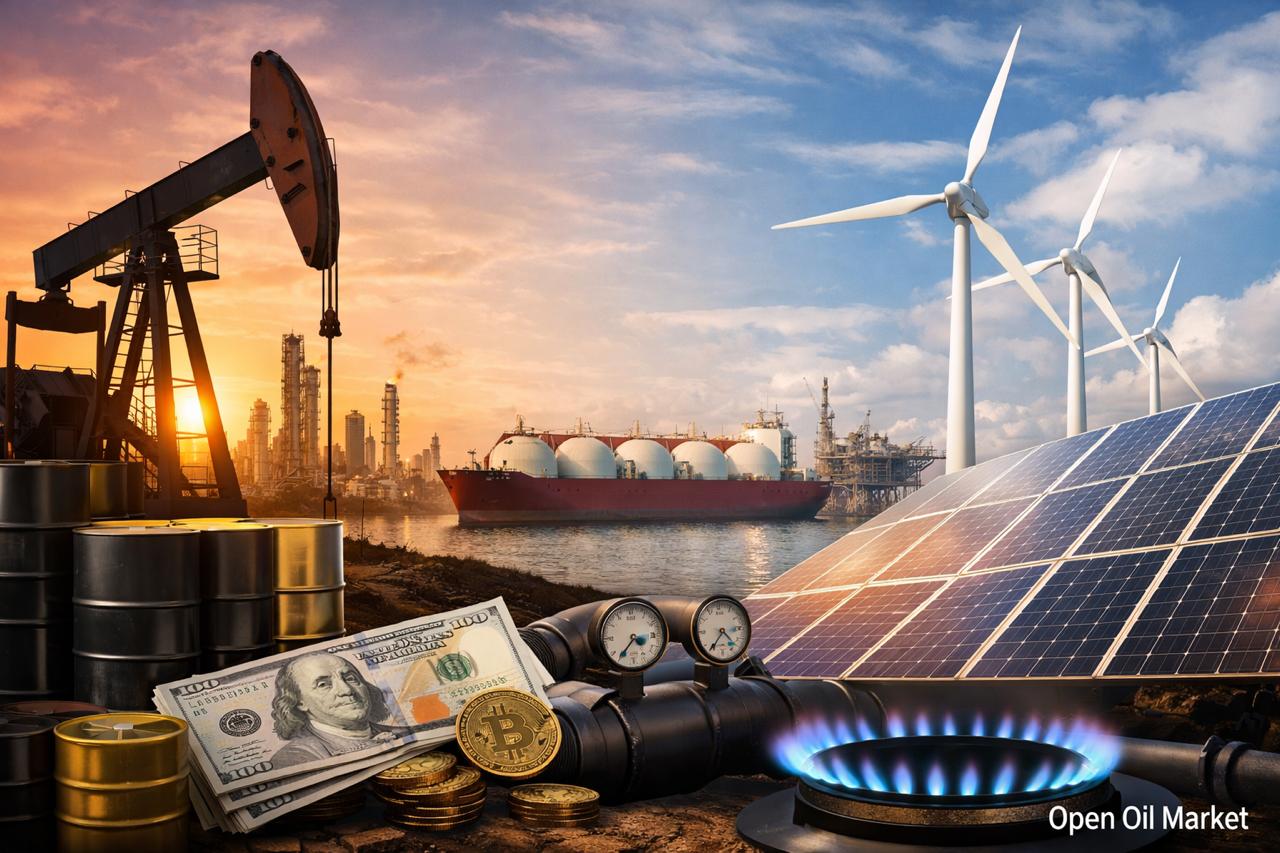
Amid increased volatility, oil and fuel companies are striving to respond quickly to changes in market conditions. Digital tools are proving useful: for instance, the "Open Oil Market" platform allows real-time tracking of oil and oil product prices, enabling investors to make quicker decisions in the market.
Natural Gas and LNG Market
The European gas market entered the winter season relatively robust. Underground gas storage across the EU is over 90% full, reducing the risk of shortages even in the event of colder weather. Active imports of liquefied natural gas (LNG) have compensated for the sharp decline in pipeline supplies from Russia. Gas prices in Europe have stabilized at levels significantly below the peaks of 2022, alleviating the financial burden on industries and households.
- Record LNG Imports: In 2025, Europe imported about 284 billion cubic meters of LNG, breaking previous records. The key supplier has been the USA (accounting for up to 60% of the volume), alongside Qatar and other exporters.
- Withdrawal from Russian Gas: The EU is formalizing plans to completely halt imports of Russian gas by 2027. Starting in early 2026, a ban on purchasing Russian LNG on the spot market will come into effect, forcing EU countries to redirect to alternative sources.
On a global scale, demand for gas remains stable due to Asian markets, although competition among suppliers is intensifying. Middle Eastern and North African countries are investing in LNG projects, intending to seize a share of the growing market. At the same time, increasing gas exports from the USA and Australia are creating an oversupply that keeps prices within moderate limits.
Renewable Energy: Record Growth
The year 2025 is marked as a landmark for renewable energy. Worldwide, there has been unprecedented growth in the commissioning of new solar and wind power capacities. Industry reports indicate that in the first half of 2025, the capacity of newly commissioned solar and wind projects increased by over 60% compared to the same period from the previous year. For the first time in history, electricity generation from renewable energy sources surpassed that of coal-fired power plants over a six-month period. The rapid development of green generation is occurring amidst significant investments: approximately $2 trillion has been invested globally in clean energy in 2025. However, despite the record pace, this is still insufficient to meet climate goals – further investments and upgrades to electrical grids are needed.
China's success is noteworthy, as it has become the locomotive of the energy transition. By bringing online hundreds of gigawatts of new solar and wind capacity, China managed to constrain CO2 emissions growth in 2025 while also increasing electricity consumption. China's experience demonstrates that substantial investments in renewables can simultaneously meet rising electricity demand while reducing carbon footprints.
Coal Sector: Peak Demand
Global coal demand reached an all-time high in 2025, although growth rates have slowed to a minimum. According to the International Energy Agency (IEA), global coal consumption increased by only 0.5%, reaching approximately 8.85 billion tons – a record volume after which a prolonged plateau and gradual decline is expected by 2030. Coal continues to be the largest fuel for electricity generation globally, but its share is beginning to shrink due to competition from alternative energy sources.
Regional trends vary. In China – the largest consumer of coal (accounting for about half of global consumption) – demand in 2025 stabilized, with expectations of a gradual decline by the end of the decade as new renewable power capacities come online. In India, a record production of hydroelectric power has led to a temporary reduction in coal use for the first time in many years. In the USA, a slight increase in coal consumption is noted amidst high gas prices and government support for extending the operation of coal-fired power plants. All these factors affirm that the peak of global coal demand is near, and future dynamics will depend on the pace of energy transition in major economies.
Oil Products and Refining: High Margins
By the end of 2025, the oil products market is showing high profitability for refiners. Global refining margin indicators ("crack spreads") have risen to multi-year highs. The reasons include sanctions (which have reduced the export of oil products from Russia), closures and repairs at several major refineries in Europe and the USA, as well as delays in bringing new refining capacities online in the Middle East and Africa. The European segment of diesel fuel remains particularly profitable: the diesel refining margin in Europe has risen to levels not seen since 2023, indicating a structural deficit of this fuel.
In response, oil refineries are maximizing utilization to take advantage of favorable market conditions. Major oil companies have reported a sharp rise in profits in the downstream segment (refining and marketing) due to high gasoline and diesel prices over the last quarters. According to the IEA, European refineries increased crude oil processing by several hundred thousand barrels per day in the second half of 2025 thanks to high margins. Analysts note that without new capacity additions in Europe and North America, fuel shortages may persist, supporting high margin figures into 2026.
Geopolitics and Sanctions: Market Impact
Geopolitical factors continue to significantly influence commodity markets. Sanction regimes on the oil and gas sector remain in place, their strict enforcement confirmed by recent events. In December, the USA intercepted an oil tanker off the coast of Venezuela, preventing an attempt to evade sanctions. At the same time, the USA increased pressure on the "shadow fleet" transporting Iranian oil: despite new restrictions, exports from Iran in 2025 reached their highest levels in recent years, thanks to supplies to Asia. Russian oil and oil product exports have been redirected to alternative markets (China, India, the Middle East), but price caps and EU sanctions continue to cut industry revenues. The European Union is also tightening restrictive measures: in addition to the oil embargo, a ban on the import of Russian LNG will take effect in early 2026 – essentially completing Europe's withdrawal from energy resources from Russia.
Against this background, market participants are embedding heightened geopolitical risks and price premiums into their forecasts. Any signals of potential easing of sanctions or diplomatic progress could significantly affect investor sentiment. For now, however, oil and gas companies are adapting to the new structure of flows and prices – diversifying logistics and seeking opportunities in regions less affected by sanctions.
Investments and Projects: Looking Ahead
Despite market volatility, significant investments in energy continue globally. Middle Eastern countries are increasing investments in oil and gas production: national companies are expanding production capacities to maintain market share in the long run. In particular, in the UAE, ADNOC has secured financing of around $11 billion for gas production expansion projects. Simultaneously, leading exporters (Qatar, USA) are implementing LNG terminal expansion projects, anticipating growth in global demand for blue fuel.
Significant funds are also being directed towards clean energy. Global investments in renewable sources continue to rise: corporations are investing in solar and wind parks as well as energy storage infrastructure. Nevertheless, achieving decarbonization targets requires even greater efforts and resources. New technologies – such as hydrogen energy and energy storage systems – are becoming increasingly attractive for investments. It is expected that 2026 will bring new merger and acquisition deals in the sector, along with the launch of large-scale projects in both the traditional oil and gas segment and the realm of renewable energy.