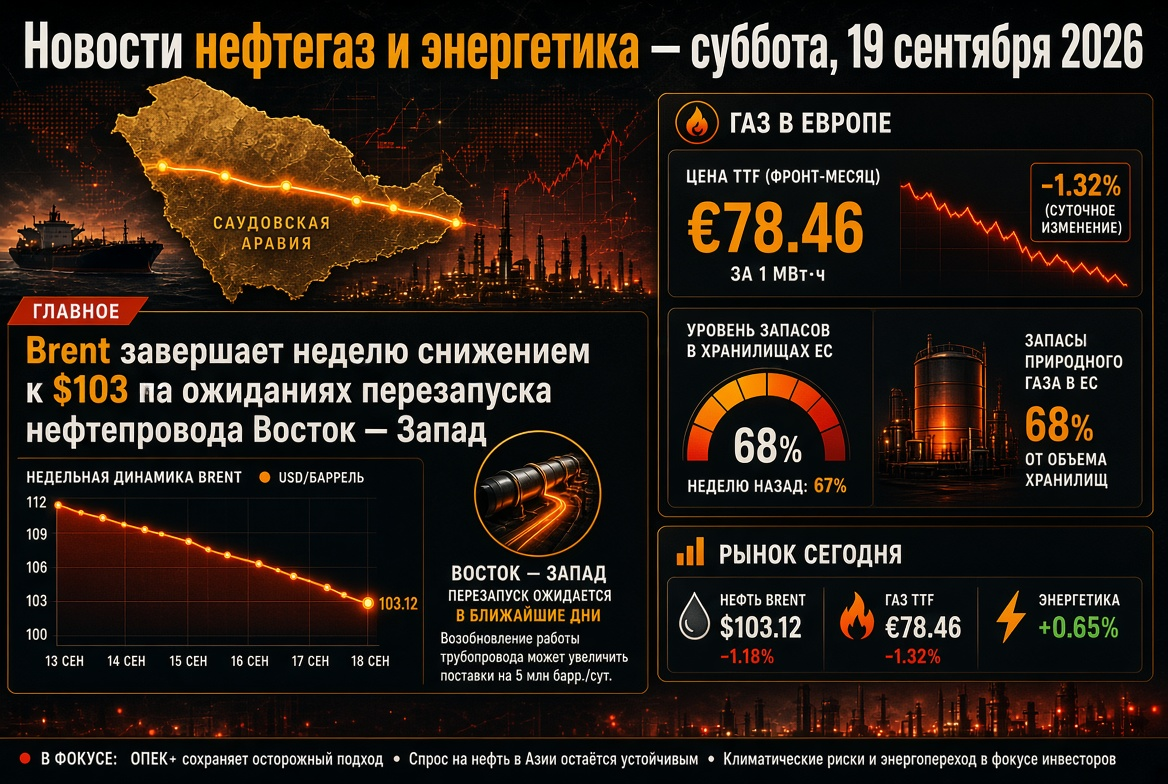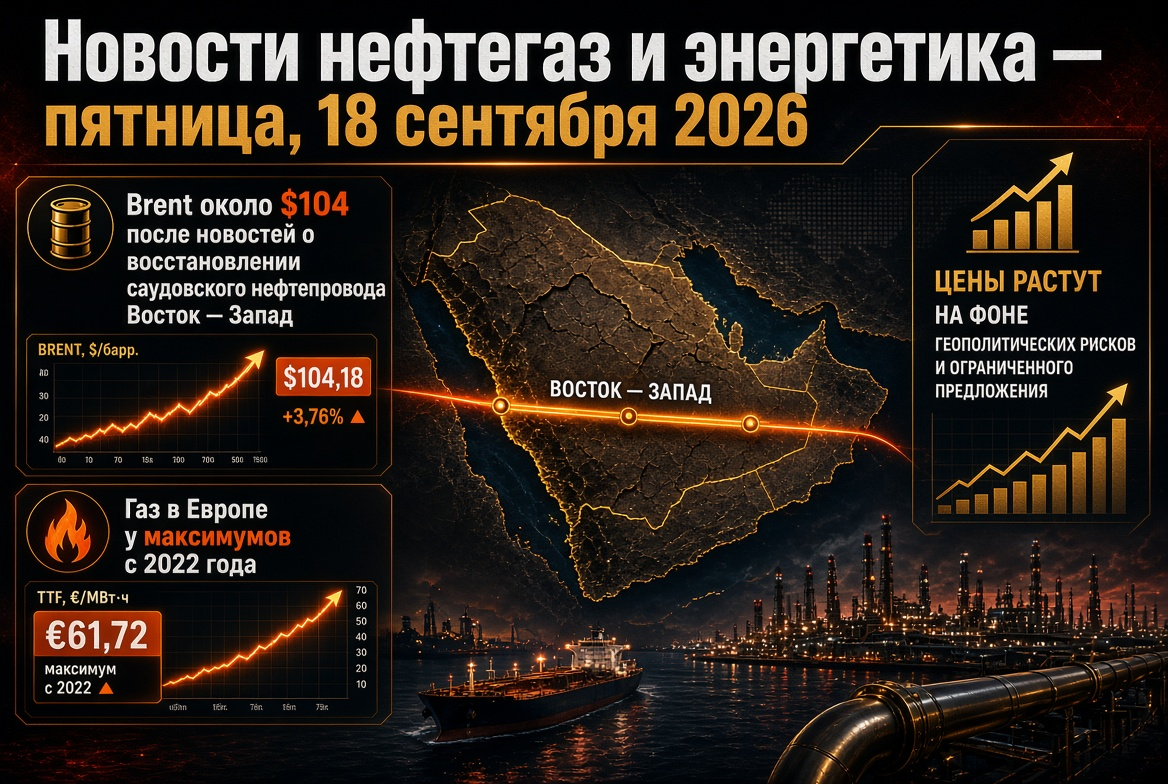
Global Oil, Gas, and Energy Sector News as of January 31, 2026: Oil, Gas, Electricity, Renewable Energy, Coal, Oil Products, and Key Global Energy Trends for Investors and Market Participants.
As January 2026 comes to a close, the global fuel and energy complex continues to grapple with geopolitical tensions and significant restructuring of global energy resource flows. Western nations maintain stringent sanctions against Russia, with the European Union imposing new restrictions on energy trade. Simultaneously, escalating tensions surrounding Iran in the Middle East have raised concerns over potential oil supply disruptions, triggering a sharp increase in prices.
On the global oil market, after several months of relative stability, prices have surged noticeably. The benchmark Brent blend has crossed the $70 per barrel mark for the first time since July, while WTI has approached $65, reaching six-month highs amid increased risks. The European gas market is adapting to winter under new conditions, essentially without Russian gas, and has so far maintained stability; high levels of storage and diversification of supply sources have helped avoid shortages. However, by the end of January, gas reserves in EU underground storage facilities fell to approximately 44% of total capacity—the lowest level for this date since 2022—and could drop below 30% by spring, posing a significant challenge for replenishment.
The energy transition is gaining momentum: in 2025, a record amount of renewable energy capacity was installed worldwide, although the reliable functioning of energy systems still requires reliance on traditional resources. For instance, a recent abnormal cold spell in the U.S. forced energy producers to sharply increase electricity generation from coal-fired power plants to cover peak demand. In Asia, demand for coal and hydrocarbon feedstock remains high, sustaining commodity markets despite climate concerns. In Russia, following last autumn's spike in fuel prices, authorities extended emergency export restrictions on oil products to maintain stability in the domestic fuel market. Below is a detailed overview of key news and trends in the oil, gas, energy, and commodity sectors at the end of January 2026.
Oil Market: Prices Rise Amid Middle Eastern Risks
By the end of January, global oil prices had significantly increased. Brent quotes remain above $70 per barrel (peaking around $71), while WTI trades around $65—these are the highest levels since mid-2025. This rise follows a period of relative stability in the second half of 2025, when excess supply and moderate demand kept prices around $60. The primary driver of the current rally is geopolitics: the escalation of the conflict surrounding Iran and threats to maritime shipping through the Strait of Hormuz—a crucial artery for global oil trade—have led to a risk premium being factored into prices.
Nevertheless, fundamental factors in the oil market still signal a significant supply presence. OPEC+ countries have increased production in the second half of 2025 in an attempt to regain lost market shares, resulting in a surplus of about 2 million barrels per day. Additional volumes are also coming from outside the cartel: the U.S. has partially lifted production restrictions in Venezuela, allowing its oil back into the market, while production in the U.S. is nearing record levels. Global demand for oil has slowed due to a weakening global economy (especially the slowdown in China) and energy-saving effects following previous years' price shocks. Some analysts forecast that, barring new upheavals, the average Brent price in 2026 could stabilize around $60–62 per barrel—due to the persistent oversupply. In the short term, however, price dynamics will depend on developments in the geopolitical landscape. Possible escalation in the Middle East conflict could push prices higher, whereas progress in negotiations (for instance, regarding Iran or Ukraine) could alleviate market tensions. Additionally, financial factors come into play: expectations of a dovish U.S. Federal Reserve policy weaken the dollar, temporarily supporting commodity prices, including oil. Therefore, oil is trading within a higher range due to geopolitical risks, but with stable supplies, the abundance of supply may constrain further price increases.
Gas Market: Winter Stability and Challenges in Stock Replenishment
The European natural gas market is entering the final phase of winter relatively calmly, thanks to created reserves and new supply routes. By the start of the heating season, EU countries had filled their underground gas storage (UGS) by more than 90%, providing a buffer for the cold months. As of late January, however, storage levels have dropped to approximately 44% of total capacity, marking the lowest level for this time of year since 2022. Nevertheless, market gas prices remain relatively modest and considerably lower than peaks seen last winter. Several factors have contributed to this: mild weather for most of the season, record purchases of liquefied natural gas (LNG) globally, and stable pipeline supplies from Norway, North Africa, and Azerbaijan. Thanks to diversification of supply sources, Europe is currently managing to meet its existing demand despite the absence of Russian gas.
However, serious challenges loom ahead for the EU gas sector. If current trends persist, storage levels could drop to about 30% by March, and European companies will need to inject approximately 60 billion cubic meters of gas to return to last year's filling levels. Ensuring such replenishment volumes without traditional Russian supplies poses a formidable task. In anticipation of the next heating season, the European Union is actively expanding LNG reception infrastructure (new regasification terminals are being constructed) and securing long-term contracts with alternative suppliers. Moreover, in January, the EU confirmed its strategic decision to completely cease imports of Russian gas (both pipeline and LNG) by 2027, ending years of reliance. The volumes lost are planned to be replaced primarily through the global LNG market: the International Energy Agency expects that in 2026, global LNG supplies will reach a new record (around 185 billion cubic meters) due to new export projects coming online in the U.S., Canada, and Qatar. At the same time, the pricing situation raises concerns: the TTF gas hub is experiencing an unusual backwardation (where summer futures are more expensive than winter), which diminishes incentives to inject gas into storage. Experts warn that without special support measures, this market situation could complicate preparations for the next winter. Overall, the European gas market is currently significantly more resilient than during the 2022 crisis; however, maintaining this resilience will require further supply diversification, development of storage systems, and potentially coordinated actions from authorities to stimulate necessary stock levels.
International Politics: Sanctions and Energy
The sanctions standoff between Moscow and the West continues to shape the global energy landscape. At the end of 2025, the European Union approved its 19th package of restrictive measures, a significant portion of which targets the fuel and energy sector—from tightening the price cap on Russian oil to banning exports of equipment and services for extraction. The United States and its allies also signal their readiness to ramp up pressure: new sanctions steps are being discussed, including mechanisms to seize frozen Russian assets to finance the reconstruction of Ukraine. While some channels of dialogue between governments remain open, there are currently no real signals toward easing sanctions. For markets, this means a continued division of energy flows into "permissible" and "alternative." Russian oil and gas continue to be redirected to Asia at discounts to countries such as China, India, and Turkey, while European consumers have completely reoriented to other sources. Two parallel pricing zones effectively exist: a western zone that refuses Russian energy resources, and an alternative zone where Russian barrels and cubic meters find demand, albeit at a lower price and with extended logistics. Investors and market participants closely monitor the sanctioning policy, as any changes immediately impact supply routes and pricing dynamics.
Besides the Russia-Ukraine conflict, sanctions against other nations also influence energy markets. In January, the U.S. and EU expanded their sanctions lists against Iran—amid crackdown on protesters and disputes over the nuclear program—complicating trade in Iranian oil and adding uncertainty to the market. Simultaneously, the sanction regime regarding Venezuela is gradually being adjusted: following the easing of American restrictions in autumn 2023, the Venezuelan oil industry began increasing output, and major companies (ExxonMobil, Chevron, etc.) are exploring new projects in the country. This is returning some previously lost heavy oil volumes to the global market. Geopolitical barriers also affect corporate transactions: for instance, the American investment fund Carlyle Group has agreed to acquire a significant portion of Lukoil's overseas assets, which Russia's second-largest oil company had to put up for sale due to sanctions. This example illustrates how international players are restructuring their strategies and assets under the pressure of sanctions. Overall, the energy sector remains a focal point of global politics: sanctions, conflicts, and diplomatic decisions directly determine global oil and gas flows, increasing the role of political risks in investment decisions for energy companies.
Energy Transition: Records and Balancing
The global transition to clean energy in 2025 was marked by unprecedented growth in renewable generation. Many countries have added record new capacities for solar and wind power plants:
- EU: approximately 85–90 GW of renewable energy sources added in one year;
- U.S.: the share of renewable electricity exceeded 30% for the first time in the overall energy balance;
- China: dozens of gigawatts of new “green” power plants have been installed, breaking national records for renewable energy deployment.
The rapid growth of the renewable energy sector raises questions about the reliability of energy systems. During periods of calm or lack of sunlight, backup capacity from traditional power plants is still required to cover peak demand and prevent supply interruptions. For instance, during a severe cold snap in the U.S. in January 2026, grid operators were forced to increase coal-fired generation by more than 30% to meet a sharp rise in electricity consumption—this case highlighted the importance of having sufficient backup capacity during extreme conditions. Consequently, large-scale energy storage projects are being actively implemented worldwide: large battery farms are being built to store electricity, and technologies for hydrogen and other energy carriers are being explored. The development of storage systems will help smooth out fluctuations in renewable energy generation and enhance the resilience of energy systems as the share of renewable energy increases.
Meanwhile, energy companies are seeking a balance between environmental objectives and maintaining profitability. The experience of BP, which in 2025 announced reductions in investments in renewable energy and wrote off several billion dollars' worth of green assets, has shown that even industry giants need to adjust their strategies. Despite the rapid growth of the clean sector, traditional oil and gas businesses still generate the majority of profits, and shareholders demand a measured approach. "Green" projects must be developed without compromising the financial stability of companies. The energy transition continues at a high pace; however, the main lesson from 2025 is the need for a more balanced strategy that combines accelerated adoption of renewable energy with maintaining the reliability of energy systems and the profitability of investments in the sector.
Coal: High Demand in Asia
The global coal market remained buoyant in 2025, despite global goals to reduce coal use. The primary reason is the consistently high demand in Asia. Countries like China and India continue to burn large volumes of coal for electricity generation and industrial purposes, compensating for the decline in consumption in Western economies. China now accounts for nearly half of global coal consumption and, even while producing over 4 billion tons annually, is forced to increase imports during peak demand periods. India is also ramping up its own production, but due to rapid economic growth, it needs to purchase substantial volumes of fuel from abroad—primarily from Indonesia, Australia, and Russia.
High Asian demand supports coal prices at relatively high levels. Major exporters—ranging from Indonesia and Australia to South Africa—experienced revenue growth in 2025 thanks to stable orders from China, India, and other countries in the region. In Europe, conversely, after a temporary spike in coal use in 2022-2023, its share is again decreasing due to the rapid development of renewable energy and the return of several nuclear power plants to operation. Overall, despite climate concerns, coal is likely to retain a noticeable portion of the global energy balance in the coming years, although investments in new coal capacity are gradually declining. Governments and companies strive to strike a balance: meeting current demand for coal, especially in developing countries, while simultaneously accelerating the transition to cleaner energy sources.
Russian Market: Restrictions and Stabilization
Since autumn 2025, the Russian government has been manually intervening in the regulation of the fuel market, curbing price growth in the domestic market. After wholesale prices for gasoline and diesel reached record highs in August, authorities imposed a temporary ban on the export of key oil products, which was then extended until February 28, 2026. These restrictions apply to the export of gasoline, diesel fuel, fuel oil, and gas oil. These measures have already had a noticeable effect: by winter, wholesale prices for motor fuel in the country fell by dozens of percent from peak levels. The growth of retail prices has significantly slowed, and by the end of the year, the situation at gas stations stabilized—service stations are well-stocked, and the panic demand from consumers subsided.
For oil companies and refineries, such restrictions mean lost profits in external markets; however, authorities are demanding that businesses "tighten their belts" for the sake of price stability at home. The production cost of oil at most Russian fields remains low, so even the price of Russian export oil below $40 per barrel does not lead to direct losses and allows for maintaining profitability. Nonetheless, a decline in export revenue jeopardizes the implementation of new projects, which require higher world prices and access to overseas markets for profitability. The government refrains from direct subsidies for the industry, claiming that the situation is under control and that energy companies are still profiting even amid reduced exports. The domestic fuel and energy sector is adapting to new conditions. The main task for 2026 is to maintain a balance between curbing domestic energy prices and preserving export revenues, which are critically important for the budget and the development of the sector.