Key themes of the review:
- OpenAI is finalizing a round of up to $30 billion at a pre-money valuation of $1.25 trillion;
- Anthropic reveals financials ahead of its November IPO on Nasdaq;
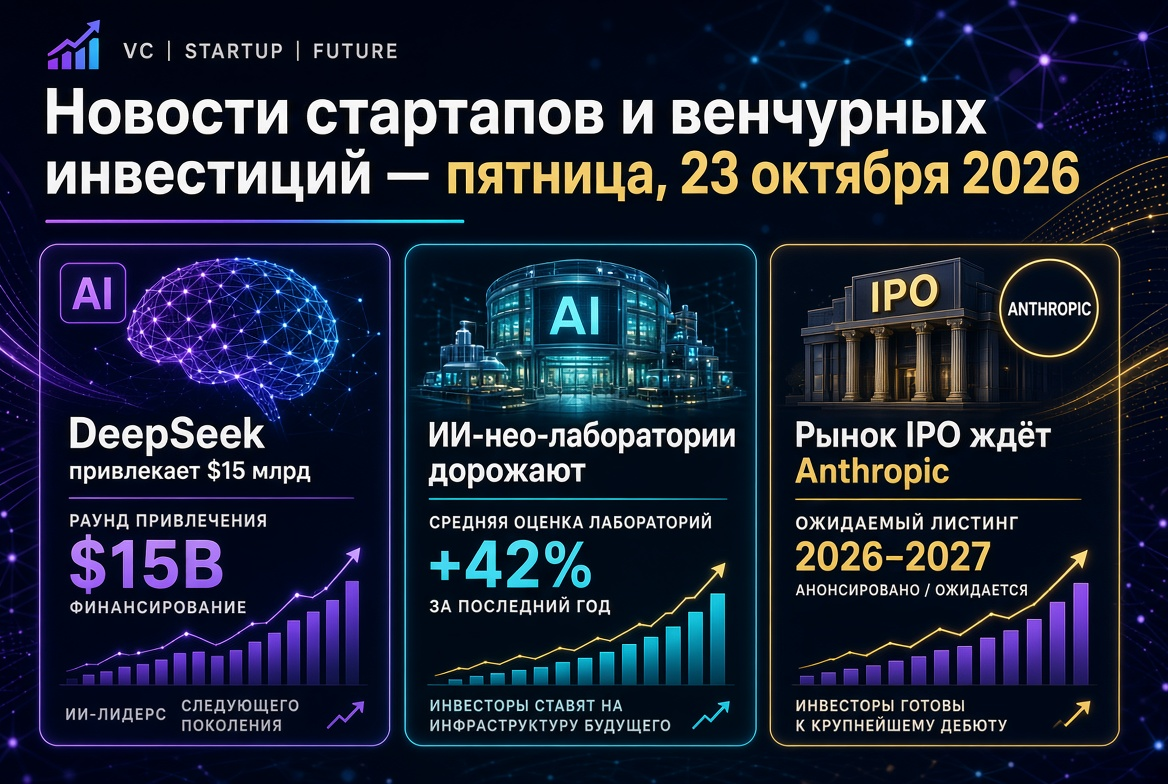
- DeepSeek raised around $15 billion and is preparing for a listing in Shanghai;
- a new wave of "unicorns" in AI infrastructure, legal AI, and robotics;
- initial signs of investor caution regarding AI infrastructure.
OpenAI: Mega Round on Discount to Self-Expectations
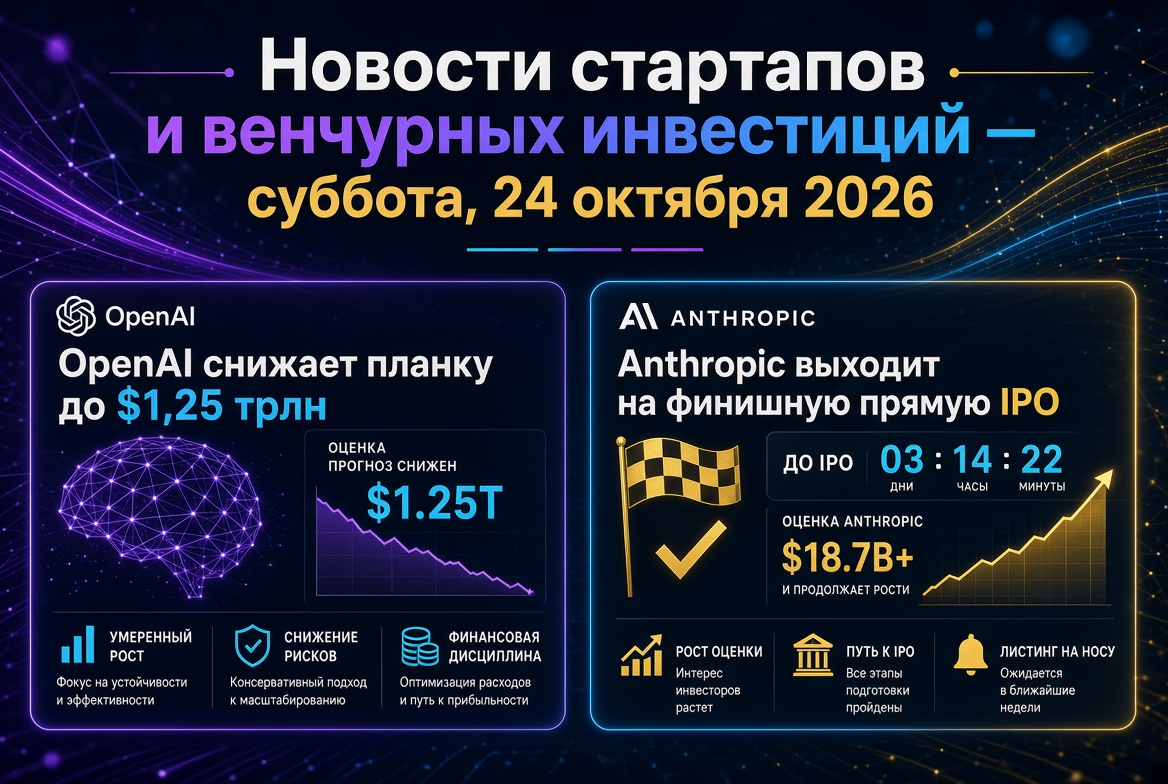
OpenAI is close to concluding a round of up to $30 billion at a pre-money valuation of $1.25 trillion. Leading investors include funds from the UAE and Coatue. The company aims to secure commitments by the end of next week, although the final size of the round is still being determined. The figure at $150 billion is below the $1.4 trillion valuation that OpenAI presented to potential investors in early October. This correction is what the market is currently discussing most actively.
Key deal parameters:
- the round is positioned as a "bridge" to the IPO that OpenAI plans for 2027;
- in March, the company secured $122 billion at a post-investment valuation of $852 billion;
- annual run-rate revenue approached $50 billion by the end of September, with a goal of $70 billion and above by the end of 2026.
The logic behind the urgency is clear: OpenAI seeks to close the deal before Anthropic's financial disclosure allows investors to directly compare the businesses of the two leaders.
Anthropic: Ticker Countdown Before Nasdaq IPO
The most anticipated event of the year in the IPO market is the publication of Anthropic's prospectus (Form S-1). According to media reports, the public filing was planned for Friday, October 23. Under SEC rules, the prospectus must be open at least 15 calendar days before the start of the roadshow, so a listing is possible as early as November.
What is known from the draft prospectus and communications to investors:
- revenue for the first half of 2026 is projected at $16.3 billion, compared to $1.1 billion a year earlier;
- revenue for the third quarter is $16.8 billion, reflecting a 45% increase from the previous quarter;
- net loss for the half-year stood at $80.7 billion, of which about $72 billion was due to non-cash revaluations of convertible instruments;
- around 20% of revenue comes from two clients, representing a key concentration risk.
Market expectations for the valuation have decreased from around $2 trillion to $1.5 trillion. Nevertheless, the placement could become the largest in history, surpassing SpaceX's IPO in June. Anthropic's last private valuation was $965 billion.
DeepSeek: $15 billion and Heading for Shanghai
Chinese company DeepSeek raised approximately 100 billion yuan (around $15 billion). This marks one of the largest rounds in the history of Chinese technology. During negotiations, the company twice raised its target amount: from 50 billion to 80 billion yuan, and then to the final sum. Among the largest investors are CATL and Tencent, with GigaDevice, Meituan, and Geely also participating. The total number of investors exceeds fifteen.
- pre-investment valuation stands at around 500 billion yuan (approximately $74 billion).
- annual run-rate revenue reached $1 billion.
- the company has hired Citic Securities and is preparing for an IPO in Shanghai in early 2027.
The deal was finalized just two days after the U.S. ordered the removal of DeepSeek technologies from federal civilian systems. This highlights the growing division of the global AI market into American and Chinese frameworks.
New Unicorns of the Week: Money Flows into AI Infrastructure and Vertical Solutions
In addition to mega rounds, the week noted a steady stream of large deals in the venture segment:
- Flapping Airplanes — $1 billion in a Series A round at a valuation of $6 billion, with no commercial product or revenue. The company is betting on increasing AI efficiency;
- Tenstorrent — $1.5 billion in a Series E round at a valuation of $6.2 billion for AI chip development;
- Legora — $550 million in a Series E round at a valuation of $8.8 billion, compared to $5.6 billion in March (leading investor — Atreides Management);
- ASI — $325 million in a Series C round at a valuation of $3 billion (AI for critical infrastructure);
- Arda — $230 million at a valuation of $1.5 billion for AI in manufacturing, led by former OpenAI research head Bob McGrew;
- Whop — $200 million at a valuation of $5.1 billion.
The unicorn club with a valuation of $1 billion also welcomed Daytona, Blacksmith (round led by Sequoia), and Town. The trend is clear: startups focused on developer infrastructure and vertical AI are rapidly gaining valuation.
Nvidia as a Strategic Investor: The Higgsfield Case
Nvidia and TCV invested in the AI video startup Higgsfield as part of the $400 million expansion of its August Series B round at a valuation of $5.4 billion. The terms of the new deal were not disclosed. The main engineering team operates out of Kazakhstan, and the announcement coincided with Jensen Huang’s visit to Astana. Higgsfield boasts an audience of over 40 million users, with annual revenue estimated between $700 million and nearly $1 billion.
At the same time, Fireworks AI is reportedly in early negotiations to raise funds at a valuation of $30–40 billion, approximately double the July level of $17.5 billion. The AI inference segment remains one of the hottest areas for venture investments.
Macro Context: Record Year and Initial Cracks
Statistics from the third quarter provide a backdrop for evaluating all deals:
- global venture funding reached $159 billion, down 25% from the second quarter but up 53% year-on-year;
- AI startups accounted for $102 billion, or 64% of the market;
- a record was noted with 27 rounds of $1 billion or more in a quarter;
- in the nine months, $679 billion has been raised, marking the highest for the same period in history.
However, Bank of America analysts are noting a growing reluctance among markets to finance the construction of AI infrastructure. In October, a new wave of sell-offs hit technology stocks. For venture funds, this means that valuations in private rounds will increasingly depend on how the public market responds to Anthropic's IPO.
Government Support: Focus on Early Stages
Governments continue to bridge the funding gap in early stages:
- Canada has allocated a separate stream of $75 million for pre-seed and seed funding for the first time in its national venture strategy;
- the EU Innovation Fund will direct €3.4 billion to 77 climate technology projects;
- American Helion Energy received $50 million in private capital and a federal award of $175 million.
Russia and the CIS: Market Tightens, Capital Concentrates
The Russian venture market is developing in opposition to global trends. According to the Moscow Venture Fund, investment volume decreased by 48% year-on-year to 4.6 billion rubles in the first half of 2026, with the number of deals down 45% to 54. About 60% of the volume was concentrated in the five largest rounds. Funds are shifting towards late seed and Series A rounds, as well as B2B projects with confirmed revenues. The Moscow Venture Fund announced the allocation of 250 million rubles to technology companies with co-investments of 1 billion rubles. The case of Higgsfield is particularly notable: the Kazakh engineering team has become the foundation for a global AI business valued at billions of dollars.
What This Means for Venture Investors
The main takeaway of the week: the AI market is entering a phase of pricing discipline. Key points to consider in the coming weeks:
- Reaction to Anthropic's prospectus. Acceptance by the public market of a valuation around $1.5 trillion will set a benchmark for late rounds across the sector.
- Closure of OpenAI's round. The final size and composition of investors will indicate the depth of demand for "trillion-dollar" valuations.
- Market segmentation. Chinese AI laboratories are forming their own capital and exit framework through Chinese exchanges.
- Shift towards efficiency. The highest premiums are awarded to projects that reduce computing costs, as well as vertical AI solutions with clear revenue.
Venture capital remains available in record volumes, but investors are increasingly scrutinizing revenue, client concentration, and computing costs. The upcoming IPO of Anthropic in November will be a crucial test of this new reality for startups and funds worldwide.