Global Startup and Venture Capital News for Sunday, February 1, 2026: Major Funding Rounds, Venture Capital Activity, Key Technological Trends, and Investment Priorities.
The beginning of 2026 continues the trend of revitalization in the global startup and venture capital markets. Following the downturn of 2022–2023 and the increase in investments in 2025, major investors worldwide are once again actively funding promising tech companies. Record venture financing deals are being closed, and the plans for startups to go public are once again in focus. Leading players with massive investments are returning to the stage, while governments and corporations are enhancing support for innovation—significant private capital is once again flowing into startup ecosystems.
Venture activity is growing across all regions. The U.S. retains its leadership (especially due to a boom in AI investments), in the Middle East, startup investments have doubled over the year due to billions of dollars pouring in from sovereign wealth funds, and in Europe, a shift has occurred: Germany has surpassed the UK for the first time in the number of venture deals. India, Southeast Asia, and Gulf states are attracting record amounts of capital, while investor activity in China has somewhat declined. The startup ecosystems of Russia and neighboring countries are attempting to keep pace with global trends despite external restrictions. As a result, a new venture upsurge at early stages is emerging on the world stage, although investors are still approaching deals selectively and cautiously.
Below is an overview of key events and trends shaping the venture market agenda as of February 1, 2026:
- Return of Mega Funds and Large Investors. Leading venture firms are raising record-sized funds and sharply increasing investments, saturating the market with capital and reigniting risk appetite.
- Record Rounds in AI and a New Wave of Unicorns. Exceptionally large investment deals are elevating valuations of startups to unprecedented heights, especially in the AI segment, leading to the emergence of multiple new "unicorn" companies.
- Revival of the IPO Market. Successful tech company debuts and new listing applications signal that the long-awaited "window" for public offerings is once again open.
- Sector Diversification. Venture capital is flowing not only into AI but also into fintech, climate projects, biotech, defense developments, crypto startups, and other promising areas.
- Wave of Consolidation and M&A Deals. Major mergers, acquisitions, and strategic investments are reshaping the industry landscape, creating new opportunities for exits and accelerated growth for startups.
- Local Focus: Russia and the CIS. Despite restrictions, new funds and initiatives are launching in the region to support local startup ecosystems, attracting investor interest.
Mega Funds are Back: Big Money is in the Market Again
The venture market is triumphantly welcoming the largest investment players back, signaling a new growth in risk appetite. In recent weeks, several top funds have announced record capital raises: the American firm Andreessen Horowitz (a16z) closed new funds at ~$15 billion (unprecedented for the industry), Lightspeed raised about $9 billion, and Tiger Global returned with a $2.2 billion fund. Sovereign funds from the Gulf have also become active, pouring billions into technology and launching mega development projects for ecosystems. Japanese SoftBank, recovering from previous setbacks, invested around $40 billion in OpenAI, once again making a significant bet on AI. As a result, venture funds have accumulated hundreds of billions of dollars in dry powder, filling the startup market with liquidity and supporting the growth of promising companies’ valuations. The return of mega funds and large institutional investors intensifies competition for the best deals while instilling confidence in the sector regarding the continued influx of capital.
AI Investment Boom: Record Deals and New Unicorns
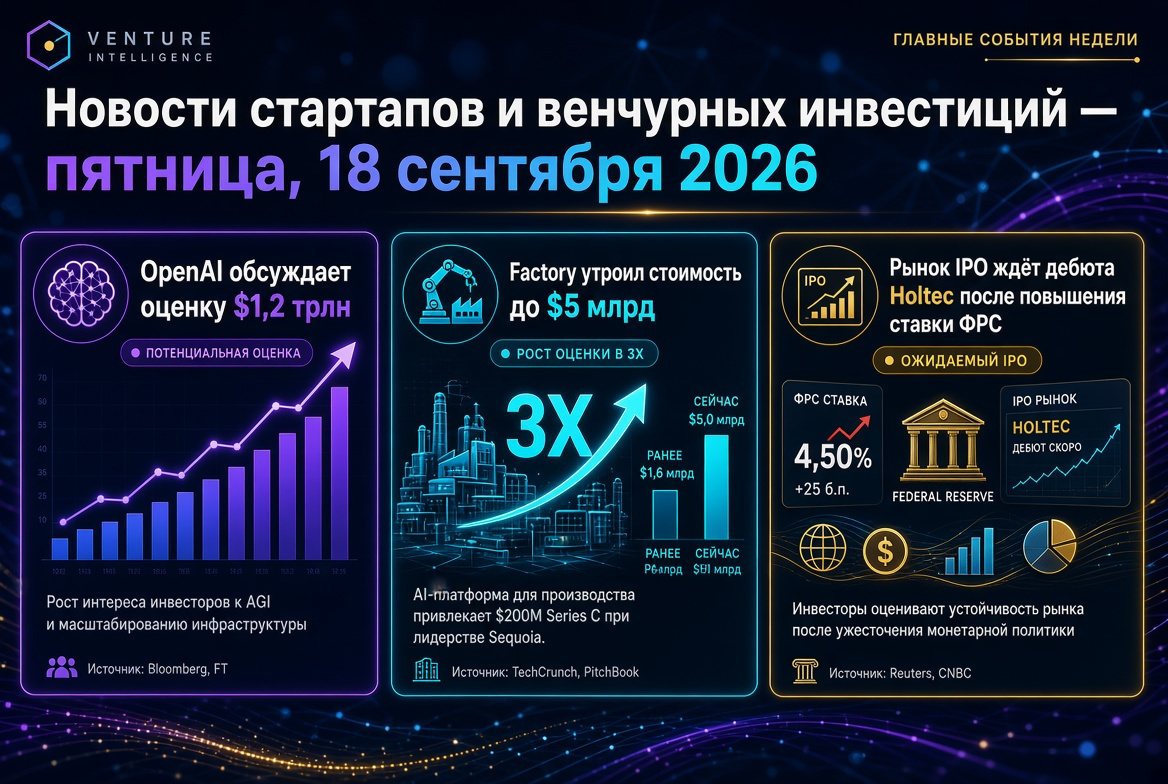
The artificial intelligence sector remains the primary driver of the current venture boom. Investors are eager to secure positions at the forefront of the AI revolution and are ready to fund colossal rounds. Already in the early weeks of 2026, unprecedented deals have been recorded even at early stages: for instance, the startup laboratory Humans& (USA), founded by top specialists from Google, OpenAI, Anthropic, and Meta, raised approximately $480 million in seed funding—a record amount for a seed round. Another example is the project Ricursive Intelligence (USA), aimed at breakthrough AI, which secured $300 million in a Series A round at a valuation of about $4 billion. Additionally, a new startup, Merge Labs, co-founded by OpenAI's Sam Altman to develop brain-computer interfaces, reportedly received around $252 million in initial funding. As a result of this race, the unicorn club is rapidly expanding: just in recent months, dozens of startups have crossed the $1 billion valuation threshold, especially in the fields of artificial intelligence and defense technologies.
IPO Market Awakens: The Window for Exits is Open Again
The situation in the U.S. and Europe has also improved: following the first successful listings of 2025, more and more unicorns are going public. The American fintech giant Chime debuted on Nasdaq, and its shares surged by approximately 40% on the first day, reaffirming investor confidence.
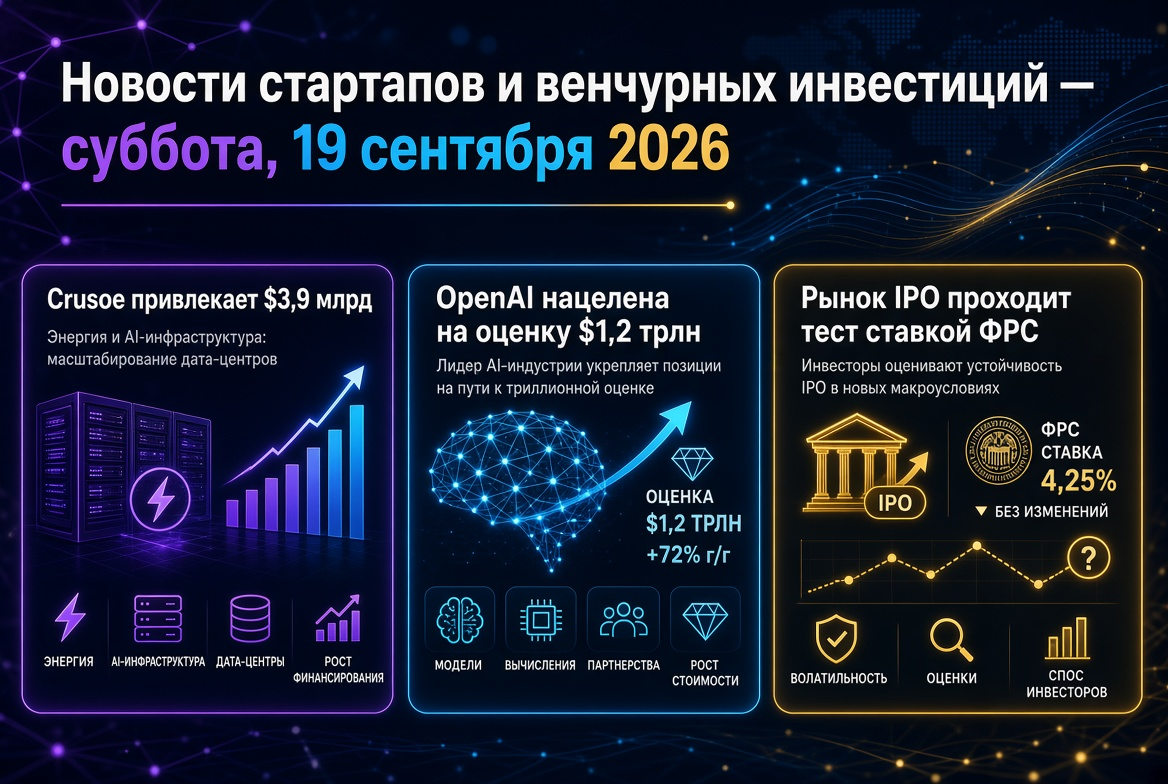
Now the potentially largest offering in history is on the horizon: Elon Musk's space company SpaceX plans to IPO in mid-2026, aiming to raise up to $50 billion at a valuation of about $1.5 trillion (almost double the record of Saudi Aramco in 2019). Among the most anticipated are IPOs of such giants as OpenAI, Anthropic, Stripe, and Databricks—their debuts have the potential to revitalize the market and attract broad attention. The revival of activity in the IPO market is crucial for the venture ecosystem: successful public exits return capital to investors and enable it to be directed into new projects.
Diversifying Investments: Fintech, Climate Projects, Biotech, and More
In 2026, venture investments are encompassing an increasingly broad array of sectors, reducing the market's dependence on a single trend. Following the explosive growth of AI investments, investor attention is shifting back to other segments:
- Fintech: A revival of activity and large rounds in financial technology startups worldwide (from the U.S. and Europe to emerging markets).
- Climate Technologies: Record investments in "green" energy, agri-tech, and other eco-tech projects amid a global focus on sustainability.
- Biotech and Health: A new influx of capital into biotechnology, medical startups, and digital health amid scientific breakthroughs and a return of investor confidence in the sector.
- Defense and Aerospace Development: Increased funding for startups in national security, defense, aerospace, and cybersecurity.
- Crypto Startups: Gradual return of interest in blockchain projects and cryptocurrency services as the market for digital assets stabilizes.
Therefore, in 2026, venture capital is being distributed across numerous niches, and funds are seeking growth opportunities not just in AI. The diversification of sector focus means more opportunities for startups of various profiles, from finance and energy to medicine and defense.
Market Consolidation: Major M&A Deals Are Reshaping the Landscape
High valuations for startups and intense competition for technological leadership are leading to a wave of consolidation. Major corporations and mature unicorns are increasingly acquiring promising teams or merging to accelerate growth and secure key technologies. Multi-billion dollar deals have already occurred: for example, Apple is acquiring the Israeli AI startup Q.ai for about $1.6 billion (one of Apple’s largest purchases in recent times), Google is acquiring the cybersecurity platform Wiz for a record $32 billion, and Capital One is acquiring the fintech platform Brex for $5.15 billion. Such acquisitions and mergers are reshaping the industry landscape, allowing rapidly growing companies to scale under the wings of tech giants and providing venture investors with opportunities for long-awaited exits.
Russia and the CIS: Local Initiatives Amid Global Trends
Despite external restrictions, the startup environment in Russia and the CIS countries is also showing signs of revival, following global trends. The region has announced the launch of new venture funds totaling approximately 10–12 billion rubles, aimed at supporting early-stage technological projects. Local startups are beginning to attract more significant capital: for instance, the Krasnodar-based food-tech service Qummy secured about 440 million rubles, while the company Motorica (a developer of modern rehabilitation devices) raised over 800 million rubles from a private investor. Additionally, authorities have permitted foreign investors to once again invest in Russian startups, gradually restoring interest from overseas capital. While venture investment volumes in the region remain modest compared to global standards, they continue to grow steadily. A number of major tech companies are considering taking their divisions public when market conditions improve—VK Tech publicly acknowledged the possibility of an IPO in the near future. New government support measures and corporate initiatives are designed to give an additional boost to the local startup ecosystem and integrate it into global trends.
Looking Ahead: Cautious Optimism Among Investors
Such a powerful start to the year fosters moderately optimistic sentiments within the venture industry. On the one hand, record rounds and the emergence of new funds are providing startups access to capital, while successful IPOs confirm that the downturn period is behind us. On the other hand, investors are still carefully selecting projects and tightening control over portfolio companies' performance to prevent the new upswing from turning into overheating.
Importantly, the volume of available capital remains high: global venture funds have hundreds of billions of dollars in dry powder ready for investment. These reserves can support innovation funding levels even amid changing macroeconomic conditions, intensifying competition for the best deals.
Undoubtedly, risks remain: rising interest rates, geopolitical instability, and stock market volatility could weaken risk appetite. However, the startup ecosystem enters 2026 with resilience and restrained optimism. Venture investors and founders are hopeful that the market will continue to grow in the coming months—provided that projects are sensibly valued and external conditions are favorable.