FAS Activity Increased Threefold
The Federal Antimonopoly Service of Russia, from the beginning of the year until August 17, initiated 41 cases against oil companies and independent market participants, and issued 68 warnings to economic entities regarding signs of violations of antimonopoly legislation, reported "Izvestia" from the service's press office.
As of May 21, the FAS and territorial bodies were reviewing 11 such cases against participants in the oil products market. Thus, in the summer alone, 30 cases were initiated—almost three times more than in the first five months of the year.All cases concern violations of the articles of the law "On Protection of Competition" and the Code of Administrative Offenses, which prohibit cartel agreements and abuse of dominant market position, "Izvestia" has discovered. Most violations were recorded among independent companies owning gas stations in various regions, as well as two firms selling fuel under the "Gazpromneft" brand, including LLC "Gazpromneft – Regional Sales" and two oil traders.
The antimonopoly service began to actively respond to price increases and violations of legislation due to the government's close attention to this issue, noted Dmitry Gusev, Vice Chairman of the Supervisory Board of the "Reliable Partner" Association. Moreover, due to rising exchange prices for fuel and supply shortages, owners of independent gas stations have significantly raised prices, which has increased the number of complaints from citizens to the FAS.
Sergey Tereshkin, General Director of Open Oil Market, believes that the increase in the number of warnings and antimonopoly cases was predictable following the June spike in fuel prices: the regulator is trying to "moderate the appetites" of some market participants and thus contribute to price stabilization.
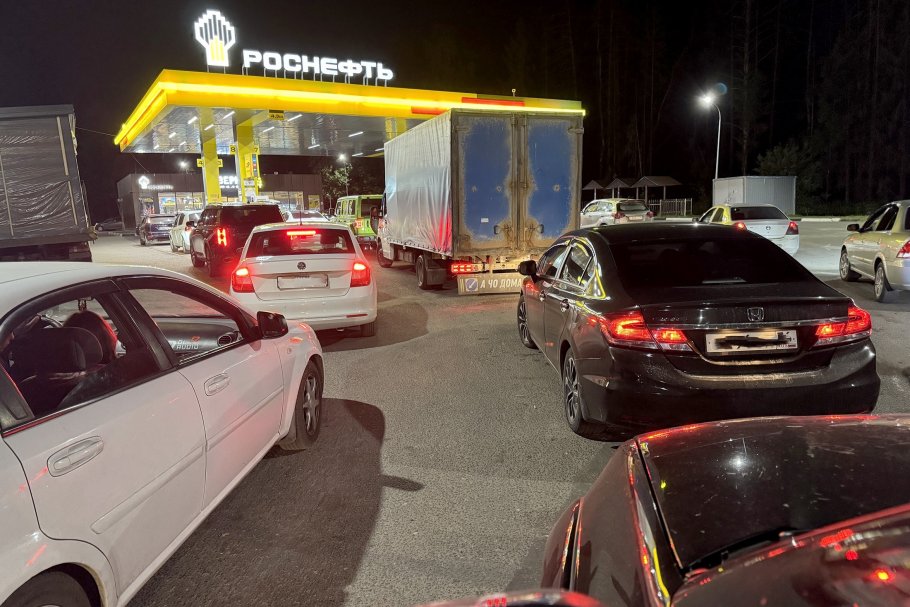
New Wave of Queues at Gas Stations
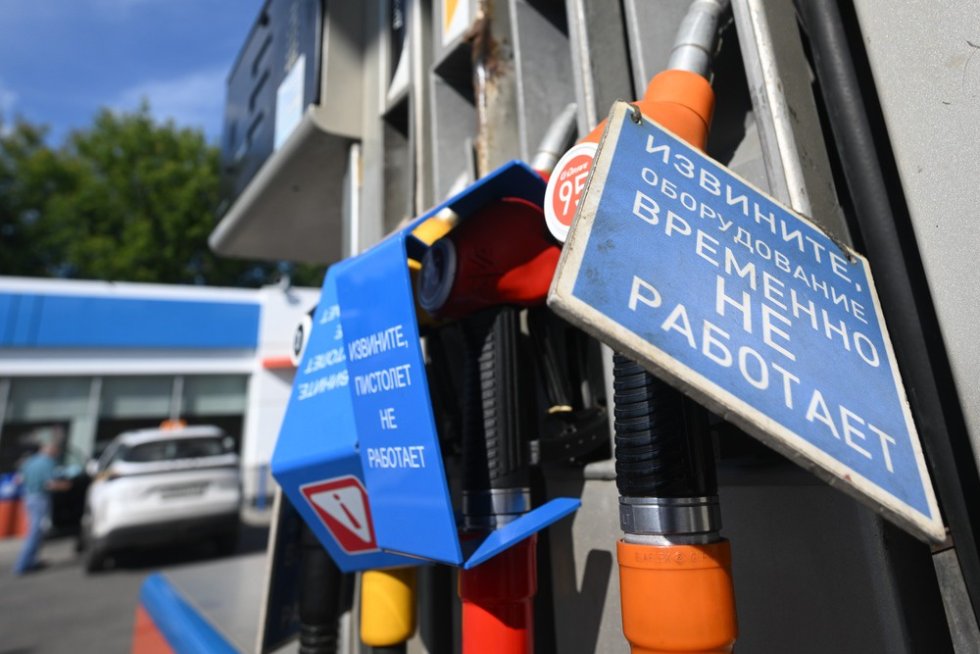
Meanwhile, recent days have seen a new wave of fuel shortages and queues at gas stations in several regions. For instance, in Moscow, some stations periodically lack almost all brands of gasoline. On August 17, "Izvestia" correspondents visited 21 gas stations in Moscow and the region: 92-octane fuel was available at seven, 95-octane at six stations, and 98-octane at only five. Diesel fuel is not available everywhere either. The editorial office has sent a request to the Moscow government.
Deputy Prime Minister Alexander Novak held another meeting on the internal fuel market situation on August 14. A representative from the Ministry of Energy reported that a tense situation with fuel supplies at gas stations persists in several regions of the country, as noted in the government's statement. In particular, the issue of ensuring fuel supplies in the Orenburg, Lipetsk, Tver, and Oryol regions, as well as Tuva, Khakassia, Krasnodar, Zabaykalsky, Primorsky, and Krasnoyarsk territories was raised.
According to the "GdeBENZ" application on August 16, fuel was available at 28.1% of gas stations nationwide. A week earlier, this figure was 41%. The availability of gasoline and diesel has decreased in the Volgograd, Chelyabinsk, Orenburg, Voronezh, Samara, Penza, Saratov, Lipetsk, Rostov regions, and in Tatarstan, as indicated by the application's data.
The first wave of queues at gas stations in Russia arose in late May and lasted about a month and a half. At the end of July, Deputy Prime Minister Novak stated that the fuel balance and the situation at gas stations in Russia had improved.
According to Rosstat, during the week from August 4 to 10, a decrease in prices for automotive gasoline was recorded in 44 regions of the Russian Federation, most notably in the Republic of Dagestan (-9.1%). In Moscow, prices fell by 0.2%. The highest price increase was noted in Tver region—by 6.8%.
Overall, this indicates that the fuel situation in Russia is developing unevenly: despite considerable gasoline production volumes, delivering it to some regions is more challenging, including due to logistic issues, a source in the industry told "Izvestia."
At the Ministry of Energy, "Izvestia" was informed that measures are being taken together with regional authorities, other agencies, and oil companies to ensure the domestic market has the necessary volumes of oil products.
The government has already implemented a temporary ban on fuel exports, permitted the circulation of gasoline of Euro-2, Euro-3, and Euro-4 environmental classes, established an import damping mechanism to stimulate fuel supplies to the Russian Federation, and modified exchange mechanisms.
"Izvestia" sent inquiries to the office of Deputy Prime Minister Alexander Novak and to the largest oil companies.
The new wave of shortages has arisen due to ongoing attacks and unplanned repairs at oil refineries, explained Igor Yushkov, leading analyst at the National Energy Security Fund. Moreover, August traditionally sees peak demand in the domestic market, especially for gasoline.
Sergey Tereshkin believes that the absence of high-octane fuel at several gas stations is a consequence of the fact that even after the first crisis wave, the market balance remained quite fragile. The reconfiguration of logistics stabilized the fuel availability situation in large cities; however, it did not significantly affect the balance of supply and demand.
Dmitry Gusev notes that the market needs more systemic support measures. He considers the key need to be a more active transition of consumers to alternative types of engines and fuel. Additionally, logistical challenges in fuel deliveries still persist, the expert added.
In the near future, fuel from India is expected to reach Russian gas stations. A large batch arrived in Murmansk several days ago, but it has not been unloaded from the tankers, a source in the industry told "Izvestia." The cost of the batch was high, and purchasing it for resale in the domestic market of the Russian Federation could mean selling at a loss for oil companies.
As reported by the media, Indian AI-92 was initially offered at 130,000 rubles per ton. Subsequently, the price dropped to 110,000 rubles. As of August 17, the regional exchange index for AI-92 for the European part of Russia was approximately 73,000 rubles per ton, according to data from the Saint Petersburg International Commodity and Raw Materials Exchange. However, as the source added, acceptable unloading conditions have still been successfully agreed upon.
Sergey Tereshkin believes that the further development of the situation will depend on the duration of the technological downtimes at refineries. Additionally, in his opinion, imports from Belarus and the easing of environmental regulations will impact physical fuel availability more significantly than supplies from India, for which adjusting logistics and pricing mechanisms is required to reach a meaningful level.
Source: Izvestia