Refineries with a combined processing capacity of approximately 40 million tons of oil per year have resumed fuel sales on the St. Petersburg exchange after undergoing planned and emergency repairs. According to an overview (available to “Ъ”) from the analytical agency Platts, part of S&P Global, some large enterprises, which account for over 45 million tons of processing annually, have not yet resumed trading.
Since July 20, the St. Petersburg exchange has also eased the permitted price fluctuation limits on certain types of fuel. For gasoline AI-92, AI-95, and diesel fuel under "free-on-board-tank" and "free-on-board-destination" conditions, the price increase corridor has been expanded from 0.01% to 5%, while a decrease is allowed up to 10%. Based on "free-on-board-railcar at shipment station" delivery, the maximum increase remains at 0.01%, while a decrease is limited to 5%. For aviation kerosene, growth is capped at 0.01%, with a potential decrease of up to 20%.
According to Sergey Tereshkin, CEO of Open Oil Market, the expansion of the price increase range is intended to invigorate exchange trading, which is becoming less relevant as a price indicator.
He stated that the majority of fuel is being sold through over-the-counter channels, and this trend has intensified in recent weeks. Earlier, the government reduced the regulatory sales norm for gasoline on the St. Petersburg exchange from 15% to 10% of production levels, with a similar adjustment planned for diesel fuel.
As of July 20, the price of AI-92 on the St. Petersburg exchange based on the index for the European part of Russia increased by 0.7% to 72,290 rubles per ton. The price of AI-95 decreased by 2.3% to 74,610 rubles per ton, while diesel prices fell by 0.38% to 74,420 rubles per ton. The decline in quotes may indicate an increase in supply.
This can also be inferred from the rise in wholesale sales volumes. According to the National Exchange Price Agency, on July 17, sales volumes increased by 4.6% compared to the previous day, reaching 13,740 tons. Although 81.9% of the total volume of gasoline purchase requests remained unsatisfied, the volume of unsatisfied solvent demand decreased for all gasoline grades, as noted in the report. The situation is particularly difficult in the AI-98 / AI-100 segment, where 92.9% of demand remains unsatisfied.
According to exchange data, from July 1 to 17, gasoline sales dropped by 47.8% year-on-year, totaling 277,300 tons. Since the beginning of 2026, 4.74 million tons of gasoline have been sold on the exchange, 16.7% less than the previous year. Additional support for the market comes from fuel deliveries from Belarus. According to exchange data, from July 1 to 17, Belarusian gasoline sales reached 98,760 tons. This figure exceeds the total for June by 8.7%.
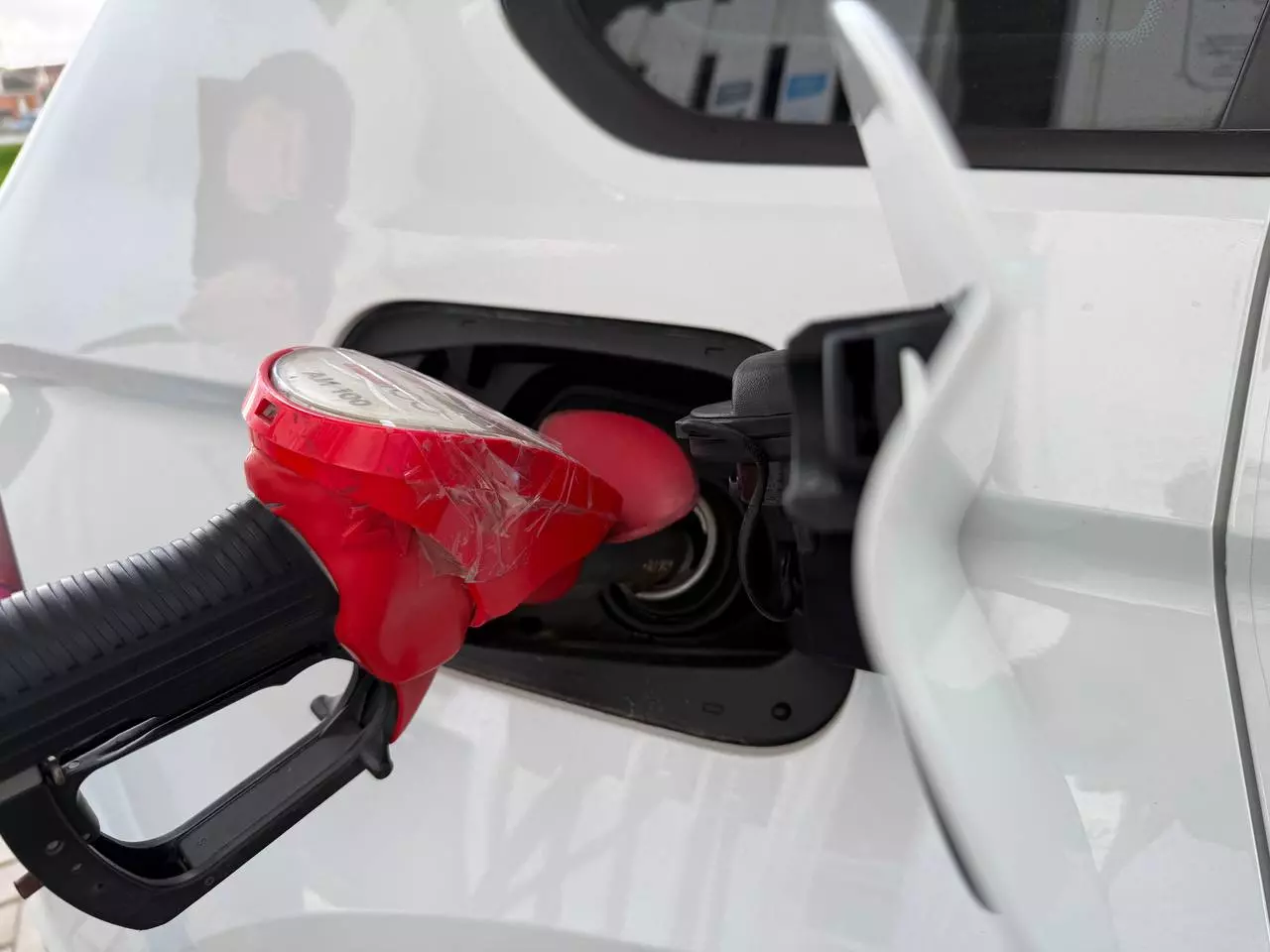
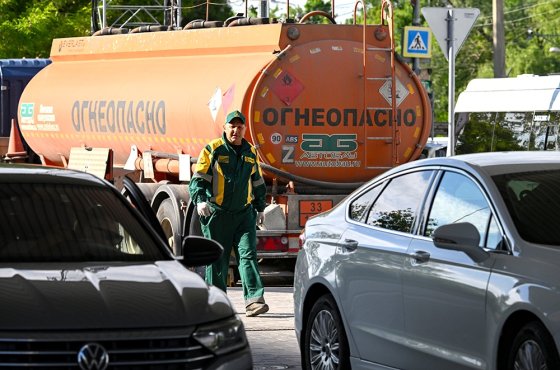
According to an industry source cited by “Ъ,” the situation at Russian filling stations has begun to improve: queues have shortened, and many operators have returned to selling fuel without restrictions.
Independent networks are reportedly still receiving gasoline from Belarusian refineries and possibly from vertically integrated oil companies. "The peak of the shortage has likely already passed," the source told “Ъ.” However, they also noted a potential decrease in gasoline reserves to less than 1.5 million tons. According to data from the Ministry of Energy, which President Vladimir Putin cited at the end of June, gasoline reserves decreased by 4% year-on-year, falling to 1.7 million tons. Another source from “Ъ” in the industry indicated that more capacities are currently being launched than are being removed from operation.
Managing partner at NEFT Research, Sergey Frolov, does not expect a quick recovery for the market. He indicated that the high seasonal demand will persist over the next two months, making expectations for an immediate improvement unrealistic. The balance between supply and demand, the expert noted, cannot be restored instantly, and noticeable increases in production will only be possible closer to the end of the year, as damaged refineries resume operations. Valeria Popova, a senior analyst at investment company "Rikom-Trast," emphasized that stabilization necessitates a recovery of reserves, a reduction in exchange price volatility, and easing of temporary restrictions.
Source: Kommersant