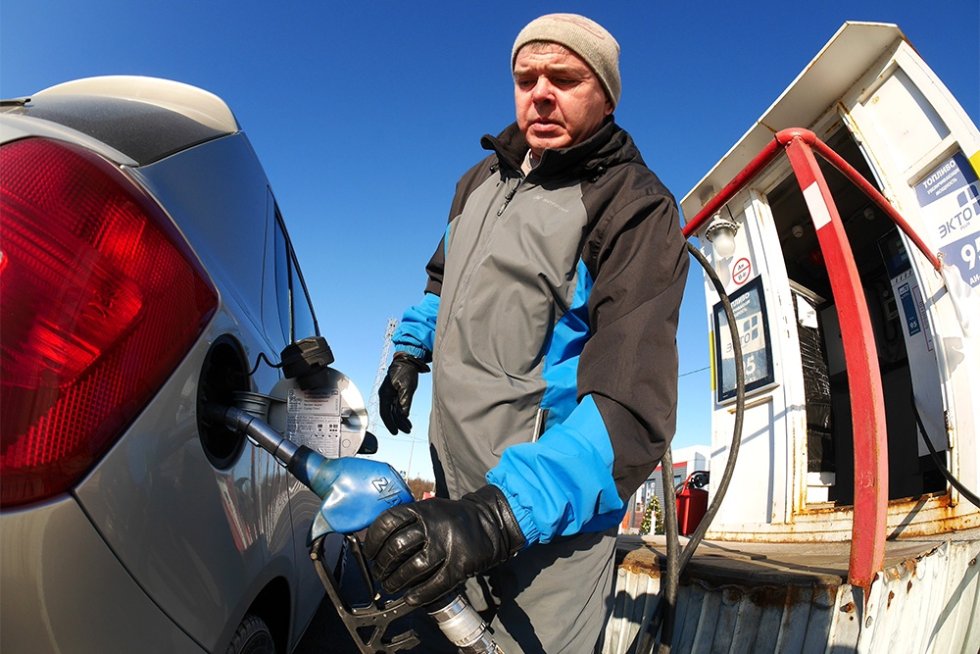
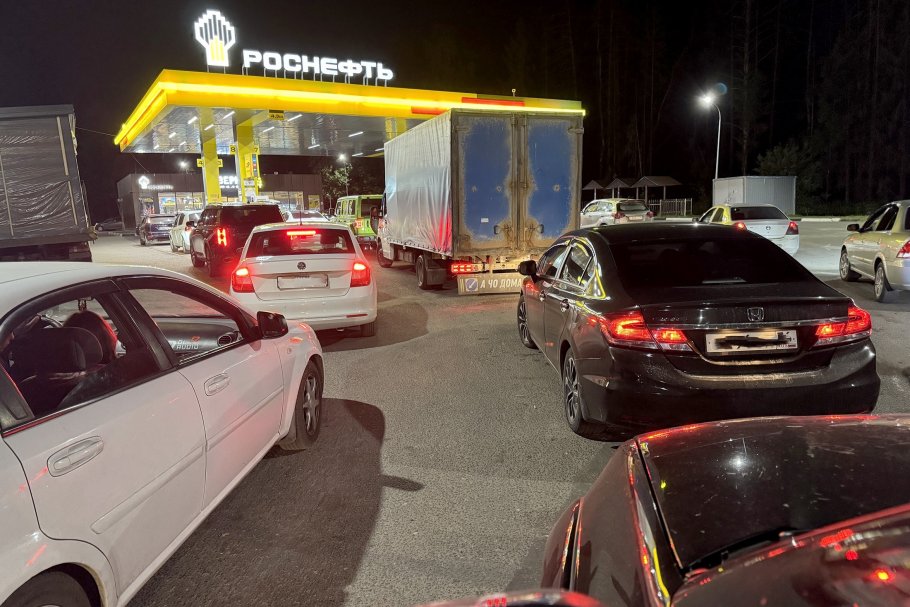
The "Euro-3" fuel standard will be available at gas stations (GS) starting from the second half of August, closer to the end of the month, considering delivery times. Importantly, all gas stations must indicate the environmental grade of the fuel at the point of sale.
Previously, the government issued a decree permitting the production, import, and trade of gasoline and diesel fuel meeting the "Euro-2", "Euro-3", and "Euro-4" standards (in Russian classification K2, K3, and K4) until July 1, 2027. Until August 13 of this year, there was a ban in Russia on the circulation of fuels below the "Euro-5" grade that had been in place since July 2016.
As highlighted in the government's announcement, this measure is temporary and aims to saturate the domestic market with necessary fuel volumes.Deputy Prime Minister Alexander Novak emphasized that information about the fuel grade should be presented to consumers in an accessible form at gas stations.
The easing of requirements is related to decreased gasoline and diesel production due to unscheduled maintenance at oil refineries (OR) following drone attacks. Technologically, producing "Euro-3" fuel is simpler as it does not require installations used in the production of low-sulfur and low-aromatic compounds. Therefore, even some affected refineries (if only this equipment was stopped) can continue producing fuel.
Additionally, scheduled maintenance for some refineries initially planned for late spring and early summer has been postponed, which may now also impact market availability. Refineries are complex operations and cannot function fully without periodic maintenance shutdowns. Allowing the production and trade of "Euro-3" will help sustain production volumes.
In a conversation with "RG", Dmitry Gusev, Deputy Chairman of the Supervisory Board of the "Reliable Partner" Association and member of the Expert Council for the "Gas Stations of Russia" competition, explained that the lower the environmental grade of gasoline, the more can be produced. This does not imply a complete abandonment of "Euro-5"; rather, where "Euro-5" is insufficient, lower-grade fuels can be utilized, he clarified.
According to Sergey Tereshkin, General Director of Open Oil Market, when fuel imports from Belarus hit production capacity ceilings, and imports from India became complicated due to high logistical costs, easing fuel property requirements has become the primary tool to prevent supply risks in the domestic market.
The majority of "Euro-3" fuel production will likely come from smaller refineries with low processing depth (there are about 20 in Russia with a total processing volume of 12 million tons per year), believes Sergey Frolov, managing partner of NEFT Research. However, the government has not released an official list of refineries authorized to supply such fuel. It is unlikely to be found at the gas stations of major oil companies. Nevertheless, petroleum products at gas stations must be labeled, and consumers must be warned that they are purchasing gasoline below the "Euro-5" standard.
On the other hand, as previously stated, producing "Euro-3" is technologically simpler, resulting in lower production costs and, thus, lower prices. This will not only help keep prices stable in the domestic market but also make "Euro-3" imports to Russia more profitable than "Euro-5". However, as Gusev noted, it will be significantly more challenging for importers to find available volumes of "Euro-3" for supplies to our country than "Euro-5".
This is not about abandoning "Euro-5" but compensating for the shortfall in fuel volumes in the market with "Euro-3".It remains to be seen how "Euro-3" impacts the environment and "vehicle health". As Tereshkin explains, the maximum sulfur content in "Euro-5" gasoline is 10 mg per kg of fuel, while in "Euro-3", it is 150 mg per kg; the maximum concentration of aromatic hydrocarbons is 35% and 42%, respectively.
Regarding vehicle impact, it is known that "Euro-3" fuel should not be used in modern vehicles that meet "Euro-5" and "Euro-6" standards. According to Tereshkin, using fuel with high sulfur content can lead to failure of oxygen sensors, reduced efficiency of engine oil, and damage to the active layer of the catalyst used for exhaust gas purification.
Frolov notes that "Euro-3" can negatively affect automotive components related to exhaust control (catalysts, particulate filters, lambda sensors) and can also harm engines due to increased corrosion and deposit formation risk.
Tereshkin also points out that the potential damage to vehicles depends on the duration of using such fuel. If it's just one or two weeks, a routine cleaning of the engine injectors at a car service may suffice. More severe repercussions may occur after several months. This is similar to fast food: it's one thing to snack on a burger and fries for lunch, and quite another to eat fast food every day for six months.
Source: RG.RU