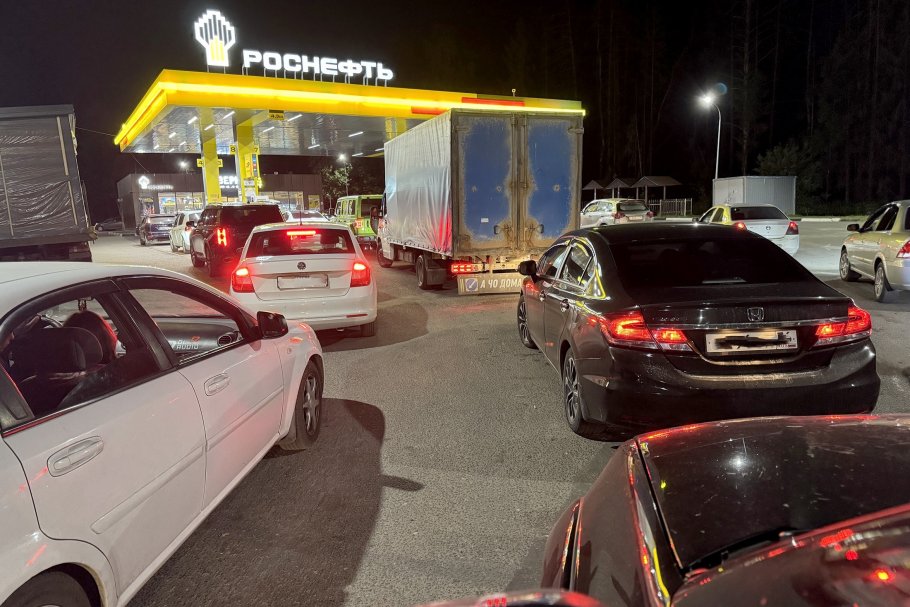
The agreement between the USA and Iran regarding the reopening of the Strait of Hormuz, expected to be signed on June 19, 2026, is set to reshape not only the oil market but the entire energy geopolitics of the forthcoming years. Donald Trump announced on June 15 the readiness of a 14-point memorandum, and the market reacted immediately: Brent temporarily plummeted to below 80 dollars per barrel, causing a record drop in the stock prices of Russian companies (to the lows of 2022-23). This is not merely another surge in quotes, but a tipping point after which the logic of global trade in energy resources will begin to operate differently.
However, it is premature to rush into optimism. This is not the first time the participants in this confrontation have reached an agreement, so, as they say, we shall see. There are still 500 ships 'moored' in the Strait of Hormuz, and who will go where and when remains unclear. Likewise, the fate of freight, which risks simply collapsing, is uncertain.
As for the deal, its parameters seem relatively clear. Iran will clear the strait within 30 days and guarantees unrestricted passage of ships without tariffs and delays. The USA will gradually lift the maritime blockade. A ceasefire is extended for 60 days on all fronts, including Lebanon. Concurrently, two-month negotiations regarding Iran’s nuclear program will commence, with the first question concerning the disposal of highly enriched uranium. The USA commits to discussing the easing of sanctions and the unblocking of frozen Iranian assets, which, according to Axios, amounts to around 24 billion dollars.
It is precisely the unfreezing of assets that has been the main sticking point in all previous negotiations. Among other points referenced in the memorandum are respect for sovereignty, payments (up to 300 billion dollars) to Iran for post-conflict reconstruction, the renunciation by the Persians of their nuclear ambitions, and the subsequent signing of a final peace agreement.
The market's reaction to yet another "Trump deal" was predictable in form but not in scale.
If in March 2026 prices quickly surpassed 100 dollars per barrel due to the news backdrop, the same mechanism is now operating in reverse. Prices are not merely falling; they are beginning to revert to levels that suggest a complete restoration of navigation. According to forecasts from the US Department of Energy from June 9, Brent is expected to drop to 79 dollars per barrel by 2027. At the current pace of market movement, this level could be reached sooner than the baseline scenario assumed.
However, the baseline scenario and the real scenario are two different things. The International Energy Agency warned in their May report that even with a signed ceasefire, a supply deficit would be felt until October 2026. The chain of restoration of maritime traffic involves several stages. First, demining takes the stated 30 days. Then insurers must restore coverage for tankers passing through the Persian Gulf. Following that, field operators will gradually begin to resume production volumes that had been put on hold. This does not happen simultaneously. The entire chain takes several months. This means that prices below 90 dollars are not just a matter of the coming weeks, but rather the second half of 2026 and into 2027.
The reopening of the strait creates distinct winners and losers, and the distribution does not align with traditional geopolitical portrayals. Global oil consumers, primarily China and India, will regain supply from the Persian Gulf and see a notable decrease in energy prices. Iran itself will gain the opportunity to restore exports, a crucial condition for the survival of its economy. The unfreezing of assets and the gradual easing of sanctions will provide Tehran with the resources to restore its damaged oil and gas infrastructure.
Paradoxically, the United Arab Emirates, which left OPEC+ on May 1 precisely for the freedom to increase production without cartel coordination, will also emerge victorious. ADNOC, the national oil company of the UAE, plans to increase its output to 5 million barrels per day by 2027. This is an increase of 1.5 to 1.6 million barrels per day. If Hormuz opens up and shipping insurance is restored, the Emirates will finally obtain a real opportunity to export these volumes to the global market instead of keeping them as intentions.
On the flip side, oil producers outside the Persian Gulf will find themselves at a disadvantage. The reopening of the strait signifies the release of previously withheld supply to the market. Between February and May 2026, Saudi Arabia, Iraq, Kuwait, and the UAE cut production by more than 11 million barrels per day. Those volumes will begin to re-enter the market. Concurrently, there may be a softening or complete lifting of the oil embargo on Iran as part of the agreement package with the USA. This will create a race for offers in the Middle East, where each producer will strive to increase sales while prices are still relatively high.
Russian exports find themselves in a vulnerable position. At Brent prices of 95-107 dollars, exports operate within a comfortable price range, providing the budget with significant additional revenues over the base price of 60 dollars laid out in the budget rule. A slip to 79-80 dollars will completely negate these advantages.
It is still too early to talk about a full restoration of transit of oil, petroleum products, and other cargoes through the Strait of Hormuz; one must wait for June 19, when the memorandum between the USA and Iran is expected to be concluded. If after the signing of the documents transit is resumed, Brent oil prices could fall to less than 70 dollars per barrel in a relatively short time, said Sergey Tereshkin, CEO of Open Oil Market.
"Along with Brent prices, Urals prices will also drop: if in May 2026 the tax price of Russian oil, factoring in spot quotes for Urals and Brent, was 86 dollars per barrel, it may fall below 60 dollars per barrel in the summer."
"Beyond that, little will change for Russian oil workers: oil production in Russia in May 2026 was only 300,000 barrels per day lower than in February, while Saudi Arabia, Iraq, and Kuwait (the three other largest participants in the OPEC+ deal) cut their production by a total of more than 9 million barrels per day."
Overall, the oil market will begin to return to normal in the second half of 2026.
This will manifest, among other things, in heightened competition among producers, considering the likely increase in production in the Middle East and the potential easing of sanctions against Iran," says the expert.
OPEC+ agreed in early June to increase the quotas by 188 thousand barrels per day for July. This is not an increase—this is preparation for retreat. However, Russia's capabilities here are limited. In May 2026, Russian oil production was only 300 thousand barrels per day lower than in February, while Saudi Arabia, Iraq, and Kuwait cut their production by a total of more than 9 million barrels per day. This indicates that Russia is already close to its ceiling, whereas the Saudis have a substantial buffer to increase supplies.
Israel has taken a clear opposition to the agreement. According to The Guardian and Israeli media, Tel Aviv believes the memorandum does not restrict Tehran's missile program and effectively solidifies Iran's gains. Former Prime Minister Netanyahu's national security advisor Yaakov Nagel described the draft agreement as "a big mistake." This creates a real risk that Israel may attempt to sabotage the implementation of the deal through a new incident in the region.
Republican critics of Trump also disparage the agreement, albeit for different reasons. On the eve of the midterm elections, a segment of the Republican Party sees the memorandum as a concession to Iran. This adds domestic political uncertainty to its implementation. Any major political event in the USA could realign the forces surrounding the deal.
In practice, the implementation could follow three main scenarios.
The first, baseline: signing on June 19, demining completed by mid-July, insurance restored by August. Brent moves towards 85-90 dollars by the end of the third quarter and to 79-82 dollars in 2027. This is the scenario that the forecasts from the US Department of Energy lay out.
The second, more likely given the historical experience of similar agreements: implementation stalls. The signing will occur, but demining takes longer than the stated 30 days, insurance returns with delays, Israeli provocations or internal Iranian disagreements slow the process. Prices retract to 90-95 dollars and hold steady until the end of the year.
The third, worst-case scenario: disruption. The deal is not signed on June 19, or it is signed but quickly falls apart due to a new incident. Prices leap above 100 dollars, and the market returns to an Hormuz crisis mode.
The main factor of uncertainty in the oil market in the second half of the year is the behavior of the UAE outside of OPEC+.
The Emirates can increase production in any manner and at any pace, without coordinating actions with the rest of the cartel. In this sense, they become the primary source of price unpredictability. Russia can manage its production within OPEC+, but it cannot control the decisions of Tehran or Abu Dhabi. That is why June 19 is not just a date but a turning point for recalibrating all assumptions of the energy budget for 2026-2027.
Source: Vgudok